
NIIRA 2025 Faces Test As MSC Container Crisis Fuels Detention Charges

Listen to story here

Nigeria’s new marine insurance regime is facing an early test over the enforcement of the Nigeria Insurance Industry Reform Act 2025 (NIIRA 2025), with stakeholders questioning whether the law’s abolition of container deposits will deliver meaningful protection for cargo interests amid rising container detention charges.
 The issue came into sharp focus on Thursday at the virtual Nigeria Marine Insurance Forum 2026, organised by Akabogu and Associates, even as the Africa Association of Professional Freight Forwarders and Logistics of Nigeria (APFFLON) called on the Federal Government and relevant maritime regulatory agencies to investigate and sanction Mediterranean Shipping Company (MSC) over alleged difficulties in returning empty containers.

The convergence of the two developments has brought renewed attention to a key question: whether Nigeria’s new insurance framework can protect importers and other cargo interests from costs arising from operational bottlenecks within the shipping and port ecosystem.

Opening the forum, Senior Partner, Akabogu and Associates, Dr. Emeka Akabogu, SAN, said Nigeria’s marine insurance landscape had entered a new era following the enactment of NIIRA 2025, which he said was reshaping the regulatory and commercial terrain.

He posited the industry must now confront fundamental questions around marine risk, domestic insurance capacity, container insurance, Protection and Indemnity (P&I) cover and the growing complexity of multimodal transportation.
Akabogu also questioned where maritime risk actually ends – at the port, when goods are loaded onto a truck, or at the shipper’s warehouse.
He noted that Nigeria’s charter and freight market was estimated at about $10 billion roughly a decade ago, arguing that the scale of the country’s maritime economy is much higher today and justified a stronger domestic marine insurance market.
In his presentation, Mr. Victor Onyegbado, a Partner at Akabogu and Associates, emphasised that NIIRA 2025 provides an opportunity to address longstanding gaps in Nigeria’s container insurance regime, particularly as the movement of goods increasingly extends beyond the traditional sea leg into road and other modes of transportation.
“Nigeria seems to be focused only on shipping risks, even though insurance cover is expanded to other modes of carriage,” he said.
Container deposits abolished, enforcement now critical
The container regime emerged as one of the most commercially significant issues at the forum.
Before the new regime, shipping companies commonly required container deposits as financial security for the return of equipment and protection against damage.
The practice, however, generated complaints from importers and freight forwarders over alleged abuse of dominant positions, while shipping companies argued that late returns and damaged containers created substantial commercial losses.
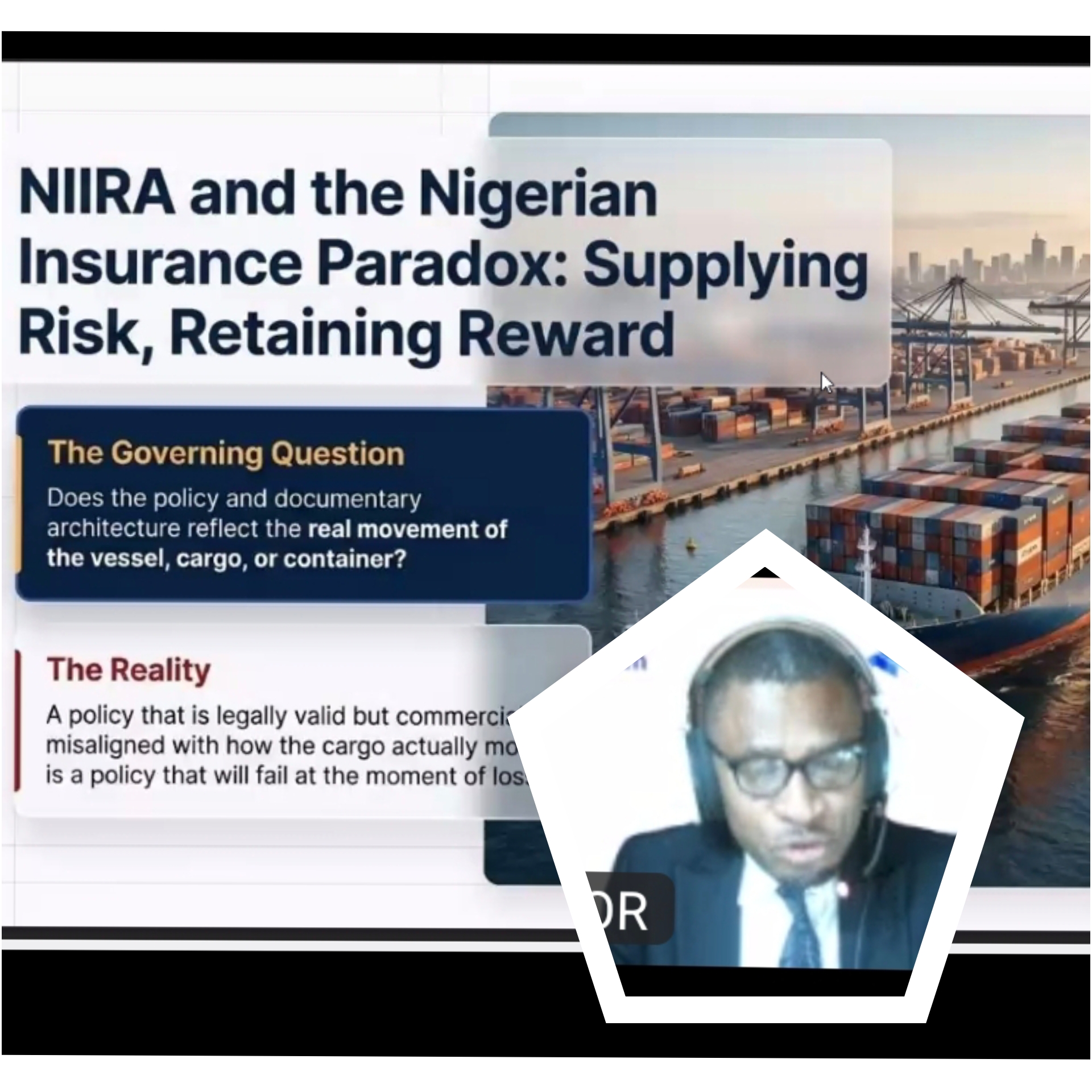
Onyegbado explained that NIIRA 2025 seeks to move the industry away from the container deposit model towards insurance-based protection, with the objective of reducing the liquidity burden on cargo interests while strengthening consumer protection.
The development has nevertheless raised a practical question: how effectively are shipping companies complying with the abolition of container deposits, and can charges introduced under different descriptions produce a similar financial burden?
That question is particularly relevant as importers continue to face container detention charges when the empty boxes are not returned within the applicable free period.
Detention charges are not legally identical to container deposits. However, where delays in returning empty containers result from inadequate collection infrastructure or other operational constraints, stakeholders are increasingly asking whether such charges could undermine the consumer-protection objective of the new regime.
APFFLON raises MSC empty-container concerns
While the insurance forum was examining the new regulatory architecture, APFFLON was disseminating a press statement where it called for immediate regulatory intervention over what it described as MSC’s persistent failure to provide adequate facilities for empty-container returns.
National President of APFFLON, Otunba Frank Ogunojemite, alleged that insufficient holding bays and designated collection points were contributing significantly to congestion around the Apapa Port corridor and exposing importers to excessive detention charges.
According to him, the continued refusal or inability of MSC to provide sufficient facilities for empty-container returns has created bottlenecks that frustrate cargo movement, delay truck turnaround time and worsen traffic congestion around the nation’s busiest port corridor.
Ogunojemite said the development was particularly concerning at a time when the Federal Government was investing heavily in road rehabilitation, port digitalisation and other reforms aimed at improving efficiency and reducing the cost of doing business.
The APFFLON position puts a practical dimension to the wider NIIRA debate. If importers have complied with their obligations but cannot return empty containers because adequate receiving facilities are unavailable, stakeholders argue that regulators must determine where responsibility for the resulting costs lies.
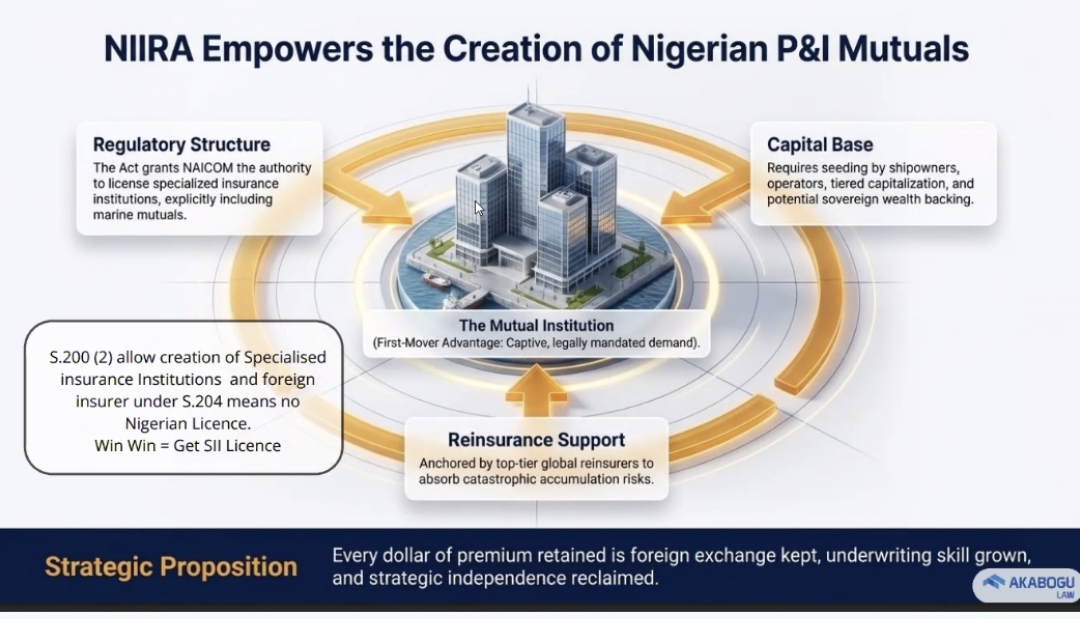
Nigeria’s P&I opportunity
The forum also examined Nigeria’s longstanding weakness in the Protection and Indemnity insurance market.
Onyegbado said Nigeria had substantial demand for P&I insurance and already possessed legislation capable of supporting greater domestic participation.
“Nigeria has a heavy demand for Protection and Indemnity and there is an existing legislation to provide it; so why haven’t we played in that space?” he asked.
He pointed to the country’s expanding maritime and energy economy, including the operations of the Dangote Refinery, noting that although the refinery was playing a major role in the petroleum industry, it did not own its own fleet.
He argued that Nigeria therefore requires stronger domestic players capable of providing P&I solutions to a maritime economy with significant exposure to shipping, offshore operations and cargo risks.
Forum discussions put the value of historically ceded marine insurance premiums at between $4 billion and $5 billion, highlighting the potential opportunity for Nigerian-licensed marine mutuals and insurers.
The challenge, however, is to convert the statutory opportunity created by NIIRA 2025 into institutional capacity, specialised expertise and competitive products.
Four pillars for implementing NIIRA
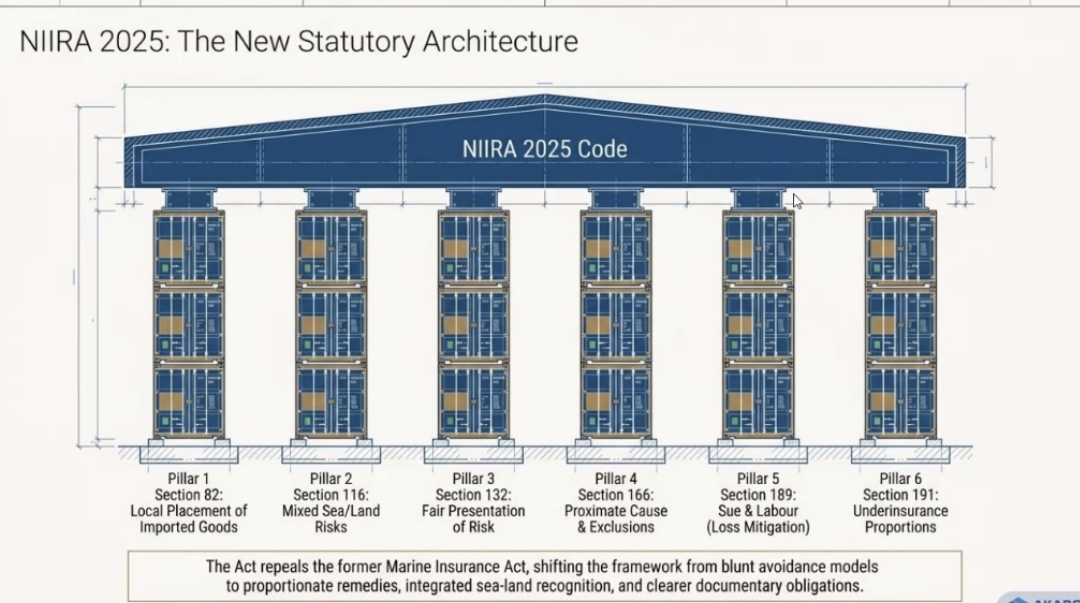
Akabogu and Associates outlined four broad pillars for moving NIIRA 2025 from legislation to effective market practice.
The first is knowing the rights created by the law, with port stakeholders requiring greater awareness of statutory provisions, including Sections 82, 116, 203, 210 and 212.
The second is building domestic capacity, including the use of training levies under Section 216 and the potential establishment of a Nigerian P&I club under Section 200.
The third is enforcement and litigation, including Federal High Court test cases relating to offshore insurance placement under Section 204 and import insurance requirements under Section 82.
The fourth is institutionalisation, involving standard policy wordings, digital insurance infrastructure and stronger regional cooperation, including the proposed Nigeria-Ghana marine insurance alliance.
The core message from the forum was that legislation will not transform Nigeria’s marine insurance market without enforcement, institutional capacity and active participation by insurers, shipping companies, freight forwarders, regulators and cargo interests.
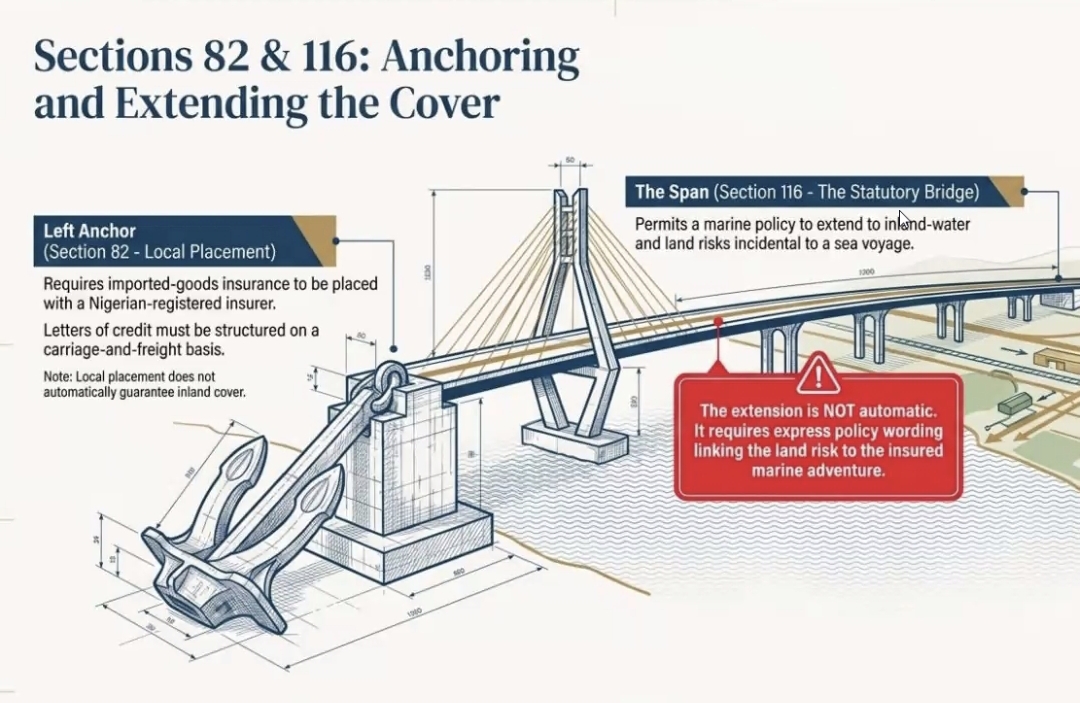
Multimodal cargo tests the new regime
Another critical issue is the increasingly multimodal nature of cargo transportation.
Goods imported through Nigerian seaports may move through several stages involving vessels, terminals, trucks, barges, warehouses and other logistics platforms. This creates questions over how insurance obligations and risk should be treated as cargo moves between different modes of transportation.
The interaction between Sections 82, 116 and 78 of NIIRA 2025 will therefore be important in determining how insurance protection applies throughout the commercial journey.
For freight forwarders and importers, the practical concern is whether protection follows the cargo across its different stages or becomes fragmented at transition points between carriers and modes.
The issue assumes greater significance when operational delays at one stage of the logistics chain can generate additional costs elsewhere.
Enforcement will define the reform
NIIRA 2025 will ultimately depend on enforcement rather than legislation alone. The abolition of container deposits, the development of domestic P&I capacity and stronger local participation in insurable risks represent significant structural changes to Nigeria’s marine insurance market.
But the reforms will face credibility questions if cargo owners continue to bear significant costs from operational failures beyond their control.
For regulators, the immediate challenge is to ensure compliance with the new container insurance framework while investigating practices that may impose excessive costs on cargo interests.
For insurers, NIIRA 2025 represents an opportunity to retain a greater share of Nigeria’s maritime risk within the domestic market.
Nigeria can use the new law to build a genuinely competitive domestic marine insurance market. However, the wider maritime industry must be committed to this goal. We shouldn’t allow old commercial pressures simply re-emerge in different forms.
Shippers also need to be more daring to seek legal redress on issues as Dr. Akabogu disclosed that in two cases that went all the way to the Supreme Court, Akabogu and Associates recovered in excess of N40billion from shipping companies and terminal operators on behalf of Nigerian shippers.
“No man is above the law, and no man is below it.” – Theodore Roosevelt