
Listen to story here
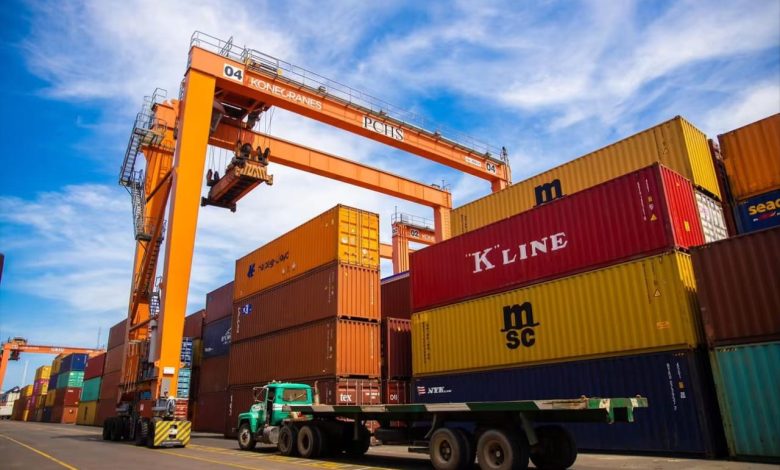
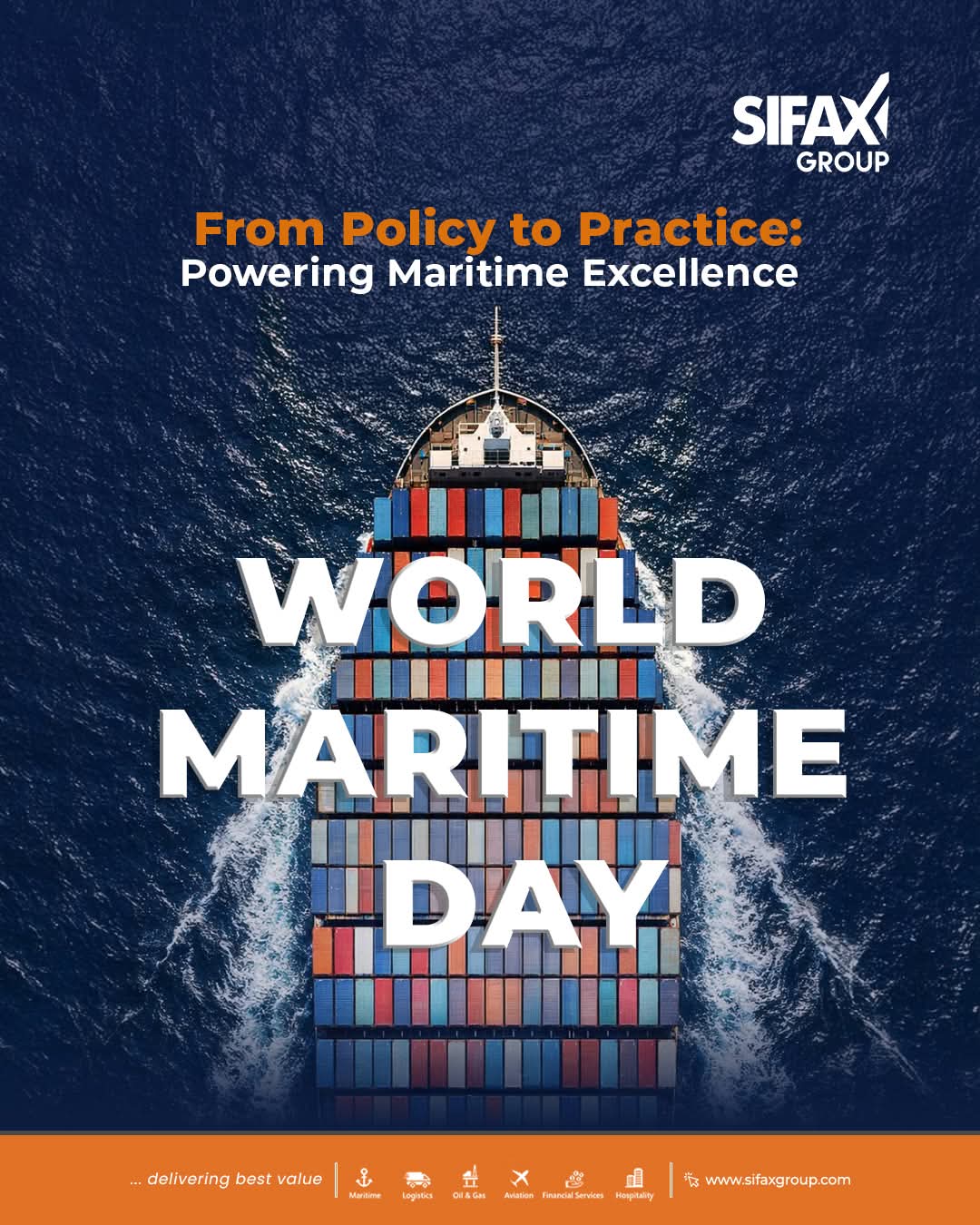
What happens when maritime policy leaves the conference room and meets the quay? That question sits at the heart of the International Maritime Organization’s (IMO) World Maritime Day 2026 theme, “From Policy to Practice: Powering Maritime Excellence.”
Marked on September 24, the theme is deliberately practical. The IMO says the value of international maritime regulations ultimately depends on implementation in national legislation, enforcement, training and the day-to-day operations of ships and ports. Its 2026 focus spans safety, digitalisation, decarbonisation, maritime security, facilitation, resilience and protection of the marine environment.


For Nigeria, that implementation question has particular economic significance. The country’s maritime sector is expected to facilitate trade, reduce logistics friction, attract investment and create the infrastructure for a competitive Blue Economy.
It is within that space that SIFAX Group’s more than three-decade journey offers an instructive indigenous-business case study.
Founded as a freight-forwarding business, SIFAX has evolved into a diversified conglomerate with interests in maritime, logistics, aviation, oil and gas, financial services and hospitality. Its current business architecture covers port operations, freight handling, haulage, warehousing, groupage, cargo consolidation and logistics solutions, among other services.
The evolution matters because SIFAX has increasingly moved beyond participating in Nigeria’s maritime economy to investing in the physical and human infrastructure required to make that economy work.
Turning Investment into Maritime Capacity
At the centre of this story is Ports & Cargo Handling Services Limited, SIFAX Group’s flagship port subsidiary at Tin Can Island Port.
Its 2026 strategy provides a particularly relevant illustration of “policy to practice.” Following a difficult 2024, the terminal refocused on general cargo and breakbulk operations and restructured its stevedoring activities. The company reported that the restructuring contributed to lower operating costs and improved productivity, while its 2025 recovery laid the foundation for further expansion in 2026.
SIFAX has subsequently outlined further investment in terminal equipment and infrastructure, including crane upgrades, forklifts and terminal trucks, with the objective of increasing operational capacity and reducing dependence on hired equipment.
The significance, according to maritime industry experts, is bigger than a company’s equipment list.
For Nigeria, port investment only becomes meaningful when it translates into faster cargo handling, better vessel turnaround, lower logistics friction and improved service reliability. Recent industry discussions have increasingly emphasised precisely these measures of port modernisation.

Expanding Nigeria’s Maritime Connectivity
SIFAX’s strategy also recognises that a port cannot be efficient if the cargo movement system surrounding it is inefficient.
Through its inland logistics operations, including SIFAX Shipping Inland Container Terminal at Ijora, the Group has developed facilities and services connecting port activity with warehousing, customs clearance, haulage and cargo delivery.
This integrated model is particularly relevant to Nigeria’s long-standing challenge of moving cargo efficiently from the seaport into the hinterland.
The Group’s 2025 partnership with Stanbic IBTC Infrastructure Fund for the development of the Ijora terminal also points to another dimension of the strategy – the use of institutional capital to strengthen logistics infrastructure.
Meanwhile, SIFAX Shipping has expanded Nigeria’s export connectivity through direct Less-than-Container Load exports to the United Kingdom, creating another channel for exporters seeking access to international markets.
In practical terms, this is the infrastructure behind trade policy: connecting cargo, markets and people rather than treating the seaport as an isolated economic asset.
In June 2026, Group Chairman, Dr. Taiwo Afolabi called on the Federal Government to prioritise the rehabilitation and capacity expansion of Nigeria’s eastern ports. SIFAX published the call as part of its 2026 maritime advocacy, reflecting the Chairman’s view that broader port development is necessary to unlock the country’s maritime potential.
This argument has particular relevance to the national logistics conversation. A more geographically diversified port system could support regional trade, reduce pressure on established gateways and bring maritime infrastructure closer to cargo-producing and consuming centres.
It also fits into Afolabi’s broader argument that infrastructure and connectivity are economic-development tools.
Speaking in New York in September 2026, he argued that infrastructure, employment, trade and economic opportunity can contribute to stability and development. He specifically linked the success of the African Continental Free Trade Area (AfCFTA) to infrastructure, efficient logistics, digital systems, financing and political cooperation.
As a logistics conglomerate, its proposition is that trade agreements create opportunity, but infrastructure determines whether that opportunity can be converted into commerce.
Building Security, Technology and Human Capital
There is another part of the policy-to-practice equation: security.
In March 2026, SIFAX Group and the Nigerian Navy reaffirmed their commitment to deeper operational collaboration aimed at strengthening maritime security and protecting critical economic assets around Lagos ports.
During a visit to SIFAX’s headquarters, the Flag Officer Commanding, Western Naval Command, Rear Admiral Abubakar Mustapha, stressed the importance of information sharing and cooperation between maritime operators and security agencies.
SIFAX, in turn, described security as foundational to operational stability and pledged continued cooperation with the Navy.
The relationship illustrates a fundamental reality of maritime commerce: cranes, vessels, terminals and warehouses cannot generate their full economic value without a secure operating environment.
SIFAX’s Offshore Maritime Ambitions
In January 2026, SIFAX Marine Services announced an asset-led growth strategy that would shift the business towards greater ownership and control of marine assets. The company said it planned to acquire additional sea-going barges, creek vessels and offshore support vessels, particularly to strengthen its participation in Nigeria’s oil and gas marine-services market.
The strategy represents a move from simply responding to market demand towards building capacity ahead of that demand.
For a maritime economy seeking greater indigenous participation, vessel ownership and marine-asset development are particularly important because they can deepen local capacity in a capital-intensive segment traditionally characterised by significant foreign participation.
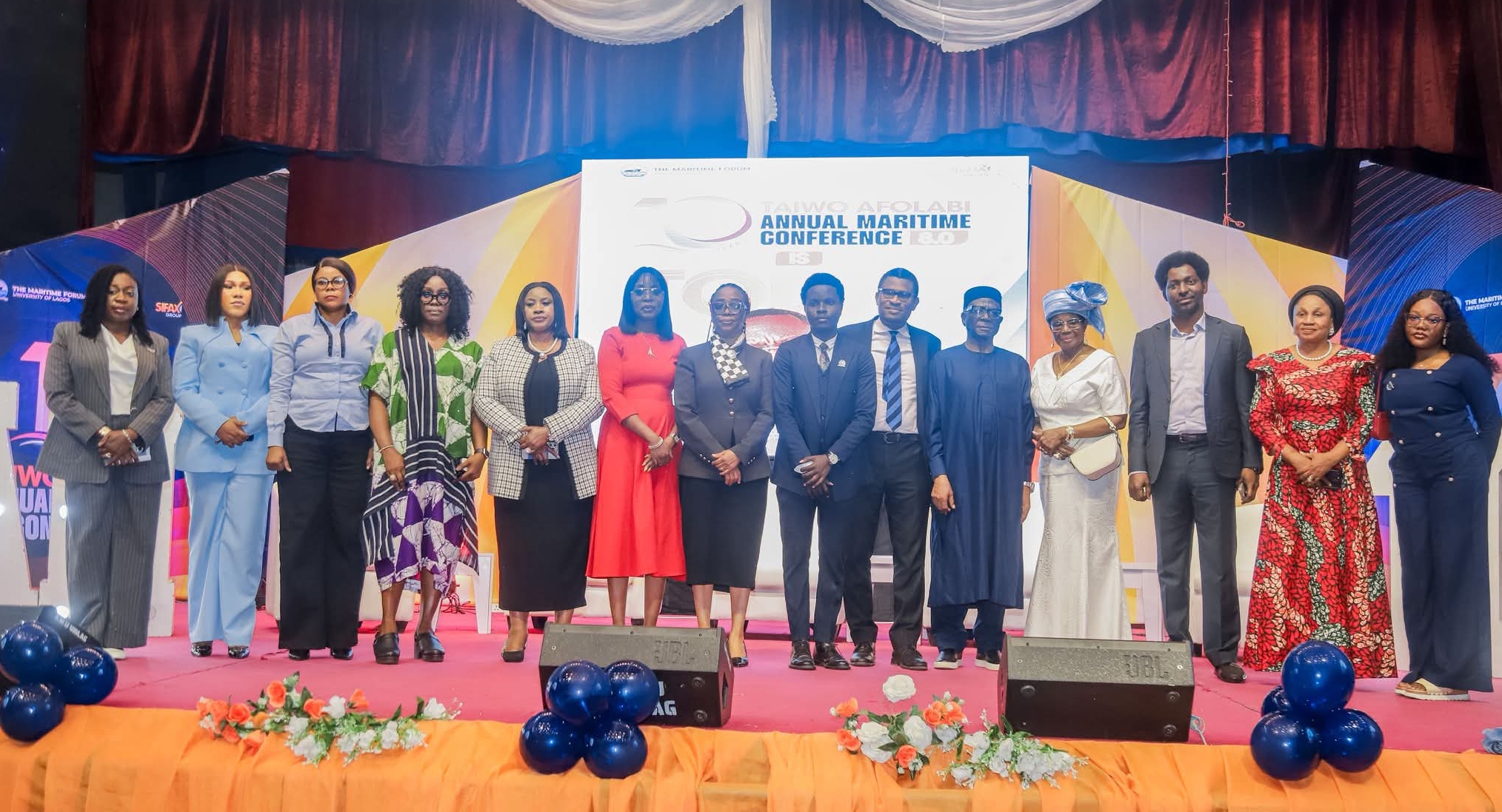
Understanding that maritime excellence is not built with steel alone, SIFAX opened 2026 with a strategy described by Afolabi as “Growth through Innovation,” with emphasis on technological integration, operational excellence, sustainability, collaboration and customer-focused service delivery. That philosophy is visible in the Group’s investment in maritime education.
The 10th Taiwo Afolabi Annual Maritime Conference, organised in partnership with the Maritime Forum of the University of Lagos, focused attention on the next generation of maritime professionals. The 2026 edition targeted the industry’s skills gap, stronger university-industry links and greater youth participation in shaping the sector’s future.
SIFAX’s partnership with the World Bank through the Ajoke Ayisat Afolabi Foundation also saw 90 Lagos students trained in artificial intelligence and technology skills in February 2026.
These initiatives reinforce a crucial point in the IMO’s 2026 theme: implementation ultimately depends on people with the knowledge and capacity to put policy into practice.
The Indigenous Capital Advantage
SIFAX’s stated sustainability strategy covers energy efficiency, renewable-energy solutions, waste reduction and environmentally responsible operations across its business sectors.
The Group’s wider footprint also demonstrates how its maritime investments sit within a larger economic ecosystem. Its aviation subsidiary, SAHCO, recorded substantial growth in 2025 while continuing investment in ground-support equipment, infrastructure and workforce development, illustrating the Group’s broader approach to building capacity across interconnected transport sectors.
The maritime story therefore cannot be separated entirely from the logistics, aviation, financial and other platforms that support trade.
Ultimately, the SIFAX story is about more than the expansion of a Nigerian company.
It is about the gradual emergence of indigenous capital as a participant in the infrastructure of trade.
From freight forwarding to port operations; from cargo handling to inland logistics; from shipping to offshore marine services; from physical infrastructure to technology and human capital, SIFAX has spent decades building across different links in the movement of goods.
Its 2026 trajectory suggests that the next phase is about integration – connecting infrastructure, technology, people, security and investment into a more coherent logistics ecosystem. This is precisely the challenge captured by World Maritime Day 2026.
Policy provides the framework as investment provides the capacity. People provide the expertise while technology enhances the efficiency. Security provides the confidence, but implementation is what turns all of them into maritime excellence.
For SIFAX Group, the journey from a Lagos freight-forwarding business to a diversified indigenous conglomerate is a story about what can happen when maritime policy is translated into cranes on the quay, vessels on the water, cargo moving through terminals, exporters reaching markets and a new generation preparing to take the sector forward.
As Nigeria seeks to convert its maritime potential into measurable economic value, the real test will be how effectively the country can make them work on the ground.
This is where the SIFAX story continues to meet the quay.