Listen to story here
Nigeria must convert its vast offshore oil and gas assets into broader maritime investment, jobs, industrial capacity and sustainable blue-economy growth, the Nigerian Upstream Petroleum Regulatory Commission (NUPRC) has said.
The commission also called for stronger coordination among regulators, operators, investors, maritime agencies and coastal communities to close the gap between policy and implementation.
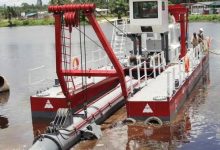

Speaking on behalf of NUPRC Chief Executive Officer, Oritsemeyiwa Eyesan, at the opening of Lagos International Maritime Week (LIMWEEK) 2026 and the 11th International Maritime Business-to-Business Conference and Exhibition, Executive Commissioner, Health, Safety, Environment and Community, Capt. John Tonlagha, said offshore petroleum development must be treated as a major component of Nigeria’s maritime economy.
The conference is themed “From Policy to Practice: Powering Maritime Excellence in Africa.”
Eyesan said offshore petroleum projects generated opportunities across marine logistics, drilling, subsea engineering, fabrication, port services, offshore support vessels, maintenance, inspection, emergency response and environmental management.
“Offshore petroleum development is not separate from maritime development. It is a major maritime enterprise,” she said, stressing that the value chain runs from exploration through production, maintenance, decommissioning and environmental restoration.
She said the effectiveness of government policy should ultimately be measured by its implementation, noting that the regulatory chain must progress from policy and legislation to standards, procedures, enforcement, monitoring and continuous improvement.
“A policy may be excellent on paper, but if it is not effectively implemented, it remains an aspiration,” Eyesan said.
She identified seven priorities for moving from policy to practice: predictability, domestic capability, maritime infrastructure, environmental and safety performance, human capital, partnership and continuous learning.
According to her, Nigeria had 131 offshore and deep offshore concessions as of January 1, 2026, representing 48.3 per cent of total concessions. The assets account for 61 per cent of annual oil production and hold 15.97 billion barrels of 2P oil and condensate reserves, or 43 per cent of national reserves, alongside 92.71 trillion cubic feet of gas reserves.
Eyesan said the figures underscored the strategic importance of offshore activities to Nigeria’s maritime economy and the need to ensure that more value is retained domestically through Nigerian businesses, professionals, technology and industrial capacity.
She urged government to regard ports, shore bases, fabrication yards, ship-repair facilities and logistics corridors as strategic infrastructure capable of serving both petroleum and wider maritime activities.
She also called for closer alignment between training institutions, regulators and industry to develop skills in offshore operations, marine engineering, digital systems, environmental management and decommissioning.
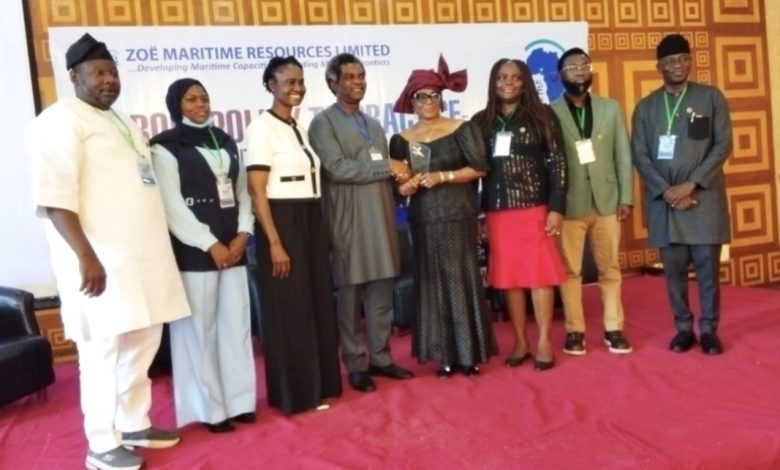
For LIMWEEK Convener and Chair of Zoe Maritime Resources Limited, Oritsematosan Edodo-Emore, the conference provides a platform to assess whether existing policies are producing practical outcomes across the maritime, marine and blue-economy value chains.
Edodo-Emore said maritime excellence could not be achieved without secure waterways, describing maritime security as critical to cargo movement and the functioning of national economies.
She said LIMWEEK’s international participation, including representatives of the Nigerian Navy, Gulf of Guinea Commission, Maritime Organization of West and Central Africa, Gambian Maritime Authority and South Africa’s Damen Shipyard, would help strengthen cross-border collaboration.
She added that the conference would examine ways to develop sustainable African shipping companies, rescue insolvent operators and apply the UNCITRAL Model Law in African jurisdictions.
Edodo-Emore also announced full scholarships for 12 students from Obafemi Awolowo University, University of Ilorin and Lagos State University, with beneficiaries to receive mentorship to facilitate their entry into the maritime industry.