Listen to story here
Nigerian shipowners seeking to access the Federal Government’s $700 million Cabotage Vessel Financing Fund (CVFF) are facing significant hurdles at the banking stage, with credit assessments and cargo guarantees emerging as major barriers to disbursement.
Although the Federal Government opened the CVFF application portal in January 2026, promising eligible indigenous shipowners up to $25 million each, only one of the 92 applications received so far has been reviewed and forwarded to the Minister of Marine and Blue Economy, Adegboyega Oyetola, for approval.


Twenty applications have reached the Primary Lending Institutions (PLIs), but none has resulted in a disbursement, despite the government’s initial projection that the process would take between 80 and 90 days.

The development has raised fresh concerns about the ability of indigenous operators to meet the commercial requirements attached to the long-awaited financing programme.
A member of the NIMASA Governing Board, Iroghama Ogbeifun, said many applicants were struggling to pass the credit assessment conducted by their respective banks, stressing that the PLIs play a decisive role in determining whether applications proceed.
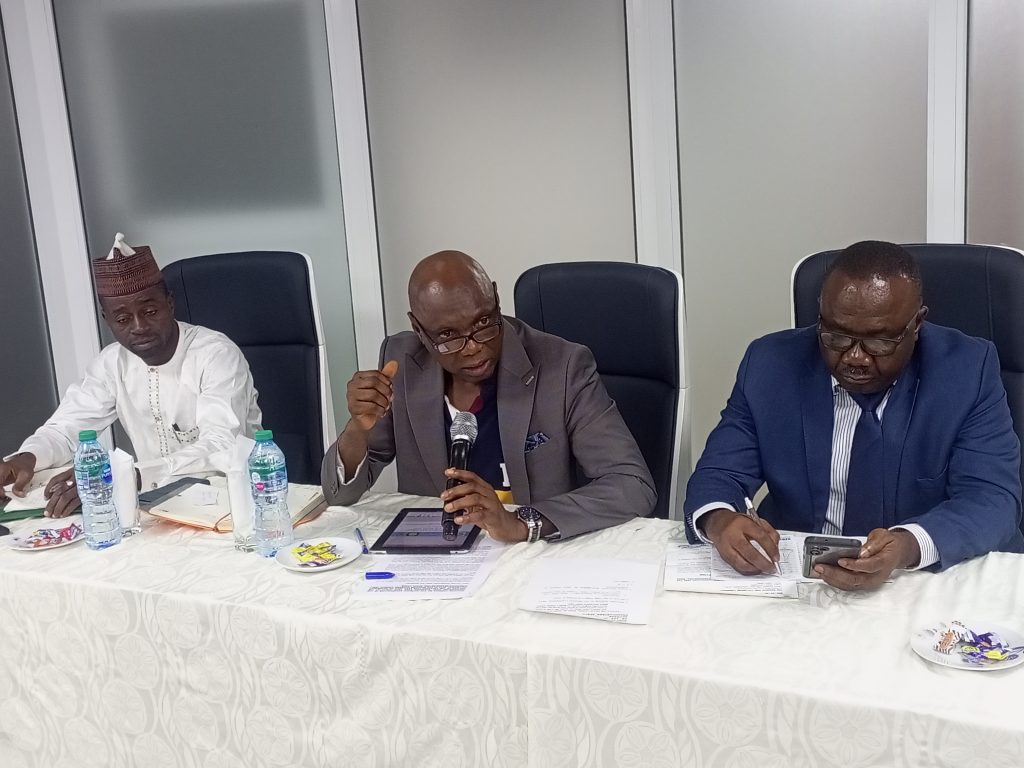
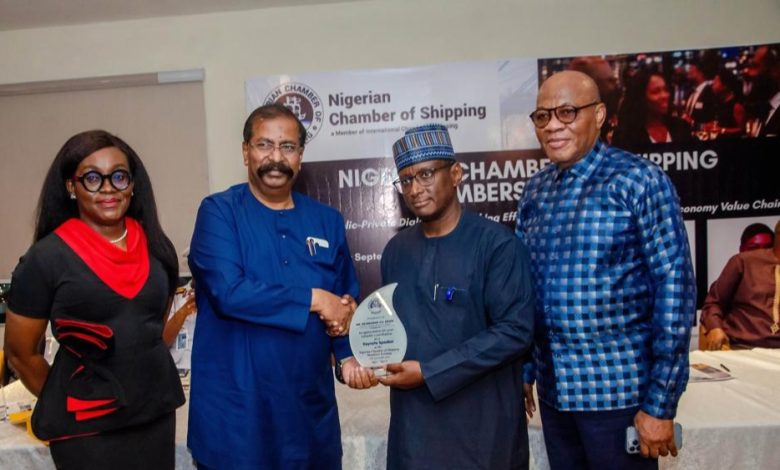
Speaking at the Nigerian Chamber of Shipping (NCS) Members’ Evening in Lagos, themed “A Public-Private Dialogue: Unlocking Efficiency in the Marine and Blue Economy Value Chain,” Ogbeifun said applicants must demonstrate sufficient commercial viability before their requests can advance.
She said cargo guarantees were particularly important because they provide evidence of future cash flow and assure lenders that financed vessels would generate sufficient revenue to service their obligations.
Ogbeifun, who is also Managing Director of Starzs Investments Company Limited, disclosed that her company could technically face difficulties qualifying for the fund because of its business model and banks’ requirement for long-term cargo contracts.
She said the applicant whose application is currently before the minister is expected to receive the $25 million financing before the end of 2026, adding that successful applications would be considered on a first-come, first-served basis after meeting the required conditions.
Meanwhile, Senior Partner at Olisa Agbakoba Legal, Dr Olisa Agbakoba, said the absence of guaranteed cargo was discouraging commercial banks from financing otherwise capable shipowners.
Agbakoba urged the NIMASA Governing Board to deploy the cargo reservation provisions of the Cabotage Act to create stronger links between vessel financing and cargo availability. He cited the United States’ cargo preference framework as an example of how government policy can support domestic shipping capacity.
While delivering the key lecture, Dangote Oil and Gas Vice President, Edwin Devakumar, said Dangote Group plans to invest in new vessels, with China as a likely destination for orders.
Citing Clarksons Research, Devakumar said Chinese shipyards accounted for nearly 67 percent of the global orderbook in 2025. He said the group plans to negotiate with Chinese shipbuilders, with the first batch of vessels expected as early as 2029.
The vessels will support the planned expansion of Dangote Refinery from 700,000 barrels per day (bpd) to 1.4 million bpd within five years.
“Currently, the petroleum refinery alone is doing 75 to 100 ships a month. That’s 900 ships a year. Once we finish doubling the capacity, the refinery alone will need 1,800 ships a year,” Devakumar said.
The expansion is partly funded by a $1.6 billion IPO opening September 14.
On his part, the President of NCS, Aminu Umar, argued that the $25 million CVFF ceiling may be inadequate for operators seeking to acquire vessels for major cargo operations.
Umar said some vessels serving West African export routes cost about $50 million, while larger vessels required for major cargo operations could cost hundreds of millions of dollars.
He therefore called for stronger financing mechanisms to enable indigenous operators build fleet capacity and capture emerging opportunities, particularly the growing maritime cargo demand associated with the Dangote Refinery.