Listen to story here

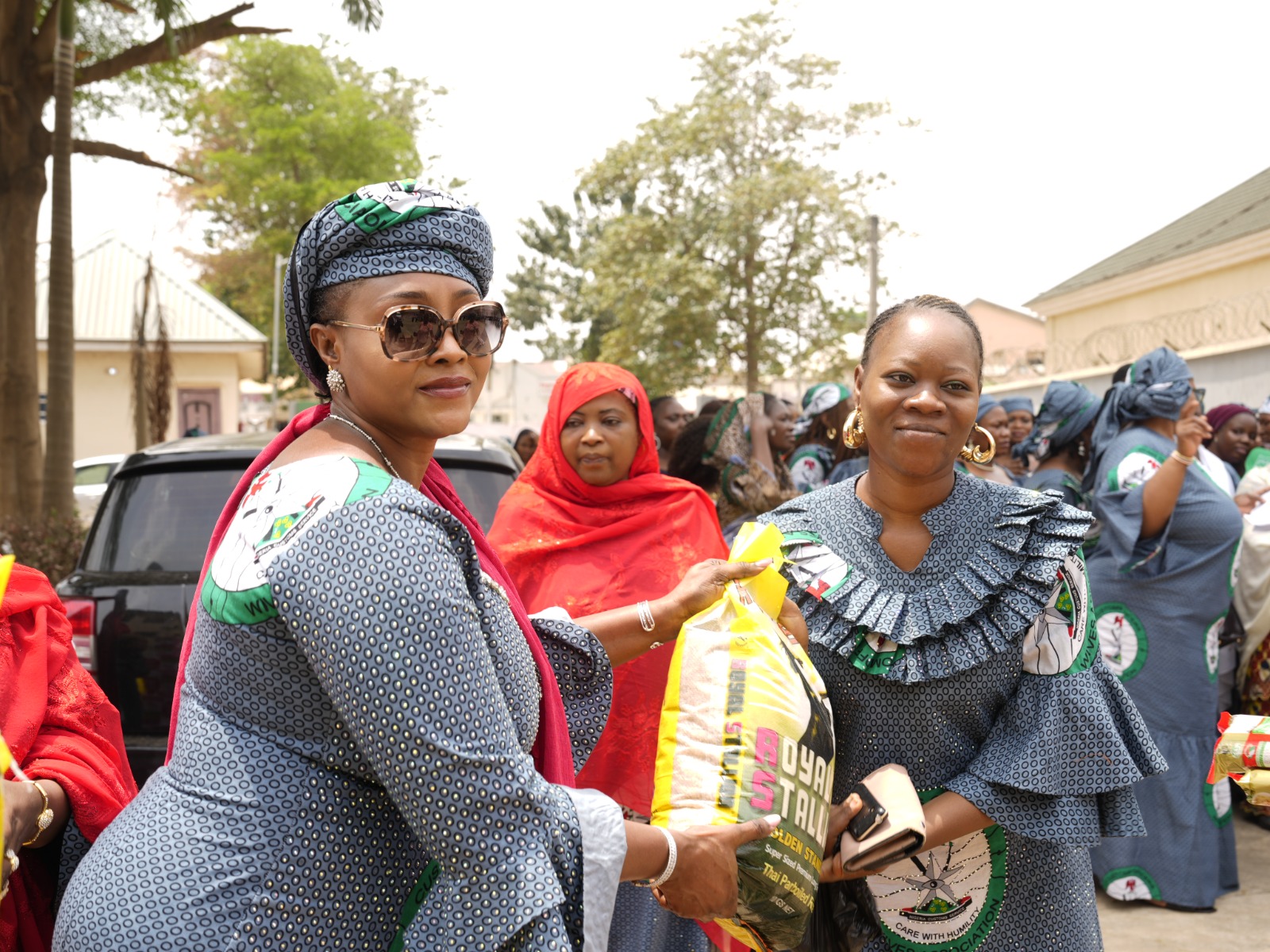
Mrs. Kikelomo Adewale Adeniyi, wife of the Comptroller-General of Customs and National President of the Customs Officers’ Wives Association (COWA), orchestrated an impactful initiative aimed at alleviating the challenges faced by Customs Officers’ Wives in Karu Customs Barracks, Abuja, on Tuesday by sharing food items to hundreds of women.
Addressing the officers’ wives with warmth and determination shortly after arriving at the venue, President Kikelomo implored them to embrace unity by becoming registered members of COWA.


Reiterating her impassioned plea, which underscored the association’s commitment to inclusivity, she emphasized her commitment to enlist every officer’s wife, irrespective of rank or formation, in the Association’s database, stating, “Every officer’s wife has a rightful place within the COWA family,” declared COWA National President emphatically.

According to her, distributing food items, which include noodles, bags of rice, spaghetti, and cooking oil, was part of COWA’s plans to ease life for members of the association nationwide.

The COWA National President, who joined the executive members of the association to launch the distribution exercise, piloted with leaders of different barracks, said, “This is not the first time COWA is conducting this initiative for distributing food items to the members and non-members of the Association, and we decided to distribute these items considering the season of Ramadan.”
Her words, “Everything we are doing now is for you. Please register so we can make provision for all of you. This will help us keep proper data of everyone and we will continue doing this subsequently to alleviate the situation.”
Speaking further, the National President urged members of the association to extend the gesture to other members of the Association because one of the teachings of COWA is spreading love amongst one another.
According to her, the gesture is currently taking place at different Customs formations across the federation, as leaders of different COWA branches are doing the same.
Recall that the COWA National President, Mrs. Kikelomo Adeniyi, had vowed to empower over 1,200 women to be self-reliant during the grand launching of the Association on 15 February 2024.
Some beneficiaries shared their joy over the palliative they received, saying it came when needed, especially with the situation of things in Nigeria.