
Listen to story here
The Independent Corrupt Practices and Other Related Offences Commission (ICPC), in collaboration with the Eagle Eye Transparency and Integrity Initiative (EETII), has intensified its campaign against corruption in Nigeria’s port sector, urging stakeholders to expose unethical practices that continue to increase the cost of doing business and worsen inflation.
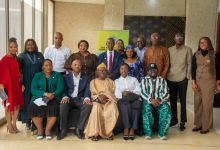
The campaign, which featured a sensitisation walk across major port facilities in Lagos on Thursday, brought together representatives of the ICPC, Nigeria Customs Service (NCS), Nigerian Shippers’ Council (NSC), Nigeria Police Force, terminal operators and freight forwarders to reinforce transparency, accountability and integrity in port operations.

Speaking during the exercise, National President of EETII Maritime Branch, Comrade Anthony Shuaibu, said the annual anti-corruption sensitisation campaign, organised in partnership with the ICPC for the past six years, has evolved into a credible platform through which port users can seek redress against corrupt practices.

According to him, sustained engagement with freight forwarders, transporters, shipping companies and terminal operators has increased awareness that victims of extortion, arbitrary charges and operational inefficiencies have channels through which their grievances can be addressed.
Shuaibu recalled how EETII successfully intervened during a prolonged operational disruption at the Tin Can Island Container Terminal (TICT), where reconstruction work at the terminal entrance prevented freight forwarders from accessing the facility despite terminal delivery orders (TDO) already being issued.
He explained that the situation forced importers to incur avoidable demurrage for four to five days while many also lost their container deposits because they could not return empty containers due to severe congestion along the port corridor.
He attributed part of the congestion to delays in evacuating empty containers by Mediterranean Shipping Company (MSC), which compounded traffic around the terminal and disrupted cargo evacuation.
According to him, EETII petitioned the relevant authorities and copied the Nigerian Shippers’ Council, whose intervention led to the immediate resolution of the problem.
Shuaibu also accused some shipping companies of deliberately delaying the refund of container deposits, describing the practice as one of the recurring complaints from importers.
He noted that although container deposits ought to be refunded within one week after the return of containers, some operators allegedly keep customers waiting for between six and eight months, hoping they would eventually abandon their claims.
Shuaibu disclosed that EETII has consistently intervened by issuing formal queries and following up with the companies, leading to the recovery of several refunds within days.
Beyond shipping-related issues, he said the organisation also responds to complaints involving arbitrary truck delays, alleged harassment by security agencies and other operational bottlenecks affecting cargo movement.
He described the participation of the Nigeria Police Force in this year’s sensitisation exercise as a significant milestone, noting that it marked the first time the Force officially joined the campaign alongside representatives of the PTML Customs Command and the Nigerian Shippers’ Council.
Shuaibu appealed to more stakeholders to support the initiative, stressing that EETII’s responsibility is to document complaints, submit petitions and monitor cases, while investigation, arrest and prosecution remain the statutory responsibility of the ICPC.
“Our responsibility is to be the eyes of the system. We observe, document and report corrupt practices, while ICPC handles investigation and prosecution,” he said.
Speaking on behalf of the ICPC, Superintendent Christopher Ocho warned that corruption within the port environment ultimately translates into higher prices of goods for consumers.
According to him, every unnecessary delay experienced by cargo at the ports increases logistics costs, which are eventually transferred to Nigerians through higher market prices.
He stressed that corruption extends beyond the exchange of bribes, describing it as a major leakage that deprives government of revenue, weakens national competitiveness and fuels inflation.
Ocho maintained that eliminating corruption from port operations would improve trade efficiency, strengthen government revenue and reduce the financial burden on businesses and consumers.
He urged Nigerians to continue reporting corrupt practices and to reject every form of extortion capable of undermining economic growth.
The ICPC official also disclosed that the anti-corruption campaign has previously enjoyed institutional support through a Memorandum of Understanding involving the Nigerian Ports Authority, Nigerian Shippers’ Council, Department of State Services (DSS), Nigeria Police Force and the Federal Road Safety Corps (FRSC), adding that efforts are underway to revive the partnership.
Also speaking, Superintendent of Customs Saidu Joshua, who represented the Customs Area Controller of the PTML Command, Deputy Comptroller Nura Miko, commended EETII and the ICPC for sustaining the annual anti-corruption initiative.
He said the PTML Command’s leadership remains committed to transparency, accountability and collaboration with relevant agencies in promoting integrity within port operations.
Joshua added that the policy direction of the Comptroller-General of Customs, Dr. Bashir Adewale Adeniyi, anchored on automation, innovation and collaboration, continues to strengthen transparency, improve service delivery and reduce opportunities for corrupt practices in cargo clearance.