Listen to story here
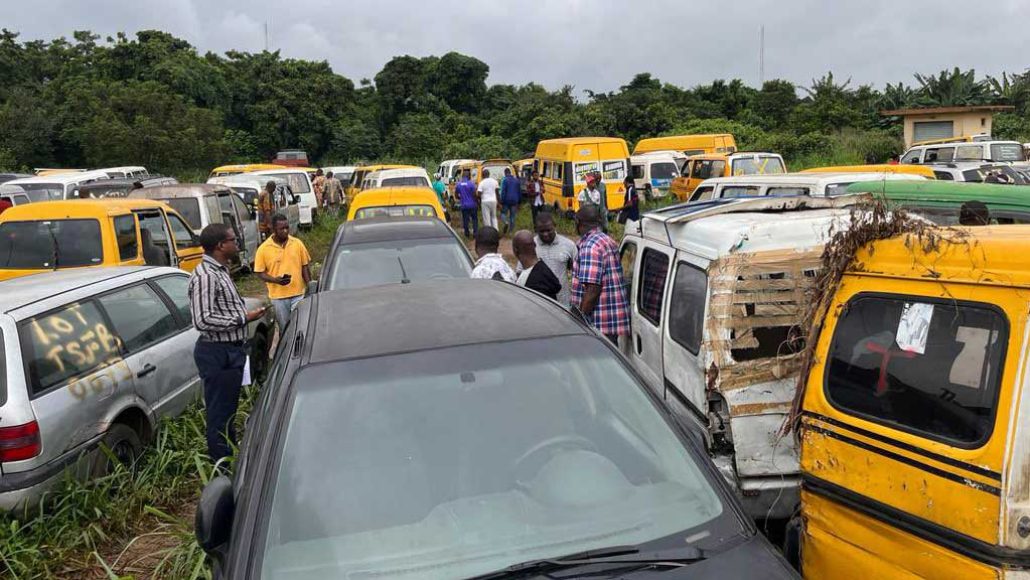
Lagos State Government has begun the release of impounded vehicles to their owners free of charge owing to cash crunch that has hit the nation following the Central Bank of Nigeria’s (CBN) naira redesign policy.
The release of the vehicles to their owners began since last Saturday and is still ongoing. Lagos State Commissioner for Transportation, Dr. Frederick Oladeinde, in an interview yesterday, said the governor had ensured that vehicles impounded for minor traffic offences were returned to their owners with the fines waved.
Meanwhile, the gubernatorial candidate of the Accord Party (AP), Hakeem Dickson, has said that he will run an inclusive and transformational leadership if elected as Lagos State governor.
Dickson, while addressing journalists in Lagos, yesterday, said he would raise the standard of the state to the status of a mega city. He noted that his administration would also engage youths in physical and intellectual activities.
Besides, the AP candidate said that if he wins, he intends to establish factories and more skills acquisition centres for both the educated and illiterates.
“When you look at what the governor proposed, especially during the cash crunch period, we have reduced public transport fare by 50 per cent. So, when you go on our BRTs and all the Lagos State-funded public transport, including LagRide, we have reduced the fare by 50 per cent just to alleviate the suffering of our people.
“Apart from that, moving away from transport, we have opened up food banks in certain areas. So, we’re beginning to give out palliatives just to ensure that people get through this cash crunch period.
“We are happy that APC has won at the national level. And we are beginning to see some of these policies being reversed. So, we’re hoping that in a short time, life would return to normal but in terms of public transport, I think we’ve reduced fare by 50 per cent,” Oladeinde said.
“There are some people that committed offences during that period and we understand the fact that money wasn’t easy to come by. Looking at the governor’s magnanimity, he has deemed it fit to ensure that people that committed crimes within that period and wanted to pay or couldn’t pay as a result of the shortage of cash, they should come and pick up their cars and he has waved the fines.
“Mind you, that does not include major crimes committed. These are just minor traffic offences that have been committed in Lagos and this is showing empathy and trying to understand how difficult it has been and it is not a reason for us to stop you from making ends meet and so hence the governor’s magnanimity.”