Listen to story here
South Africa is stepping up efforts to restore traveller confidence and deepen the tourism-business corridor with Nigeria, as key industry stakeholders push for stronger air connectivity, joint marketing and better communication on safety and travel requirements.
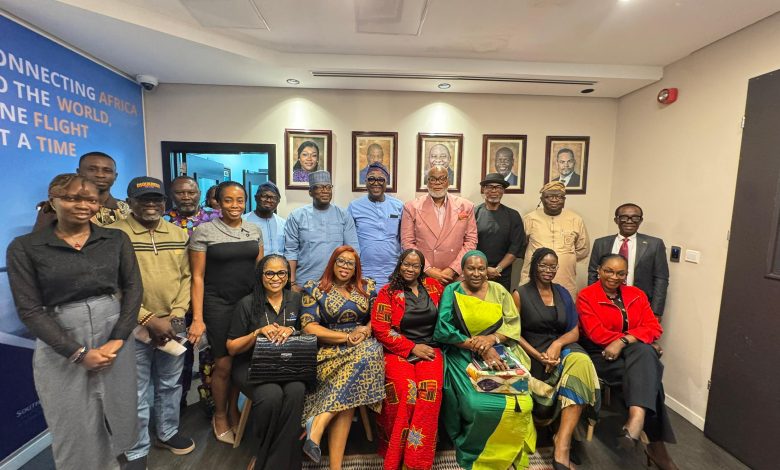
The renewed push emerged at the South Africa Tourism Connect, held Wednesday at Heritage Place, Ikoyi, Lagos, where South African tourism and aviation stakeholders met with leading Nigerian travel agencies, tour operators and business representatives.


The forum brought together the South Africa Tourism Board, South African Airways (SAA), the Nigeria–South Africa Chamber of Commerce, the National Association of Nigeria Travel Agencies (NANTA) and the National Association of Nigeria Tour Operators (NATOP).

At the centre of the discussions was the need to protect and expand the movement of people, business and capital between Africa’s two largest economies, amid lingering concerns over the treatment and safety of Nigerians travelling to South Africa.
Addressing the gathering, the Acting High Commissioner and Consul-General of South Africa, Prof. Bobby J. Moroe, sought to reassure Nigerian travellers, insisting that South Africa remains safe for legitimate visitors.
“South Africa remains safe for legitimate travellers. Incidents reported in mainstream and social media should not be taken as a representation of the average South African or the entire country. The South African Government condemns criminality. Crime has no nationality,” he said.
Moroe also referenced South Africa’s Constitution, which states that the country belongs to all who live in it, while drawing a distinction between illegal migration and undocumented migration.
For stakeholders, however, the conversation goes beyond leisure travel.
The Executive Secretary of the Nigeria–South Africa Chamber of Commerce, Iyke Ejimofor, stressed the economic value of the corridor, noting that tourism and trade are closely interconnected.
“Tourism and trade go hand in hand. When Nigerians travel to South Africa, they also do business. We must protect that corridor,” he said.
The South African Tourism Board also identified Nigeria as a critical source market, with Mohammed Kwajaffa saying the country was seeking to rebuild confidence while exposing Nigerian travellers to experiences beyond South Africa’s traditional destinations.
“We are here to rebuild confidence, showcase new experiences, and make it easier for Nigerians to explore South Africa beyond the usual destinations,” he said.
Kemi Leke-Bamtefa of South African Airways said the airline was committed to reliable airlift and competitive fares to stimulate travel for business, leisure and family purposes.
NANTA President, Dr. Yinka Folami, called for a deliberate effort to address historical and perception gaps, while NATOP President, Bolaji Mustapha, advocated renewed joint marketing between tour operators and the South African Tourism Board.
The stakeholders resolved to intensify joint marketing campaigns aimed at Nigerian travellers, improve information sharing on safety, visa requirements and emerging tourism products, and strengthen air connectivity and trade-tourism linkages.
They also agreed on the need for more positive communication to educate travellers, provide historical context and correct lingering negative perceptions about South Africa.
The initiative positions tourism as more than a passenger movement business, with stakeholders seeking to use travel, aviation and hospitality as gateways for deeper commercial relations between Nigeria and South Africa.
South Africa seeks to rebuild Nigerian traveller confidence and deepen tourism, trade and aviation ties through stronger connectivity and joint marketing