REPORTER’S DIARY: How Lagos State Taskforce made me an ‘Igbobi Landlord’ for filming Extortion
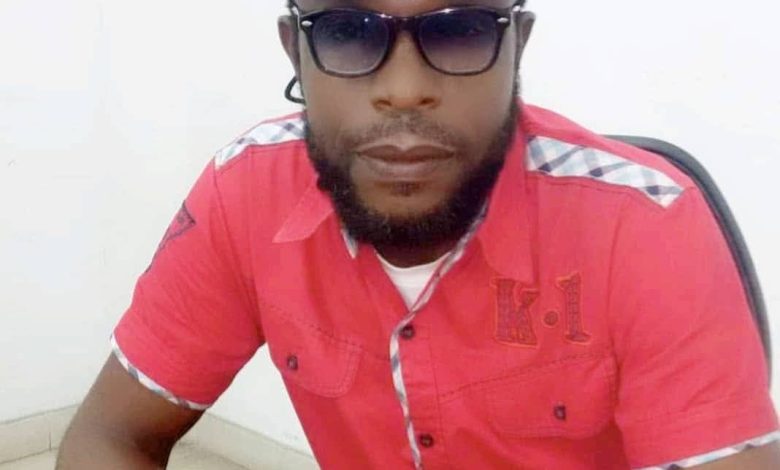
By Obiajulu Agu

Listen to story here
In Lagos street slang, being called an “Igbobi landlord” is hardly a compliment. The expression references the long-standing reputation of the National Orthopaedic Hospital, Igbobi, a leading treatment centre for accident victims, especially those injured in motorcycle crashes.
For decades, my encounters with the hospital were distant and professional. My first visit came in the early 1990s as a reporter with National Concord, when I was assigned to investigate reports of an industrial action at the facility. I completed my assignment and returned to the newsroom without incident.
My second relationship with the hospital has been deeply personal.

Since late 2023, I have been receiving treatment at the National Orthopaedic Hospital, Igbobi, where I attend the Spine and Physiotherapy Clinics. My patient identification reads AGU OBIAJULU AMD 10039338. I am awaiting corrective surgery for degenerative lumbar spine disease, a condition that later developed complications, including paraplegia.
I believe the roots of my condition trace back to an incident years earlier during the administration of former Lagos State Governor Babatunde Raji Fashola, SAN, when Tunji Bello served as Commissioner for the Environment and Water Resources, the ministry then overseeing the Lagos State Task Force on Environmental and Special Offences.
The encounter occurred one evening in Apapa after I left the International Maritime Press Centre near the Lagos Port Complex. At the time, persistent traffic gridlock on port access roads had forced many commuters, including me, to rely on commercial motorcycles to navigate the area.
Approaching Wharf Road, I noticed traffic stretching from the port gates toward Eleganza Plaza. Curious about the cause, I walked closer and saw what appeared to be a Lagos State Task Force checkpoint. A crowd had gathered, with some bystanders complaining quietly about what they alleged was extortion of commercial motorcyclists.
As a journalist, I considered the situation newsworthy and began recording the scene on my mobile phone.
Moments later, according to my recollection, a police officer attached to the operation struck the hand holding my phone with a hard plastic object, causing the device to fall. My phone was seized and handed to the supervising officer, whom I later identified as Superintendent Ajayi.
What followed was a violent assault.
I recall being struck repeatedly with fists, rifle butts and plastic pipes by several operatives. My backpack absorbed some of the blows directed at my back, but the laptop inside was damaged beyond repair.
The incident, which I estimate lasted several minutes at the junction of Wharf and Commercial roads, ended when I was escorted into a Task Force vehicle commonly called a “Black Maria.” While inside, I discreetly used a second phone to contact then-Commissioner Tunji Bello, whom I knew from my days at Concord Press. I narrated my experience, and he expressed concern and assured me he would intervene.
Later that evening, the convoy moved from Apapa to the Lagos State Task Force headquarters in Alausa, Ikeja.
At the facility, I was eventually identified as a journalist and brought before the then Chairman of the Task Force, Superintendent Bayo Sulaiman. According to my recollection, Sulaiman lectured me on how journalists should approach the coverage of law enforcement operations. I responded that I had years of experience covering the police, defence and security agencies and believed I had acted within professional bounds.
After discussions, I was released.
Before my departure, I requested the return of my phone. Task Force officials said they wanted copies of the videos I had recorded. I consented. However, I later discovered that files on the device, including videos, photographs and recordings, had been deleted.
Sulaiman reportedly encouraged me to exchange phone contacts with him and Superintendent Ajayi as a gesture of reconciliation. Despite this, I never maintained contact with either officer.
Exhausted after my release, I abandoned plans to retrieve my parked car that night and returned home instead. Over the following days, I managed persistent body pain with analgesics, believing the injuries would heal with time.
In retrospect, I underestimated the long-term consequences.
My chronic back pain developed in the years after the incident and progressively worsened. Eventually, I sought specialist treatment at the National Orthopaedic Hospital, Igbobi, where scans and clinical assessments led to a diagnosis of degenerative lumbar spine disease with paraplegia.
I have remained on a waiting list for corrective surgery since 2025. A clinic appointment scheduled for May 11, 2026, had to be missed because of logistics difficulties, and I was rescheduled for July 6, 2026.
Today, I remain bedridden and wheelchair-bound, hoping for successful surgery and rehabilitation.
In March 2026, the Federal High Court in Warri reportedly affirmed in Suit No. FHC/WR/CS/87/2025 that recording police officers in public is constitutionally protected. The following month, Lagos State Commissioner of Police Tijani Fatai publicly stated that citizens may film police officers while they are on duty.
For me, those pronouncements arrived too late.
Obiajulu Agu is a journalist and Administrator of “Maritime Matters.”