Listen to story here
Nigeria’s National Single Window (NSW), since going live on March 27, 2026, has handled 169,211 licences, permits and regulatory documents, registered 12,465 importers and agents, and onboarded 27 airlines and 56 shipping lines. Under Project Director Tola Fakolade, it has also maintained 99.98 per cent uptime.
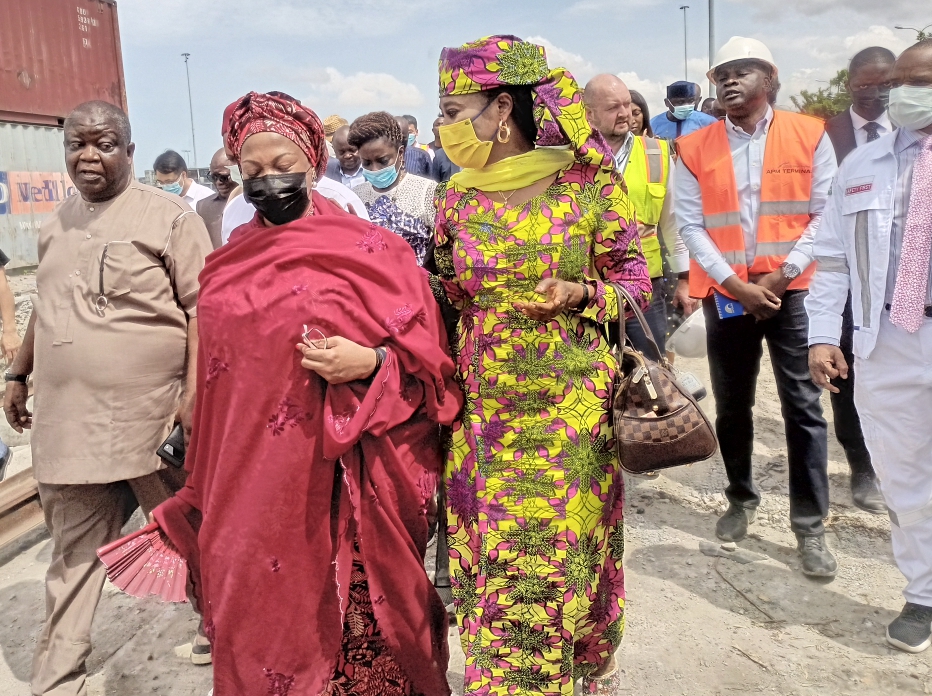
The figures were unveiled as the project launched a stakeholder tour of eight locations: Enugu, Akure, Jos, Ikeja, Badagry, Port Harcourt, Kano and Abuja. Government officials, regulators, private operators and other players across the import-export chain will review progress, raise concerns and help shape the next phases.


The platform has transmitted 4,009 air cargo manifests and 405 sea manifests. It has digitised import licence, permit and certificate processes for SON, NAFDAC, NESREA and NAQS, bringing applications, approvals and payments into one system.

Previously manual processes at NAQS and NESREA are now fully automated, while work is under way to harmonise HS Codes across agencies and Customs, a move aimed at ending classification disputes.
Launched by President Bola Tinubu on April 16, 2024, the NSW replaces fragmented, paper-heavy processes with a single electronic entry point. Traders submit their information once, and the data flows to the relevant agencies.
The expected payoff is substantial. Traders stand to gain lower costs, faster clearance and predictable timelines. Government should see fewer revenue leakages, tighter oversight and better compliance. Both sides benefit from real-time visibility, traceability and auditability.
Phase 2 rollout is scheduled between the fourth quarter of 2026 and the first quarter of 2027.
The next phase will bring in export licences, certificates and permits; Forms NXP and NCX and export manifests; Import Duty Exemption Certificates (IDEC); Free Trade Zone import and export permits; and payments for export licences, permits and certificates.
First-cycle User Acceptance Testing is already running. The NPA and NIMASA are also expected to onboard in the next Phase 1 milestone, deepening the platform’s maritime component.
The governance framework spans the Nigeria Customs Service, Nigeria Revenue Service, NPA, FAAN, CBN, SON, NAFDAC, NAQS, the Nigerian Shippers’ Council and NIMASA. Importers, exporters, manufacturers, freight forwarders, customs agents, shipping lines, airlines, banks and trade associations complete the picture.
Benin, Djibouti and Kenya have already used Single Window systems to speed up clearance, cut cargo turnaround time and ease cross-border trade. Nigeria is now building its own version, tailored to its trade and regulatory environment.
Phase 1 is live, the results are measurable and Phase 2 is gathering pace. Success now depends on sustained institutional commitment and on traders actually embracing the platform.