Nigeria’s Tuna Potential: The Missing Entrepreneurial Link
By Akanbi Williams

Listen to story here
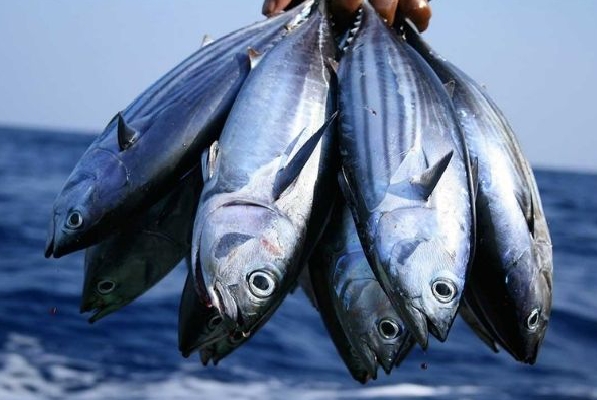
Nigeria’s growing interest in the Blue Economy has renewed attention in the vast opportunities within its marine environment. From maritime transport and coastal tourism to aquaculture, marine biotechnology, and fisheries, the ocean economy is increasingly seen as a strategic route to diversifying the country’s economy beyond oil. Yet, within this broad potential, one area stands out as both promising and underdeveloped: Tuna Fisheries.
This is not because Nigeria lacks tuna resources as studies conducted decades ago confirmed the presence of commercially valuable tuna species in Nigeria’s offshore waters in the Gulf of Guinea. Over the years, individuals and organizations have shown willingness to explore opportunities in industrial tuna fisheries and related seafood value chains, but the real challenge lies elsewhere.


The missing link in developing Nigeria’s tuna fisheries is the lack of strong entrepreneurial capacity to connect scientific research with investment capital. For years, debate about Nigeria’s fisheries sector has centered on finance, infrastructure, and resource availability. Important as these are, they do not fully explain why a country with confirmed tuna resources and interested investors has failed to build a viable tuna industry despite more than four decades of scientific evidence.

The uncomfortable truth is that resources alone do not build industries, entrepreneurs do. Natural resources create opportunities, research provides knowledge, and investors supply capital, but without entrepreneurs who can combine these into functioning businesses, development remains only a possibility. Nigeria’s tuna sector illustrates this clearly.
Tuna fisheries differ sharply from traditional nearshore artisanal fishing with small canoes and simple gear. Industrial tuna operations require specialized vessels, advanced navigation and fish-detection systems, cold storage, export logistics, processing facilities, and strong knowledge of international seafood markets. It is a highly technical, capital-intensive business.
Around the world, successful tuna industries are led by entrepreneurs and firms with strong operational competence and long-term vision. They understand vessel management, international trade rules, fisheries compliance, seafood processing, and global market dynamics. More importantly, they can turn marine resources into profitable value chains.
Nigeria has not yet developed enough entrepreneurs with these capabilities in the tuna sector.
This helps explain why research findings from the early 1980s did not translate into industrial development. Although science confirmed the presence of tuna resources, the country lacked the commercial and entrepreneurial capacity needed to turn that knowledge into an industry.
As a result, investors became cautious because investment decisions depend on confidence, predictability, and operational competence. Investors may be ready to provide funds, but they also need credible operators who can manage risk and deliver results. Without experienced and bankable tuna entrepreneurs, investor interest weakens or disappears.
Potential investors would naturally ask key questions:
Who will manage the vessels?
Who understands industrial tuna operations?
Who can coordinate export logistics?
Who can ensure profitability and sustainability?
Without convincing answers, investor hesitation is inevitable.
This points to a broader lesson for Nigeria’s Blue Economy agenda. Marine industries need more than policy statements and resource assessments; they also require deliberate investment in entrepreneurial ecosystems. For years, the country has emphasized resource potential while paying too little attention to developing the people and institutions needed to commercialize those resources.
That is where Nigeria differs from countries with successful tuna industries. These nations often invested heavily in entrepreneurial development, technical partnerships, fleet management training, seafood business incubation, and public-private industrial strategies. They built environments in which marine entrepreneurs could emerge and grow.
Nigeria has not done enough in this area and as a result, its tuna resources remain largely “unexploited” while foreign fleets operating across the wider Gulf of Guinea continue to dominate industrial tuna harvesting and export markets. If Nigeria is serious about making the Blue Economy a pillar of national economic transformation, this gap must be addressed urgently.
One practical response would be to establish a national tuna fisheries Proof of Concept programme. This pilot initiative would test the technical and commercial viability of industrial tuna operations under Nigerian conditions. Such a programme could involve controlled fishing operations using chartered or leased industrial vessels, alongside scientific monitoring, operational training, and commercial analysis. Its purpose would be to generate real data on catch rates, operating costs, profitability, storage systems, processing needs, and market opportunities.
This approach would deliver several benefits at once; it would update scientific understanding of Nigeria’s tuna resources with modern operational data, give investors evidence-based confidence in commercial viability, and, most importantly, create a platform for building local entrepreneurial and technical capacity.
Nigeria needs more than tuna investors; it needs tuna operators. The country needs a new generation of marine entrepreneurs who can manage industrial fisheries enterprises. Building this capacity will require targeted training in fisheries business management, vessel operations, seafood processing, maritime logistics, export systems, and fisheries governance.
Universities and research institutions also have an important role to play as marine research should move beyond resource assessment alone. Scientific institutions must work more closely with the private sector to produce commercially relevant feasibility studies and industry-focused innovation programmes.
Government policy matters just as much because investors are more likely to commit capital when regulations are transparent and predictable. Clear licensing frameworks, effective monitoring, fisheries compliance systems, and infrastructure support are essential to reducing investment risk. Infrastructure remains another major constraint in that the industrial tuna fisheries cannot operate efficiently without modern fishing ports, cold storage, processing plants, and export logistics facilities. Developing this infrastructure should be part of a broader Blue Economy industrialization strategy.
Financial institutions must also begin to treat marine fisheries as a strategic economic sector rather than a peripheral activity. Dedicated fisheries financing windows, vessel acquisition schemes, and public-private investment partnerships could lower entry barriers for emerging entrepreneurs. Ultimately, the future of Nigeria’s tuna fisheries depends on whether the country can connect three essential elements: scientific knowledge, entrepreneurial capability, and investment capital.
Right now, the weakest link in that chain is entrepreneurship. Nigeria already has marine scientists with decades of fisheries research experience, and there are investors willing to explore the sector if the right conditions are in place. What is missing are capable entrepreneurial operators who can bridge science and finance and turn marine resources into sustainable businesses.
Tuna fisheries development should therefore be seen as more than a fisheries issue. It is also an industrial development challenge, a governance challenge, and above all, an entrepreneurial one. If Nigeria can build this missing entrepreneurial bridge, tuna fisheries could become a major source of jobs, seafood exports, foreign exchange earnings, and Blue Economy growth. But if the gap remains, the country [ continue to see its tuna potential remain largely unrealized while others benefit from the resources of the Gulf of Guinea.
The resources exist, the research is available and potential investors are present. The next step is to build an entrepreneurial engine that can connect them.
Mr. Akanbi Williams is the Director, International Ocean Institute, Nigeria Center (IOI-Nigeria).
Email: abwilliams2@yahoo.com