Nigeria’s Blue Economy Policy Done, Delivery Next: Usoro Calls for Whole-of-Government Push

Listen to story here
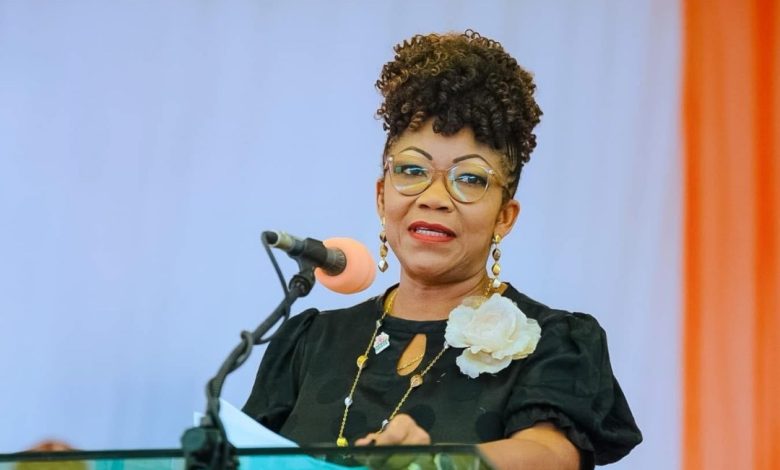
Nigeria has built the house of its Blue Economy but is yet to get everyone living in it. That was the blunt message from Barr. (Mrs.) Mfon Ekong Usoro, Partner at Paul Usoro & Co. (PUC), at the World Maritime Day 2026 celebration in Nigeria on 16 October, organised by the Ministry of Marine and Blue Economy under Minister Dr. Adegboyega Oyetola.
Usoro speaks with rare authority. She led PUC’s legislative advocacy team in drafting the NIMASA Act 2007 on instructions from the Federal Ministry of Transportation, then worked with both Houses of the National Assembly until it became law. She also led PUC’s team in drafting the 2005 Cabotage Regulations on Bareboat Registration and Ship Detention Orders, and served as NIMASA’s pioneer Director-General. Usoro is also a former Secretary General of the Memorandum of Understanding on Port State Control for West and Central African Region (Abuja MoU).


Delivering the keynote on the theme “From Policy to Practice: Strengthening Nigeria’s Blue Economy,” she told maritime stakeholders that they should not “merely recount official milestones or repeat claims of completed implementation.”
Instead, she said, they should “examine and comment on measurable improvements for businesses and communities.”
Two Milestones Down, One Hard Question Left
She credited two foundations: the 2023 creation of the Ministry of Marine and Blue Economy, and the National Policy on Marine and Blue Economy, approved by the Federal Executive Council and made public in 2025 with a ten-year horizon. “Nigeria has entered the delivery phase, beginning in 2026,” she said.
The policy covers five sectors: maritime trade and transportation, fisheries and aquaculture, marine resources and industries, energy and environmental sustainability, and blue tourism and recreation. But Usoro pressed on accountability. “Who is tracking performance against the identified indicators, and can stakeholders access that information?” she asked.
No Single Agency Can Carry the Load
Her answer is structural. “Nigeria should establish, or strengthen if one already exists, an INTEGRATED BLUE ECONOMY ECOSYSTEM FRAMEWORK to support the transition from policy to practice,” she said.
She noted that the policy creates a Policy Advisory Council under the Minister’s chairmanship but says little about who sits on it. She wants a multi-ministerial body written into the policy, naming at minimum the ministers responsible for Transport, Finance, Petroleum Resources, Environment, Budget and Economic Planning, and Defence, alongside the Central Bank of Nigeria, the Maritime Academy of Nigeria, commercial banks and state commissioners. “Experts from the above establishments must be at the drawing table to jointly develop implementation strategies and delivery plans,” she said.
Sections 36 and 37 of the NIMASA Act, which offer non-tariff incentives to eligible national-carrier shipping companies, illustrate the point. “The truth be told, neither NIMASA nor the Ministry can fulfil this mandate alone,” she said, listing the finance, budget, trade, petroleum and justice ministries, the Nigerian Navy, Nigeria Customs Service, Nigeria Revenue Service (NRS) and others as essential partners.
Port performance told the same story. Usoro said available statistics show Nigeria is “not doing well” on port logistics and liner shipping connectivity, both of which influence a ship registry’s appeal. She dismissed cabotage vessel growth as a measure of that appeal because it “is driven by mandatory provision rather than shipowners’ free decisions.”
“NIMASA therefore cannot treat inefficient port logistics as solely NPA’s responsibility, just as NPA cannot treat the growth of nationally owned tonnage as solely NIMASA’s responsibility,” she said.
The root problem is that “Nigeria’s Blue Economy aspirations do not yet appear to be shared national goals.”
She welcomed NIMASA’s apparent return to its flag-State core mandate, saying “we have begun to hear words like competitive, competent ship registration again.”
Her prescription: “Nigeria therefore needs a WHOLE-OF-GOVERNMENT approach that assigns shared responsibility, coordinates implementation, and tracks measurable results.”