|
Getting your Trinity Audio player ready...
|
In a bid to expedite the inclusion of women in the maritime industry, experts have called for the introduction of incentives for Gender-Inclusive maritime organisations in public and private spheres, while recommending penalties for firms where harassment and discrimination thrives.
These were some of the submissions at the 4th edition of Women in Maritime and Shipping Conference organised by Nigerian Chamber of Shipping (NCS), themed: “Charting New Waters: Women Steering Progress in Maritime and Shipping.”
Speaking at the event on Friday, the President of Nigerian Maritime Law Association (NMLA), Mrs. Funke Agbor (SAN), posited that intentional efforts must be deployed via incentives as well as corporate governance approaches to reward maritime organisations ranking high on gender-inclusivity.

Agbor asserted that distinct legislations and policies could be helpful in creating an enabling environment for women in the sector, however, she canvassed for more accountability and responsiveness from all categories of maritime stakeholders on gender issues.

“Regulators like the Nigerian Maritime Administration and Safety Agency (NIMASA) can incentivize companies in the shipping sector such that shipping companies know that part of the regulations will be their level of gender inclusion.
“For shipping companies listed on the Nigerian Stock Exchange, they already have gender inclusion as part of their Corporate Governance requirements, but for others we could we ask how many women are on their boards and their level of gender inclusion. The culture of silence on women issues especially when they are being harassed or victimised must stop,” Agbor said.
In his keynote address, the Director General of NIMASA, Dr. Dayo Mobereola, acknowledged the significant contributions of women in shaping maritime and shipping in the country.
While agreeing that several challenges lie ahead, the NIMASA boss opined that the industry must continue to foster an environment that encourages inclusivity, diversity, and equal opportunities for all to enable economic growth and development.
“Let me reemphasize NIMASA’s committed to promoting gender inclusion and empowering women to take on leadership roles. We recognize that a diverse workforce is essential for driving innovation and growth in our industry,” he said.
In his welcome address, the President of NCS, Mr. Aminu Umar, stated that the event’s theme reflects the Chamber’s commitment to building a more inclusive, resilient, and forward-looking maritime industry where women are not only participants but powerful drivers of innovation, leadership, and sustainable growth.
The veteran ship owner recounted his first encounter with a female marine engineer who he had initially only employed to work as an administrative officer before she convinced him that her sole objective was to work on ship engines – leading to Sea Transport Group recruiting two female cadets as its first set of female seafarers in 2017.
Expressing satisfaction at the quality of work done by women onboard Sea Transport ships across various levels, Aminu revealed that over 20 female seafarers are currently working with the organisation or at varying stages of their training.
Meanwhile, the President of Women in Maritime Organisations of West and Central Africa (WIMOWCA), Barr. (Mrs.) Oritematosan Edodo-Emore, recommended that Nigeria implements the African Union charters advocating for development of women.
“One of the key areas for Nigerian women to explore is the Standards of Training, Certification, and Watchkeeping (STCW) and maritime administration. I visited the Maritime Academy of Nigeria, Oron recently and inspected some of their facilities which are top-class, yet the facilities are grossly underutilised.
“I was dissatisfied to find a small amount of women in the Academy. The solution could be developing young girls in STEM – Science, Technology, Engineering, and Mathematics. There is a need to encourage more girls to be involved in sciences,” she posited.
On her part, the Head of Administration at the Memorandum of Understanding on Port State Control for West and Central African Region (Abuja MoU), Ms. Elozino Eteghrara, suggested that Nigeria reserves a quota for women for recruitment in the maritime sector.
While pointing out that the International Maritime Organisation (IMO) already practices such quota reservation for women, Elozino added that gender-inclusivity could equally be explored as a barometer for accessing the Cabotage Vessel Financing Fund (CVFF).
Reeling out the essence of the summit, the Director General of NCS, Mrs. Vivian Chimezie-Azubuike, observed that the event was in commemoration the International Day for Women in Maritime, May 18th, as designated by the IMO.
She recalled that the 2024 edition of the NCS summit which focused on the mental health of seafarers and safety birthed issues that were explored by the IMO and taken a notch higher via regulations.
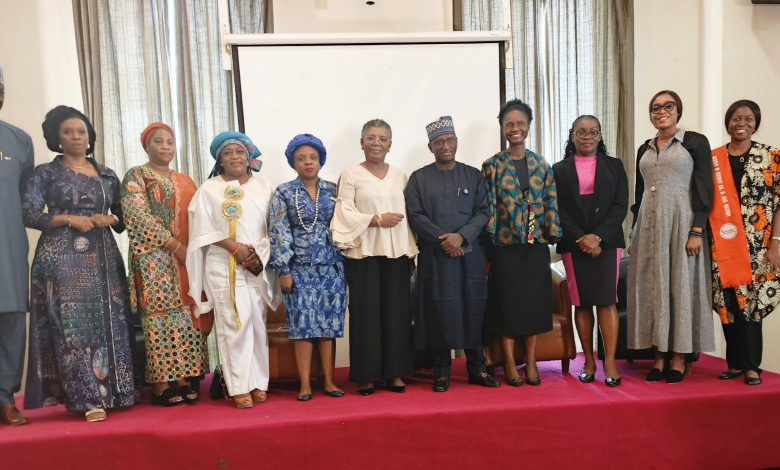
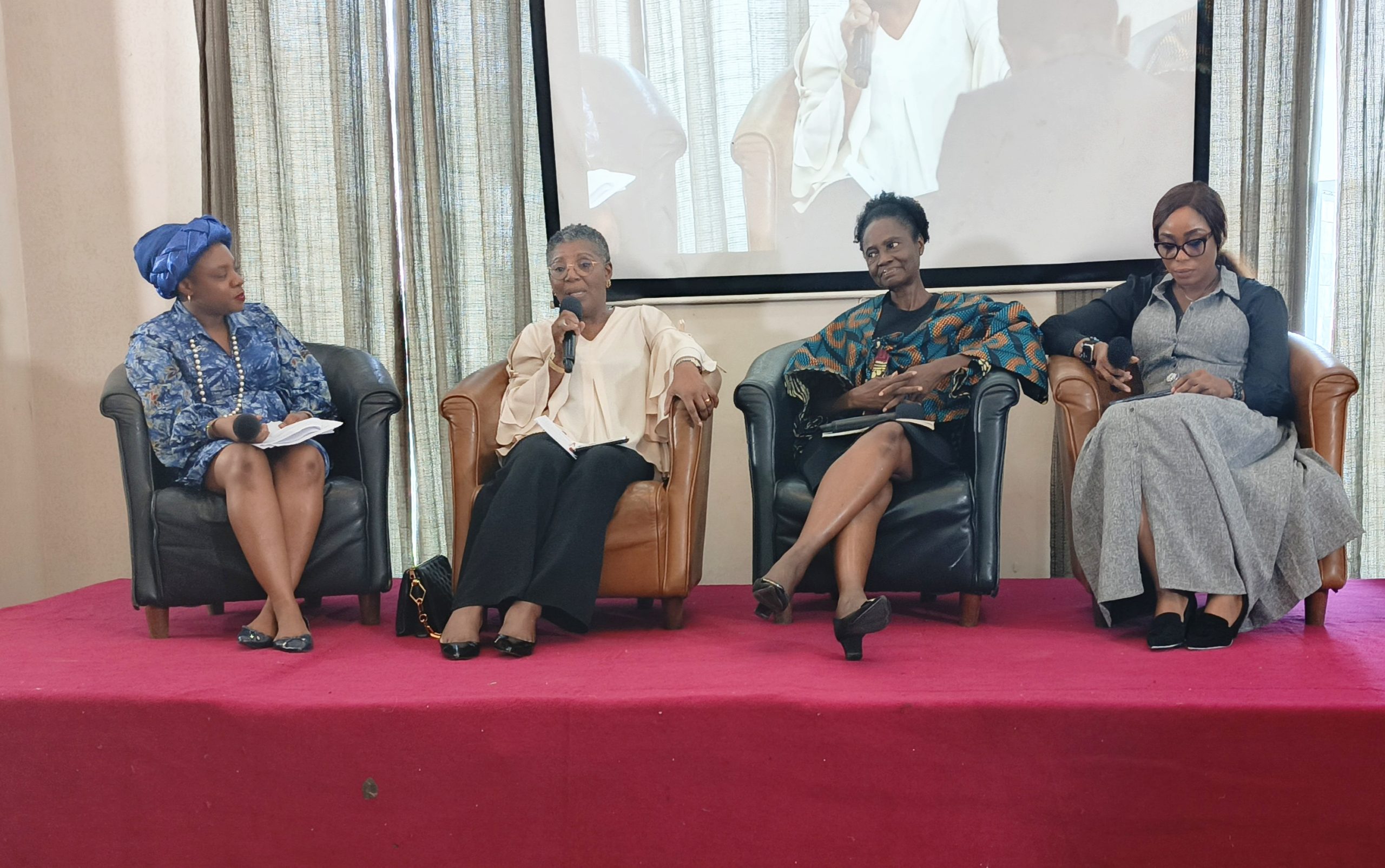
The event featured several quality submissions from leading Nigerian maritime women including the Nigeria’s Continental representative at African Women in Maritime (WIMAFRICA), Mrs. Gloria Kanabe; President of African Marine Environment Sustainability Initiative (AFMESI), Dr. (Mrs.) Felicia Mogo; President of WIMA Nigeria, Mrs. Rollens Macfoy; Managing Director of Starz Investment Limited, Iroghama Ogbeifun; Chairperson, Advisory Board of Women in Maritime and Energy (WIME) Awards, Dr. (Mrs.) Chizoba Anyika.
Other maritime amazons at the summit were; Founder, Ocean Ambassadors Foundation (OAF), Hon. Olaitan Williams; Deputy Director, Trade Services, Nigerian Shippers’ Council (NSC), Adaora Nwonu; Managing Director of Gobel Energy and Logistics, Mrs. Ruth Chukwukezirim; Head of Human Resources at LTT Coastal and Marine Services, Mrs. Theodore Nwaeze; among others.