
Listen to story here
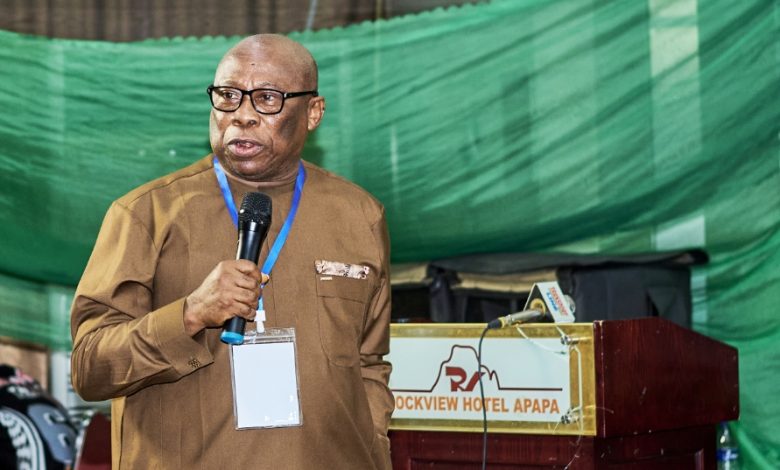
Nigeria’s maritime industry must move quickly from policy announcements to visible results on the quayside, or watch contestable cargo drift to rival West African ports, a Master Mariner and former General Manager, Marine, at the Nigerian Ports Authority, Capt. Iheanacho Ebubeogu, has said.

Ebubeogu spoke at the Annual General Meeting of the Nigerian Association of Master Mariners (NAMM) in Lagos on Saturday, where he presented a paper on the Port Stimulus and Modernisation Policy.


He explained that ports earn their keep from cargo, which falls into two groups. Captive cargo originates from or is destined for a port’s immediate hinterland and stays because alternatives are impractical. Contestable cargo is discretionary freight that moves to competing ports on price or service. It is the second group, he said, that rewards efficiency and punishes delay.
According to him, the risks are real because Nigeria’s legacy ports were built about 70 years ago, and years of underinvestment have left shallow channels, heavy congestion and slow, paper-heavy clearance processes.
High handling costs and delays have already pushed some importers and exporters to neighbouring countries, with significant revenue lost.
Ebubeogu described the nation’s policy response as sound with the National Policy on Marine and Blue Economy developed in 2025.
He cited the $1 billion Port Modernisation Programme, led by the Federal Ministry of Marine and Blue Economy and the NPA, and the Federal Executive Council approvals for the rehabilitation of Apapa and Tin Can Island ports in the west and Warri, Onne, Rivers and Calabar ports in the east. The scope covers dredging to 16 to 18 metres, modern cargo-handling equipment, digitalisation, hinterland links and human capacity building.
He asserted that the industry’s task now is delivery, and linked it to the International Maritime Organization’s 2026-2027 theme, “From Policy to Practice: Powering Maritime Excellence.”
Ebubeogu, however, argued that policy becomes practice when quay walls are rebuilt, the National Single Window is enforced, dry ports open and cargo turnaround times fall and clearance time is achieved under 48 hours.
To keep cargo in the country, he said, ports must offer the attributes shippers look for: operational efficiency, deepwater access, competitive tariffs, reliable road and rail links, fast Customs clearance, strong safety records and regulatory compliance.
For the eastern ports, he recommended round-the-clock pilotage, stronger security and better road access to help them compete for cargoes currently concentrated in Lagos.
Ebubeogu also pointed to the African Continental Free Trade Area (AfCFTA) as a prize for ports that deliver, stressing that tariff cuts alone will not move goods because infrastructure does.
He urged operators to invest in transhipment services, bunkering, ship repair and fresh water supply to turn ports into one-stop maritime hubs.
He acknowledged that execution will bring challenges, including temporary berth losses and congestion during construction, and called for coordinated phasing and clear mitigation plans among regulators and concessionaires.
The master mariner maintained that if delivery matches intent Nigerian ports will earn the reputation and performance to secure their fair share of contestable cargo and position the country for the AfCFTA regime.


