Listen to story here
The Nigerian Maritime Administration and Safety Agency (NIMASA) has reaffirmed the Federal Government’s commitment to using the Cabotage regime to deepen indigenous capacity and expand Nigerian participation in the maritime industry.
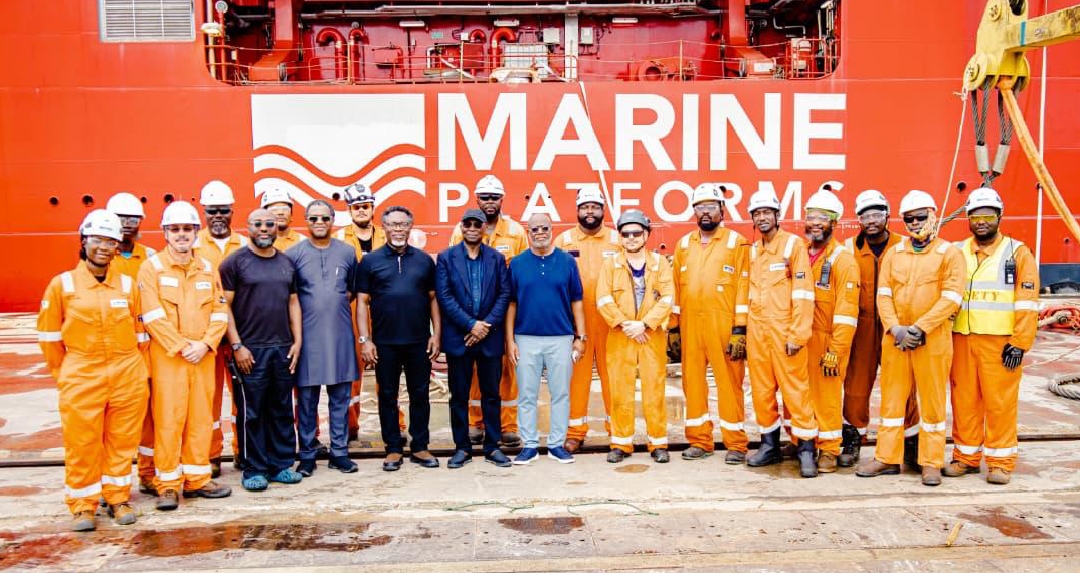
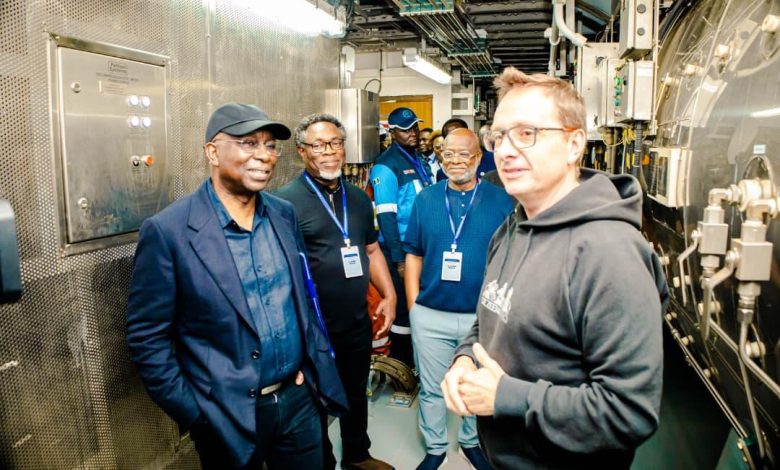
The Director-General of NIMASA, Dr. Dayo Mobereola, stated this during a tour of Marine Platforms Limited’s African Pioneer Lagos vessel, an offshore Diving Support Vessel (DSV) operating under the Nigerian flag.


Mobereola said vessels owned and operated by Nigerian companies should receive priority in domestic maritime operations, stressing that strengthening the Nigerian Ship Registry was central to developing a competitive indigenous fleet.
“I’m quite happy at what I have seen today after the tour of this 8,000 metric tonnes African Pioneer Specialised Vessel. A vessel such as this flying the Nigerian flag should have priority over any foreign vessel,” he said.
According to him, NIMASA is automating the Nigerian Ship Registry to make it more attractive to shipowners and encourage more vessels to register and operate under the Nigerian flag.
The African Pioneer Lagos, with IMO Number 9808613, is approximately 143 metres long with a deadweight of about 8,000 metric tonnes. The specialised offshore vessel supports deepwater subsea construction, diving, inspection and offshore oil and gas operations.
The NIMASA chief said the vessel demonstrated the level of capability that Nigerian-owned maritime companies could develop when domestic policies, regulation and industry investment work together.
His comments come against the backdrop of efforts to strengthen implementation of the Coastal and Inland Shipping (Cabotage) Act and increase Nigerian participation in shipping and offshore activities.
Chief Executive Officer of Marine Platforms Limited, Mr. Taofeek Adegbite, said the company had benefited significantly from the Cabotage regime and the Nigerian Oil and Gas Industry Content Development Act.
Adegbite said Marine Platforms had remained committed to flying the Nigerian flag since acquiring its first vessel, MT African Vision, in 2012.
“Since 2012, when we got our very first vessel, MT African Vision, we are happy and proud to say NIMASA’s Cabotage Regime and the Nigerian Content Development and Monitoring Board Act has played a major role in ensuring that our vessels have contracts on a regular basis,” he said.
He urged more Nigerian shipowners to register their vessels locally, saying the Nigerian flag could serve as an important platform for developing indigenous maritime manpower and expanding the country’s presence in specialised shipping.
Adegbite, however, called for a classification framework that gives special attention to crews operating large and specialised vessels, arguing that such measures could encourage more owners of high-capacity vessels to fly the Nigerian flag.
He commended NIMASA for its support and said the African Pioneer Lagos demonstrated that Nigerian companies and professionals could operate sophisticated maritime assets to international standards.
Beyond fleet ownership, Adegbite said Nigeria should identify areas of maritime specialisation where it could build globally competitive capabilities.
He cited the Philippines’ reputation in seafaring and Norway’s strength in shipbuilding as examples of how countries have developed specialised maritime competencies, stressing that Nigeria could similarly build a globally recognised niche.
The development of indigenous shipping capacity has implications beyond vessel ownership, including employment, seafarer development, technology transfer, maritime services and retention of value within the Nigerian economy.