
Listen to story here
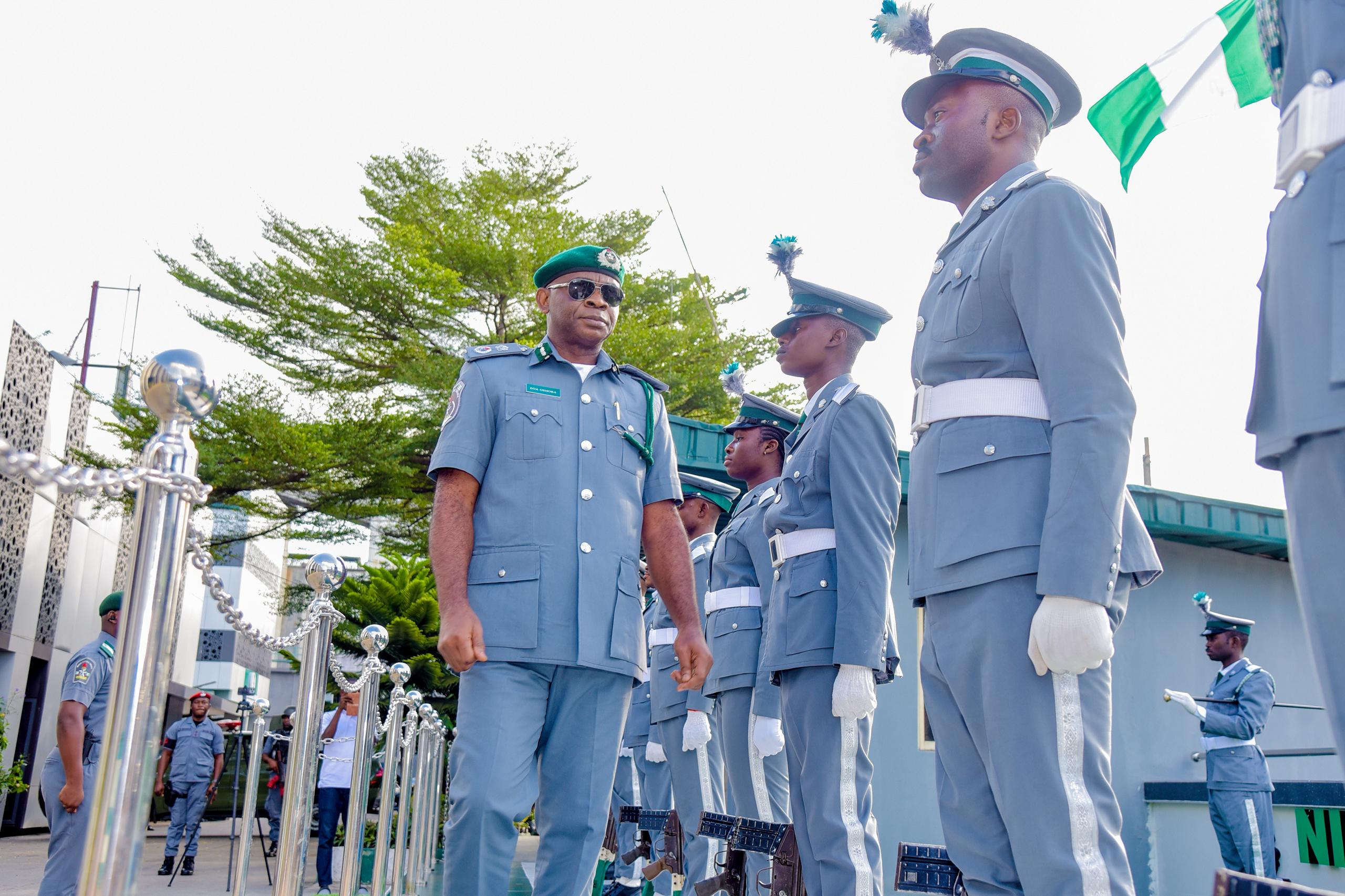
Comptroller Emmanuel Oluwadare Oshoba has retired from the Nigeria Customs Service after 35 years, leaving Apapa Area Command with record revenue, major drug seizures and a deeper reliance on technology.
In just over a year at the helm of Nigeria’s busiest Customs formation, he pursued intelligence-led enforcement and trade facilitation together, arguing they were two sides of the same responsibility, not competing goals.


Leadership Through People
Oshoba joined the Service in 1991. Before becoming Customs Area Controller, he served as Controller, Risk Management at Customs Headquarters; Controller, Special Duties; and Controller in charge of the Customs Intelligence Unit. That background gave him a broad grasp of revenue, enforcement, risk and intelligence operations.
When he assumed office at Apapa in September 2025, he already knew many of the officers and stakeholders he would lead. “The most important thing when you assume any office is getting familiar with the personnel working with you,” he said in an October 2025 interview.
His early months were marked by extensive stakeholder engagement. He reached out to traditional rulers, port police, freight forwarders, licensed Customs agents and industry groups, saying modern Customs administration cannot work in isolation. He described that engagement as central to coordinated border management, arguing the Service needed synergy with the business community and other government agencies to achieve its objectives.
Discipline came with it. In May 2026, he warned officers against delaying duly exited consignments and told them to protect the Service’s reputation, stressing professionalism, integrity and respect for stakeholders.
Record Revenue
Within days of his arrival, the command recorded N20.1 billion in a single day, its highest daily collection under the Unified Customs Management System at the time.
By the end of 2025, Apapa had generated N2.93 trillion, a 24.32 per cent increase over the N2.36 trillion recorded in 2024. Oshoba credited disciplined manpower, strategic use of technology and improved compliance, and resisted presenting the result as a personal triumph. Invoking Isaac Newton’s metaphor of standing on the shoulders of those who came before, he acknowledged that his predecessors had prepared the ground. “All I’ve done was just a little fine-tuning here and there,” he said.
The records continued in 2026. In July, Apapa collected N323 billion, its highest monthly figure at the time, surpassing the N304 billion recorded in October 2025. On August 18, it generated N28.102 billion within 24 hours, beating the earlier N20.1 billion single-day record.
Oshoba said the significance went beyond the amount, noting that Customs revenue funds infrastructure, security, education, healthcare and other public priorities. The figures coincided with a sharper focus on compliance, intelligence-led interventions, digital processes and faster cargo clearance.
Technology and Enforcement
The B’Odogwu Unified Customs Management System became central to cargo processing, while the One-Stop Shop was deployed to cut duplication and delays. The Authorised Economic Operator programme expanded to more than 200 beneficiaries in 2026, and Oshoba linked it to faster clearance for compliant traders and better trade facilitation.
The most visible addition was the drive-through scanner. Oshoba said it could process about 200 containers per hour and described it as capable of transforming cargo examination at Apapa. By September 2026, he reported that the command had moved toward universal scanning, with consignments scanned before reaching terminals and records kept for audit.
For an officer whose background lay in intelligence and risk management, the shift from physical examination to data, scanning and risk-based intervention was a natural extension of his approach.
Facilitation did not soften the command’s stance on prohibited cargo. In 2025, it intercepted 53 containers of illicit drugs and other prohibited items with a combined Duty Paid Value of N12.63 billion.
In January 2026, Customs and the National Drug Law Enforcement Agency seized 347.5kg of Canadian Loud concealed in a vehicle. Oshoba cited the operation as proof of the value of intelligence sharing and inter-agency collaboration. “We remain vigilant and resolute in the discharge of our duty to protect our society and national security,” he said.
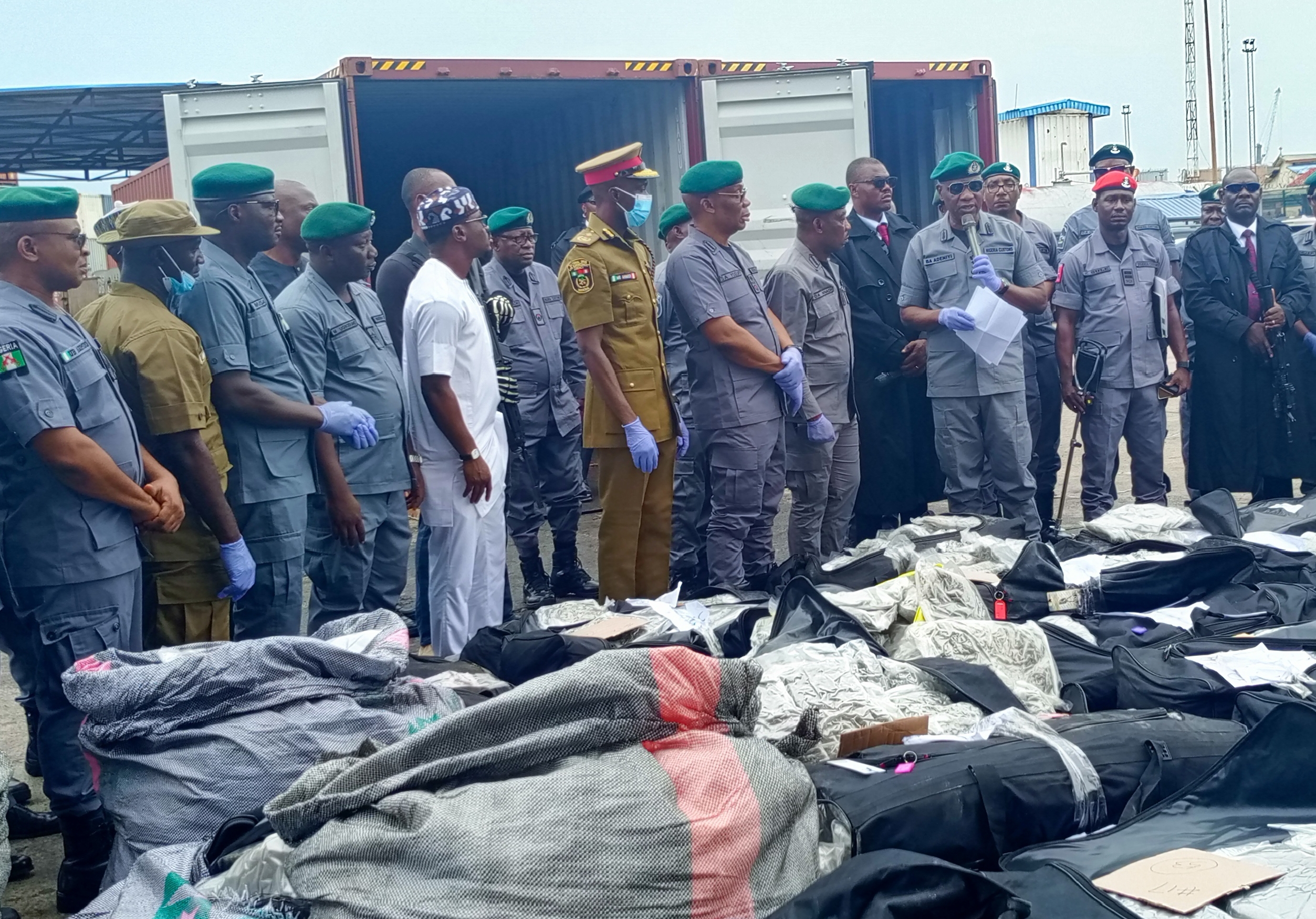
In September 2026, Customs intercepted 12 containers of cannabis, codeine syrup, security-sensitive drones, used clothing and expired products, with a reported Duty Paid Value of N43.6 billion. His position stayed consistent: legitimate trade would be facilitated, but prohibited goods would be stopped.
A Legacy Beyond the Numbers
Oshoba’s message to officers was consistent: obey lawful instructions, protect the Service’s reputation, stay accessible to stakeholders and deliver results. His message to traders was that Customs is open for business, but compliance is the price of predictable trade.
He credited his predecessors, officers, stakeholders and Customs management for the command’s achievements, attributing them to institutional reform, technology and compliance rather than individual effort.
His legacy at Apapa is the case that revenue, enforcement and trade facilitation can be pursued through the same architecture, provided technology is embraced, officers stay disciplined and stakeholders are treated as partners. After 35 years, it will be reflected in the systems strengthened, relationships built and standards upheld, a record of stewardship as much as service.