Listen to story here
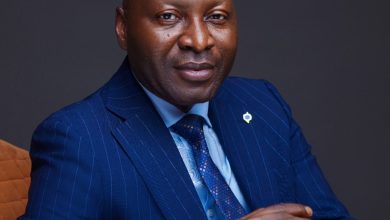
Nigeria is about 90 years behind other countries in the development and professionalisation of its road transport sector, President of the Chartered Institute of Transport Administration (CIOTA), Dr Segun Obayendo, has said.
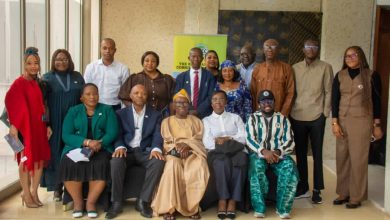
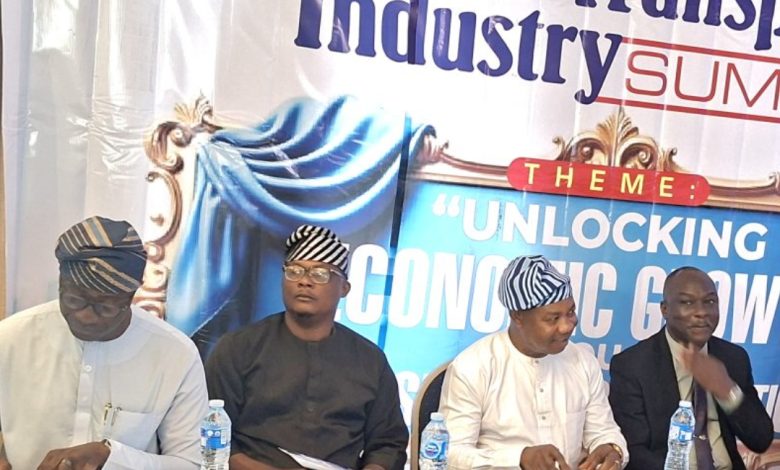
Obayendo, who is also Technical Assistant on Transportation, Logistics and Innovation to the Office of the Vice President, made the assertion while delivering the guest lecture at the 2026 Transport Correspondents Association of Nigeria (TCAN) Summit, themed “Unlocking Nigeria’s Economic Growth Through Transportation Logistics.”


According to him, several countries in Europe and Asia established policies regulating and professionalising road transportation more than 90 years ago, leaving Nigeria with a substantial institutional and professionalisation gap to close.
He, however, stated that the Federal Government’s transportation reform agenda must therefore move beyond policy pronouncements to the development of a properly structured, professional and standardised road transport industry.
Obayendo opined that President Bola Tinubu’s experience in Lagos partly explains the administration’s emphasis on transportation, noting that Lagos had consistently placed transportation high on its development agenda.
He recalled that Tinubu, as Lagos State governor in 2003, established the institutional framework that produced the Lagos Metropolitan Area Transport Authority (LAMATA), describing it as a model whose achievements are now recognised beyond Nigeria.
“It is a pity that as a country, as we speak today, only three states are proud to say that they have established a metropolitan transport authority, and none has come close to the strides that had been achieved in Lagos,” he said.
The CIOTA president stressed that transportation is a shared responsibility involving the federal, state and local governments, arguing that public discourse has often focused disproportionately on what the Federal Government has failed to do.
He said the administration was changing that narrative through initiatives including compressed natural gas (CNG) deployment and conversion centres.
Obayendo said road transport facilitated about N157 trillion in movement in 2025 but contributed only about 1.5 per cent to Nigeria’s GDP, which he attributed largely to the sector’s informality and the difficulty of tracking economic activity within it.
He called for the establishment of LAMATA-like metropolitan transport authorities across the 36 states, arguing that professional management, capacity building and standard operating procedures would make the sector more attractive to investors and financiers.
Obayendo also called for a national land transport policy to provide a coherent structure for the sector, adding that orientation on the proposed policy would commence soon.
Also speaking at the summit, the Minister of Marine and Blue Economy, Adegboyega Oyetola, said the cost, speed, reliability and predictability of moving goods have direct implications for investment, production, trade and employment.
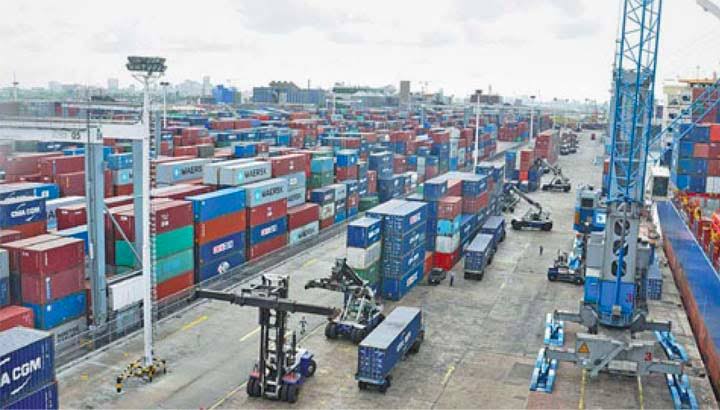
Represented by Paul Ganuwa, Director of Inland Transport Services at the Nigerian Ports Economic Regulatory Agency (NPERA), Oyetola said Nigeria could not improve port performance without addressing the wider logistics chain connecting ports with roads, rail, warehouses and distribution networks.
He disclosed that, with President Tinubu’s approval, the Ministry was preparing to commence what he described as the country’s most ambitious seaport modernisation programme in more than five decades.
The programme covers Apapa and Tin Can Island ports in Lagos, Onne Port, Rivers Port, Calabar Port and Warri Port, with planned investments in quay-wall reconstruction, channel deepening, cargo-handling equipment and digitalisation of terminal and gate operations.
According to him, the objective is to expand capacity, reduce vessel and cargo-handling delays and lower unit logistics costs.
Oyetola also highlighted the United States Coast Guard’s August 2026 removal of Conditions of Entry on vessels arriving from Nigeria after 12 years of additional security requirements. The USCG formally removed Nigeria from its Port Security Advisory effective August 19, 2026, following assessments that Nigeria was maintaining effective antiterrorism measures at its ports.
He said the Ministry was also working with sub-national governments and private investors on deep-seaport developments in Akwa Ibom, Bayelsa, Cross River, Ogun, Ondo and Rivers states.
Oyetola described the Nigeria Ports Economic Regulatory Agency Act 2026 as another important reform, saying the new framework would strengthen regulation of tariffs and charges, service standards, competition and protection of port users.
Meanwhile, the General Manager of the Lagos State Waterways Authority (LASWA) and Special Adviser to Governor Babajide Sanwo-Olu on Blue Economy, Oluwadamilola Emmanuel, underscored the importance of water transportation to Lagos.
Emmanuel said more than 135 hard-to-reach communities across Lagos made an efficient waterways transportation system essential to connectivity and economic activity.
He traced the evolution of water transportation in the state, from the era of wooden boats to the deployment of modern vessels, while outlining a future shaped by digitalisation and smarter water transport systems.
The Nigerian Railway Corporation (NRC) Managing Director, Dr Kayode Opeifa, represented by his Special Adviser, Media, Yinka Aderibigbe, said Nigeria needed an integrated transport network in which rail, road, maritime, inland waterways and aviation complemented rather than operated in isolation from one another.
He said rail could ease pressure on highways, reduce logistics costs and facilitate the movement of agricultural produce, petroleum products and containers, noting that the corporation was strengthening freight operations and connections to seaports, inland dry ports and industrial centres.
On infrastructure financing, Opeifa said government alone could not provide all the investment required and urged greater private-sector participation in rolling stock, freight terminals and logistics hubs.
Earlier, the President of TCAN, Tola Adenubi, said transportation should be regarded as the backbone of economic activity because every product consumed or used in Nigeria has a transportation story.
“We need a balanced transportation network in which roads, railways, aviation and waterways complement one another,” the TCAN President said.