Listen to story here
Maritime experts have called for the establishment of a dedicated Coastal Resilience Fund to finance coastal protection, infrastructure development and community empowerment, amid concerns over poor living conditions and inadequate social amenities in Nigeria’s coastal communities.
President of the Maritime Arbitrators Association of Nigeria (MAAN), Chief Jean Chiazor Anishere SAN, made the call while delivering the keynote address at the 4th Ehingbeti Maritime Hub Summit in Lagos, where she also urged Nigeria to explore international funding support from climate funds and multilateral organisations to scale development across coastal communities.

Anishere asserted that Nigeria’s blue economy could only deliver sustainable prosperity if supported by effective governance, stressing that the country must create the legal and institutional conditions required for innovation, investment and sustainable exploitation of marine resources.
She equally stressed that the regulatory system must provide certainty, security and flexibility for investors while remaining environmentally responsible and inclusive of coastal populations.
According to the Learned Silk, the future of Nigeria’s blue economy must be anchored on three pillars; security, sustainability and governance, while urging stakeholders to implement waste-management infrastructure and sustainability initiatives that directly benefit local communities.
Anishere also called for greater public education on recycling, sustainable fishing practices and environmental stewardship, as well as stronger private-sector participation in coastal development.
According to her, sustained investment in coastal resilience would strengthen infrastructure, protect livelihoods and create the conditions for communities to participate meaningfully in the emerging blue economy.
Representing Lagos State Governor, Mr Babajide Sanwo-Olu, the Permanent Secretary, Lagos State Ministry of Tourism, Arts and Culture, Mrs Bopo Oyekan-Ismaila, said although Ehingbeti’s history is closely associated with Lagos Island, no part of the state would be left behind in the government’s plans to develop the blue economy.
She said the state remained committed to an inclusive approach that brings stakeholders together to maximise the opportunities presented by Lagos’ waterways.
According to her, the Governor encouraged participants to collaborate at the summit and produce a communique capable of advancing the blue economy agenda of Lagos State.
Convener of the summit, Hon. Olaitan Violet Williams, said the Ehingbeti Maritime Hub was established in 2023 to trace the historical roots of maritime activities in Lagos, noting that Ehingbeti represented an important chapter in the evolution of Lagos from its early trading history to modern-day Eko.
Williams said her research into the history of Lagos revealed the strong connection between the city’s traditional institutions and maritime commerce, including the collection of Wharf Landing Fees.
She said the advocacy for a dedicated maritime ministry had also yielded results with the establishment of the Federal Ministry of Marine and Blue Economy, which, she noted, provides an opportunity for Nigeria to diversify beyond oil.
Williams described inland waterways as one of the low-hanging fruits of the blue economy, stressing that maritime development begins with effective utilisation of inland waterways before extending into the wider ocean economy.
Williams said stronger legal protection for investors and greater attention to coastal communities were necessary to unlock investment in the sector, adding that the estimated 10,000 kilometres of waterways in Nigeria could not deliver their full potential if they remained largely unnavigable.
Chairman of the occasion and Board Chairman of the NIWA Governing Board, Alhaji Mukhtar Shehu Shagari, represented by a board member, Capt. Tajudeen Alao, commended Williams for her passion and commitment to the development of the marine and blue economy. He said consideration for coastal communities was critical to ensuring sustainable implementation of blue economy policies.
Shagari said an appropriate legal framework for developing Nigeria’s littoral states, coupled with deliberate attention to coastal populations, would strengthen the country’s ability to translate blue economy policies into sustainable development outcomes.
Representing the Flag Officer Commanding, Western Naval Command, Rear Admiral Abubakar Mustapha, Rear Admiral NC Okon said “sea blindness” had hindered Nigeria from fully harnessing the potential of its maritime domain.
He opined that collaboration among stakeholders was essential because a thriving blue economy could not exist amid insecurity, environmental degradation, illicit activities and regulatory uncertainty.
Okon called for stronger regulation, effective enforcement of existing maritime laws and continuous review of legislation to address emerging security and economic challenges.
He, however, assured that the Nigerian Navy remained committed to providing the secure maritime environment required for commerce, investment and sustainable exploitation of Nigeria’s maritime resources.
He added that maritime security was a collective responsibility requiring government agencies, coastal communities and development partners to work together to protect the marine environment.
Chairman of the Nigerian Council of Registered Insurance Brokers (NCRIB), Ekeoma Ezeibe, tipped insurance as critical to protecting the investments and infrastructure required to develop Nigeria’s maritime hub and wider blue economy.
She argued that maritime assets and businesses must be adequately insured to provide assurance against the multiple risks associated with the sector.
Ezeibe said the new insurance legislation had strengthened protection for practitioners and expanded opportunities within the insurance industry.
She added that the recapitalisation of insurance companies and the presence of strong reinsurance capacity had created a more supportive environment for insurance to contribute to the development of Nigeria’s marine and blue economy.
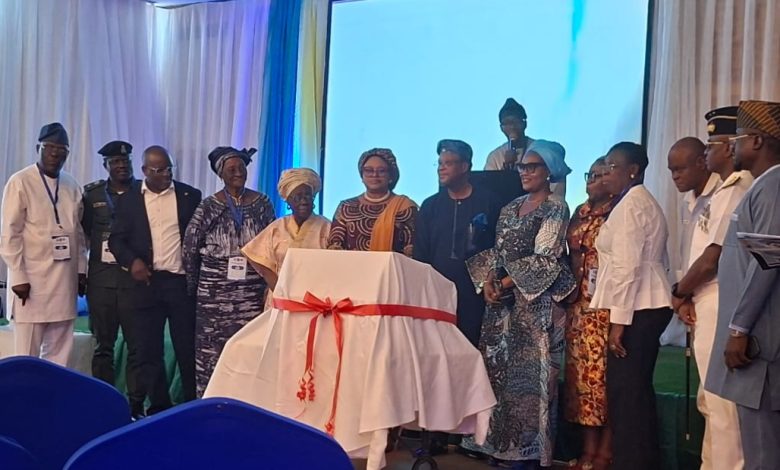
The summit also featured the official launch of the 28 Inland Waterways Investment Jigsaw, an investment-focused initiative designed to highlight and unlock viable opportunities across Nigeria’s inland waterways and provide a structured pathway for private-sector participation in the development of the sector.
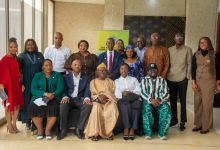
Several royal fathers and eminent maritime personalities graced the occasion including; Lagos Area Manager, NIWA, Engr. Sarat Braimah; the Special Adviser to the Lagos State Governor on Blue Economy, Mr. Oluwadamilola Emmanuel; President of Women in Maritme Organisations of West and Central Africa (WIMOWCA), Mrs. Oritsematosan Edodo-Emore; President of Women in Maritme Africa (WIMA) Nigerian Chapter, Mrs. Theodora Nwaeze; among others.