
Listen to story here

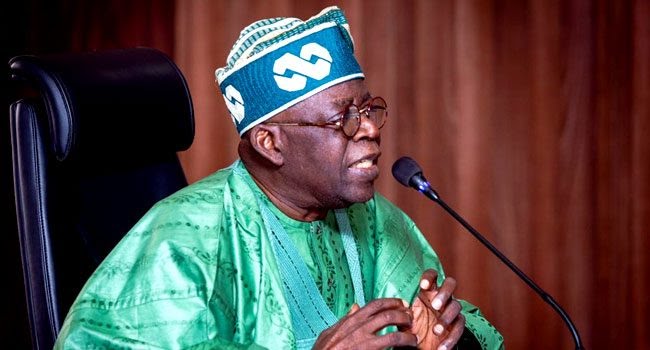
President Bola Tinubu has assented to the Nigerian Ports Economic Regulatory Agency (NPERA) Bill, 2026, paving the way for the establishment of a dedicated economic regulator for Nigeria’s port sector.
The development marks a major milestone in efforts to create a statutory framework for regulating tariffs, charges, competition and commercial activities across the nation’s ports.


The Executive Secretary and Chief Executive Officer of the Nigerian Shippers’ Council (NSC), Dr. Pius Akutah, disclosed the presidential assent in a post on his Facebook page.

Akutah expressed appreciation to President Tinubu, writing: “Nigerian Port Economic Regulatory Agency Act, 2026. Thank you Mr. President for making it a reality.”
The Minister of Marine and Blue Economy, Adegboyega Oyetola, also welcomed the development, describing the new legislation as a landmark step towards strengthening economic regulation and improving efficiency in Nigeria’s port industry.
According to Oyetola, the Act will provide a dedicated, robust and independent economic regulator with powers covering tariffs, port charges, competition, licensing and the resolution of commercial disputes.
He said the legislation would promote greater certainty, transparency and efficiency in the port sector while supporting the Federal Government’s ambition to build a globally competitive maritime economy.
The minister commended President Tinubu for what he described as visionary leadership and commitment to transforming the maritime sector and unlocking the potential of Nigeria’s Blue Economy.
The journey towards a statutory port economic regulator has spanned several years, particularly following the concession of Nigeria’s ports.
In 2014, the Federal Government designated the NSC as the interim economic regulator of the ports pending the enactment of a substantive law.
However, the absence of a dedicated Act meant that the Council operated largely on the basis of government policies and regulations while carrying out its economic regulatory functions.
The new Act is expected to give stronger legal backing to regulation in critical areas including tariffs, rates and charges, competition, licensing of port service providers and the settlement of commercial disputes.
Akutah had previously described the NPERA framework as a transition towards a more structured and efficient port regulatory regime, with an independent regulator empowered to enforce its decisions.
The legislation nevertheless faced significant hurdles before securing presidential assent.
Earlier versions of the Bill generated concerns among stakeholders and maritime agencies over potential duplication of responsibilities, particularly between the proposed regulator, the Nigerian Ports Authority (NPA) and the Nigerian Maritime Administration and Safety Agency (NIMASA).
Stakeholders had called for a clear delineation of mandates to prevent regulatory conflicts and overlapping functions within the maritime sector.
The Bill was initially passed by the National Assembly and transmitted to the Presidency, but President Tinubu withheld assent after concerns were raised over some of its provisions.
The National Assembly subsequently revisited the legislation, addressed the identified issues and passed an amended version in April 2026.
With presidential assent now secured, attention is expected to shift to the establishment of NPERA and the operationalisation of the new regulatory framework.
The agency’s emergence could have far-reaching implications for terminal operators, concessionaires, shipping companies, freight forwarders and other port users, particularly in the areas of charges, market competition, licensing and commercial disputes.
The establishment of NPERA also represents a significant step in the Federal Government’s broader port reform agenda, with stakeholders watching closely to see how the new regulator will reshape economic regulation and improve the competitiveness of Nigerian ports.