
Listen to story here
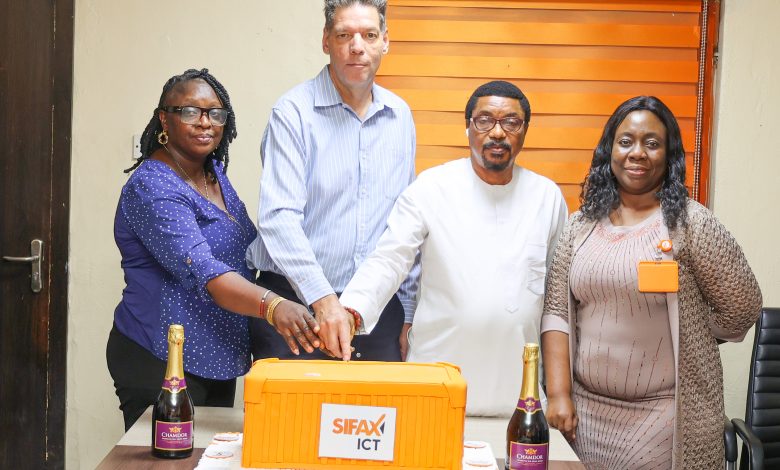
SIFAX Shipping Inland Container Terminal (ICT) Limited, a subsidiary of SIFAX Group, has marked its fifth anniversary with a celebration of innovation, resilience, and remarkable transformation from a swampy site into a world-class logistics hub.

At an event held at the company’s Lagos terminal, management, staff, and partners reflected on the journey that began in 2020, when the terminal was established to help decongest the Apapa ports.

Speaking at the event, Managing Director, Mr. Paul Linden, described the transformation as a product of vision and teamwork.
“When we started, the ground was soft, there was no quay, and only a few warehouses. But we saw potential,” he said. “Today, SIFAX ICT stands as a fully functional, modern terminal that reflects years of consistent investment and innovation.”
Linden highlighted key milestones in the terminal’s evolution, including the launch of its first barge operation in December 2020, extensive floor reinforcement, and the installation of Rubber Tyred Gantry (RTG) cranes — a rare feature among inland depots in Nigeria.
“The transformation has been incredible,” he added. “We are now completing the final phase of our 15,000-square-metre upgrade to bring the entire terminal up to full international standards.”
He noted that the facility has grown from 46,000 square metres in 2020 to over 82,000 square metres today, now operating two terminals — A and B. “The vision is driven by a competent, motivated workforce that continues to push boundaries,” he said.
Also speaking, the Chief Security Officer, Mr. Cashmir Ihedioha, credited strong collaboration with regulatory agencies such as NIMASA, NPA, and the Lagos State Task Force for transforming the facility into a safe and efficient operation.
“We implemented a structured traffic system and installed 69 CCTV cameras for 24-hour surveillance,” he said. “The terminal is fully compliant with the International Ship and Port Facility Security (ISPS) Code.”
Looking ahead, Linden revealed plans to construct a quay wall that will enable direct vessel calls and reduce pressure on congested seaports.
“We’ve secured approval for direct vessel operations. Once completed, this project will redefine how inland terminals operate in Nigeria,” he stated, adding that the company is transitioning its handling equipment to gas-powered alternatives for cleaner, greener operations.