Listen to story here

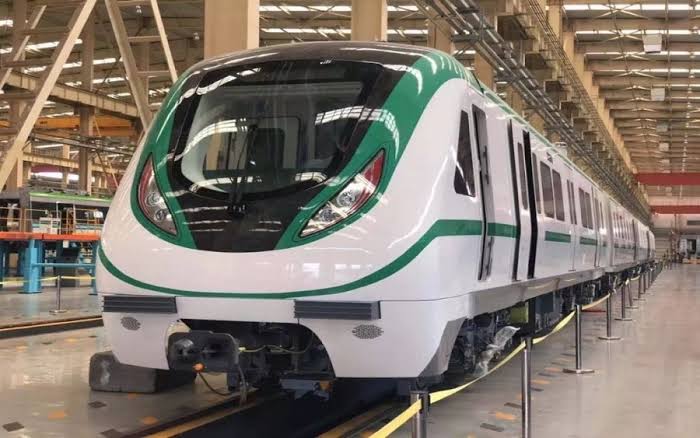
Eight months after the Federal Government suspended train operations on the Abuja-Kaduna railway following terrorist attack, the Nigerian Railway Corporation (NRC) has reopened the train route today.
The News Diet observed that the online ticket portal for Abuja-Kaduna rail services was opened on Saturday as passengers booked ahead of the resumption date scheduled on Monday(today).


This is coming a week after the Minister of Transportation, Mu’azu Sambo, announced the extension of the train services.

News correspondents who visited the Idu rail station on Sunday, revealed that staff of the Corporation were seen at the station with some engineers who were working on the escalator.
“The government has opened the portal and some people have bought tickets already. I see a few seats remaining, but even some coaches have been taken.”
Recall that terrorists attacked the Abuja-Kaduna train on March 28, 2022, kidnapping 168 passengers and killing eight others; however, the release of the victims has been in batches since then, with the last 23 freed in October.
A reliable source within the Idu rail station told our correspondent that there was a closed-door meeting among officials from the Ministry of Transportation at Idu rail station on Sunday. However, the source failed to disclose the subject of discussion.
“Some people from the ministry are here in a meeting, “the source said.
According to a statement by NRC obtained by our correspondent in Abuja, the first train will depart Rigasa station in Kaduna to Abuja by 8:00am while the first train in Abuja will depart Idu station train to Kaduna by 9:45 am.
The statement also revealed that as part of the security measures put in place, it would be mandatory for every passenger to present their National Identification Number and a valid boarding ticket before they could board a train, adding that purchase of tickets by proxy was limited only to minors and specific number of adult passengers.
“Online and mobile app ticketing will be available from 8:00am today, December 4, 2022, while the ticket offices at the train stations will open from 6:30am tomorrow, “the statement added.