Listen to story here
The Comptroller-General of Customs, Bashir Adewale Adeniyi, has said the proposed Bakassi Deep Sea Port and modernisation of strategic border corridors will unlock Cross River State’s economic potential, boost regional commerce and reposition the state as a gateway for international trade.
Adeniyi, who spoke at the 6th AfSNET Investment Conference 2026 in Calabar, said the developments could restore Cross River’s historic position as one of Nigeria’s foremost commercial hubs.

He described the groundbreaking ceremony for the proposed port as a significant milestone, recalling that Calabar once hosted Nigeria’s busiest Customs port and had a trading history spanning approximately a century.
He also highlighted the state’s contribution to the Nigeria Customs Service, noting that the country’s first indigenous and longest-serving Comptroller-General hailed from Calabar.
The Customs boss, however, stressed that infrastructure development must be accompanied by operational reforms to eliminate trade bottlenecks and maximise economic benefits.
He disclosed that the Service had conducted a Time Release Study to establish how long it takes to process consignments at the ports and identify areas requiring improvement in cargo clearance.
Adeniyi also identified effective One-Stop Border Posts at Mfum-Ekok and Seme as critical to eliminating duplicate examinations and reducing delays. He said proper implementation could increase trade volumes by as much as 70 per cent.
He explained that modernising the corridors would require supporting facilities, including warehouses, storage infrastructure, weighbridges and scanners, to improve cargo handling and border management.
According to him, the Service had studied successful border management models in other countries and was confident that proven practices could be adapted to Nigeria’s operating environment.
He further emphasised the importance of non-intrusive inspection technology, particularly scanners, in facilitating legitimate trade, reducing unnecessary physical examinations and strengthening enforcement against smuggling.
On trade compliance, Adeniyi disclosed that the Authorised Economic Operator (AEO) programme had facilitated the recovery of approximately N200 billion through improved compliance.
He acknowledged the support of the African Export-Import Bank (Afreximbank) in advancing trade development and modernisation initiatives, while calling for stronger partnerships among government institutions, financial organisations and private-sector operators.
The Customs CG maintained that government alone could not provide all the resources required to create sustainable wealth, urging greater private-sector participation in developing trade infrastructure and unlocking investment opportunities.
He added that Customs administrations must balance trade facilitation with effective enforcement to prevent smuggling and other illegal activities.
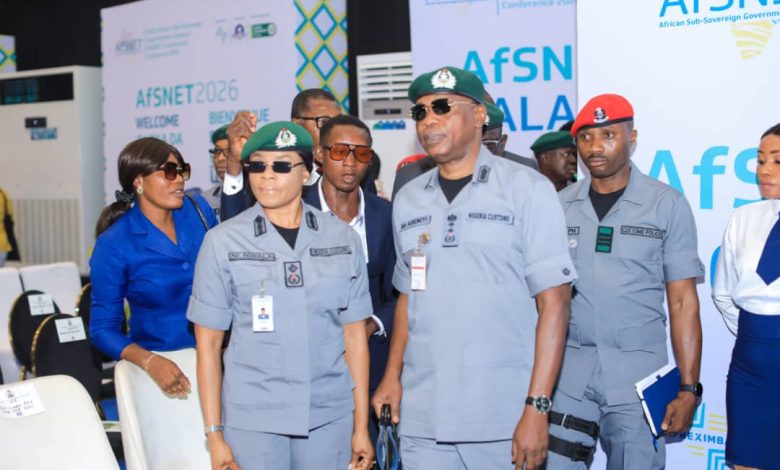
Meanwhile, the Nigeria Customs Service (NCS), Cross River/CFTZ/Akwa Ibom Area Command, has pledged collaboration with government agencies and stakeholders to support the proposed Bakassi Deep Sea Port and facilitate legitimate trade.
The Acting Customs Area Controller of the Command, Deputy Comptroller Nkiruka Nwala, gave the assurance when she joined service chiefs and heads of government agencies to receive Vice President Kashim Shettima at Margaret Ekpo International Airport, Calabar, ahead of the port’s groundbreaking ceremony.
Shettima visited Cross River State on Friday, November 13, 2026, for the ceremony and participated in the 6th AfSNET Investment Conference, where stakeholders discussed investment, trade and economic development.
According to the Command, Nwala’s participation underscored its commitment to inter-agency cooperation and readiness to work with relevant institutions to advance the port project and maximise its economic benefits.
The Command reaffirmed its commitment to revenue generation, border security, trade facilitation and protecting Nigeria’s economic interests, while supporting initiatives capable of attracting investment and promoting regional economic growth.
It stressed that effective collaboration among government agencies and private-sector stakeholders would be essential to ensuring that the proposed port and associated trade infrastructure deliver their expected benefits.