Listen to story here

Former Director-General of the Nigeria Tourism Development Authority (NTDA), Folarin Coker, and other tourism stakeholders have called for stronger Artificial Intelligence (AI) regulation and digital transformation to reposition Nigeria’s tourism and travel sector.
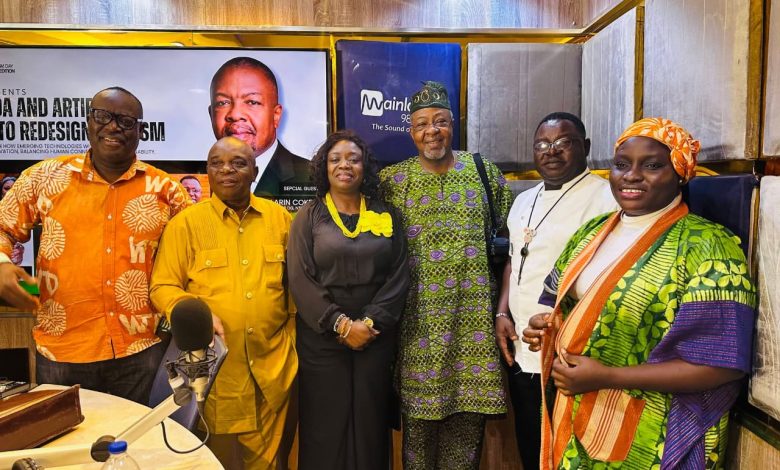
They made the call during Villa Square, a special segment of Cre8tive 9Ja, a weekly tourism and culture programme on Mainland 98.3 FM, Lagos, hosted by veteran tourism journalist Frank Meke and Bunmi Bade-Adeniji.

The discussion followed a recent technical glitch involving the Nigeria Centre for Disease Control (NCDC) and the Nigeria International Travel Portal (NITP), which reportedly disrupted travel operations and left passengers stranded at airports.

The incident, according to the stakeholders, highlighted vulnerabilities in Nigeria’s digital travel infrastructure and the need for more resilient systems.
Coker warned that Nigeria must distinguish between digitising existing processes and achieving genuine transformation.
“We should not confuse digitisation with transformation. Putting a broken process online is not reform,” he said.
He argued that government should first fix structural deficiencies across the travel ecosystem before deploying AI to enhance passenger experience.
According to him, AI can improve visa and embassy processes, flight bookings, pricing, arrival experiences, transportation and cultural engagement.
“Artificial Intelligence and technology are being mistaken for true development. It is not about another app or website, but about fixing the things that need to be fixed and setting the standards,” Coker said.
He also called for improvements in roads, security and hospitality standards, while urging government to make Nigerian tourism products and destinations easier to access and book.
Coker said Nigeria could leverage its cultural strengths, including music, fashion, food and medical tourism, to attract more visitors.
Also speaking, Managing Director of Global Links Service, Pastor Chinyere Umeasiegbu, urged airlines to tackle recurring flight cancellations and improve communication with passengers.
She cautioned against relying solely on AI to resolve operational challenges and advised travellers to retain screenshots of airline communications concerning delays and cancellations for possible submission to relevant authorities.
Meanwhile, Director-General of the National Council for Arts and Culture (NCAC), Obi Asika, disclosed that the council had established a Council for Creative Technology and would soon release a digital roadmap for integrating AI into arts and culture.
Asika stressed the importance of ensuring Nigerian and African cultural content is adequately represented in AI systems.
“We need to enrich Artificial Intelligence with the elements of our culture, our history and our content,” he said.
Chef Shine called for the use of AI to document and promote Nigeria’s culinary heritage, while travel journalist Okorie Uhuru said AI was already transforming destination marketing and tourism promotion.
Professor Wasui Babalola, however, urged policymakers to ensure that digital transformation retains a human dimension.
“The knowledge of the digital process should be given with a human element, and that is when our tourism would improve,” he said.