Listen to story here
The International Maritime Institute of Nigeria (IMION) has called for stronger policies, enhanced welfare systems and sustained investment in maritime workforce development to safeguard the future of seafarers and strengthen the nation’s Blue Economy aspirations.
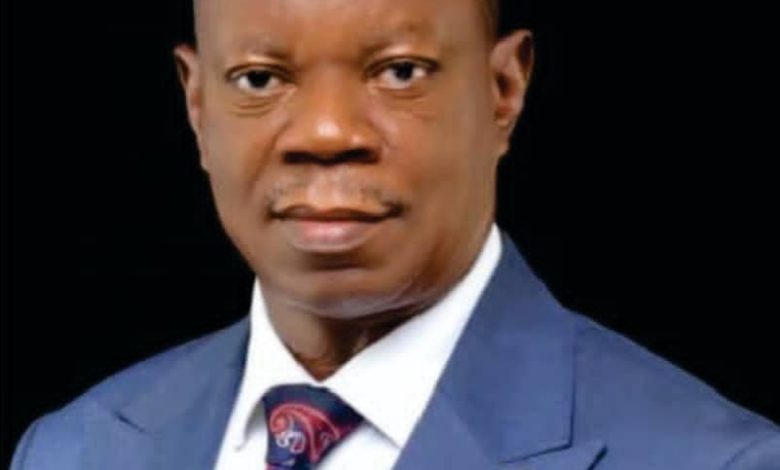
The Director General of IMION, Rear Admiral Thaddeus Udofia (Rtd), Ph.D, made the call to commemorate the 2026 International Day of the Seafarer, celebrated annually on June 25.


Udofia noted that this year’s theme, “Carrying world trade. Carrying the risks,” aptly captures the enormous responsibility borne by seafarers who sustain global commerce while operating under increasingly complex, demanding and sometimes hazardous conditions.

He observed that the theme serves as a timely reminder that behind every shipment delivered across continents are dedicated professionals whose sacrifices often go unnoticed.
According to him, the observance provides an opportunity for governments, maritime administrations, industry leaders and stakeholders to recognise the indispensable role of seafarers in sustaining global supply chains, economic stability and sustainable development.
His words: “Seafarers are not merely transport workers; they are critical enablers of economic growth, humanitarian assistance, energy security and international connectivity. While they keep world trade moving, they also shoulder significant operational, environmental and geopolitical risks that demand greater protection and support.
“More than 90 percent of global trade is transported by sea, making seafarers indispensable to food security, energy supply chains and economic prosperity. Their resilience, professionalism and dedication continue to sustain international commerce despite evolving global challenges.”
Udofia observed that Nigeria, as a major maritime nation strategically located within the Gulf of Guinea and blessed with enormous Blue Economy potential, must intensify efforts to develop a globally competitive seafaring workforce.
He stressed that with the increasing adoption of digital technologies, decarbonisation policies, automation and evolving international maritime regulations, the competencies required of modern seafarers are changing rapidly.
“Preparing the next generation of maritime professionals requires significant investment in quality education, specialised training, research, innovation and internationally compliant certification programmes.
“Nigeria must continue to strengthen its maritime institutions and create pathways that enable young Nigerians to compete effectively in the global shipping labour market while contributing meaningfully to national economic development.
“It was in recognition of this imperative that the Nigerian Navy established IMION as a specialised institution for research, capacity building and policy advocacy to bridge knowledge gaps and support sustainable growth across the Blue Economy ecosystem.
“Through strategic partnerships, professional development programmes and evidence-based research, IMION is helping to build the expertise required to advance maritime governance, shipping operations, marine technology, environmental sustainability and ocean security.”
The IMION Director General further emphasised the importance of addressing emerging challenges confronting seafarers, including climate change, piracy threats, fatigue, mental health concerns, cyber risks and evolving technological demands.
He called on governments, shipping companies, regulatory agencies, academic institutions and development partners to deepen collaboration towards creating safer, more inclusive and future-ready maritime workplaces.
“Protecting seafarers is protecting global prosperity. Investing in their welfare is investing in economic resilience, while empowering them today is essential to securing the future of the Blue Economy.
“As the world commemorates the 2026 International Day of the Seafarer, IMION reaffirms its resolve to advance research, shape maritime policy and strengthen Nigeria’s capacity to emerge as a leading maritime nation in Africa and a strategic contributor to global shipping.”