Listen to story here
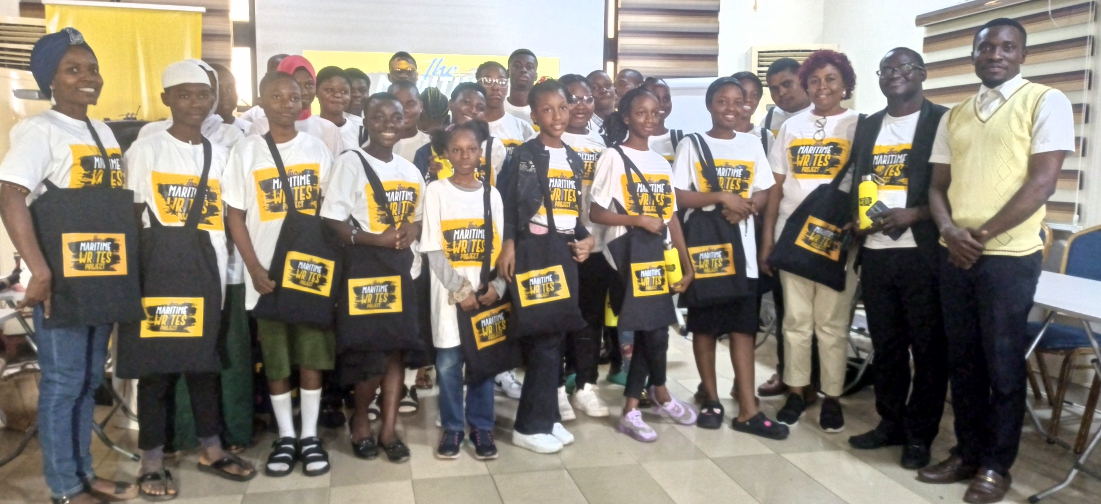
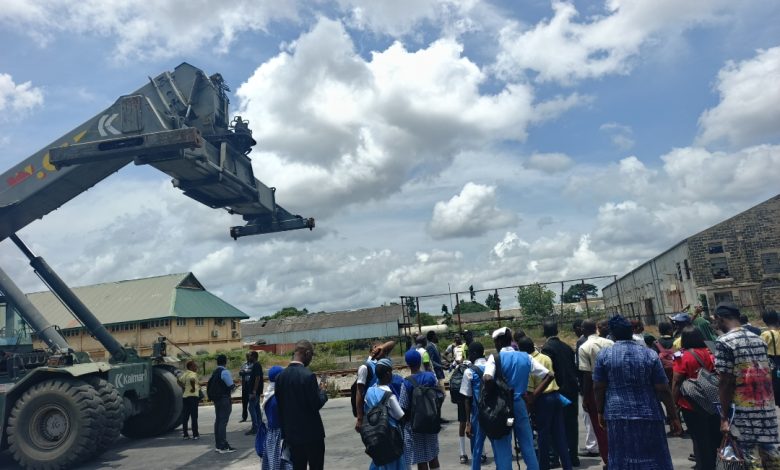
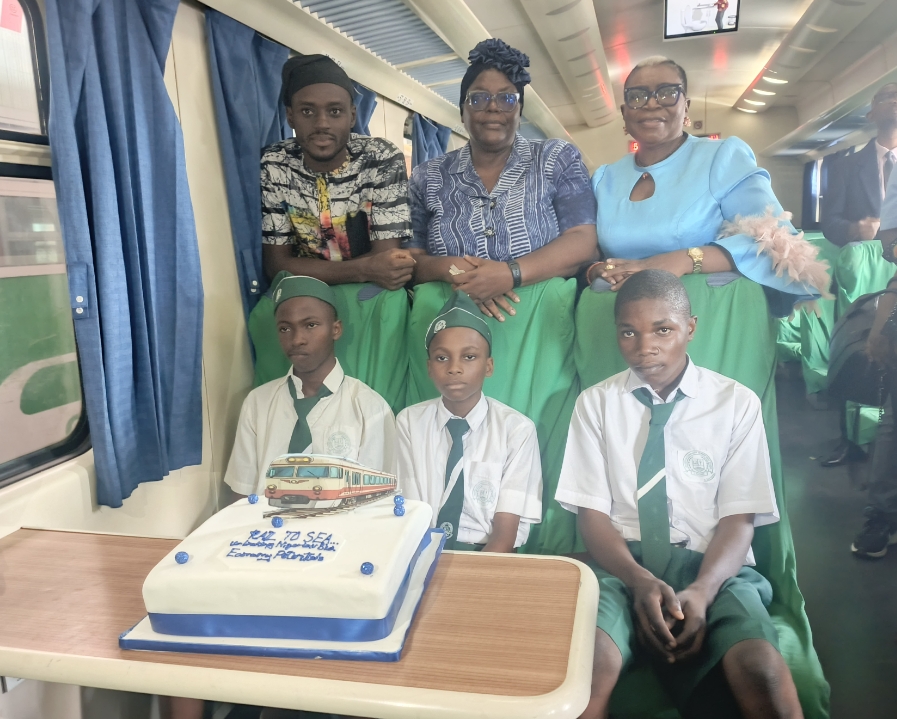
In a bid to ensure that the next crop of maritime experts and policy leaders understand the crucial role of intermodal transport system in shipping and the entire logistics and supply chain, Ocean Ambassadors Foundation (OAF) took scores of secondary school students on a train ride and career tour to experience passenger trains and cargo trains.
The exercise, which took place on Thursday in Lagos, commenced with an opening lecture series at the headquartered of the Nigerian Railway Corporation (NRC) by the Head of Industrial Maintenance Engineering Department, Yaba College of Education, Engr. (Dr.) Femi Adedotun, who expand the immense value of railways to cargo distribution and passengers across developed economies.
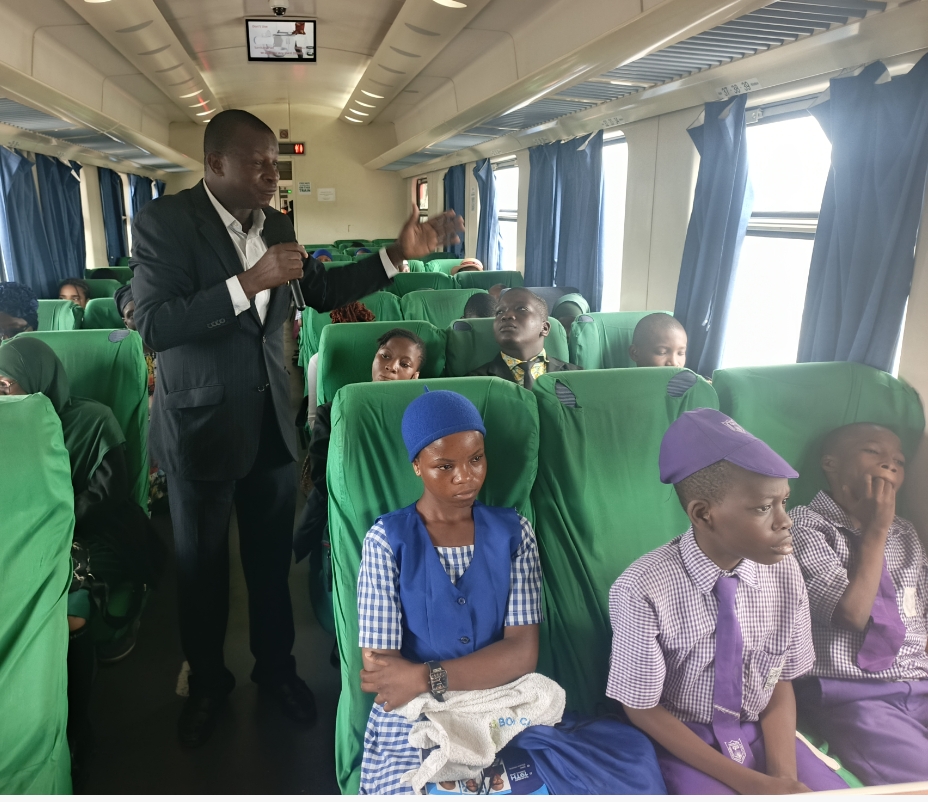
During the experiential train ride from Ebute-Metta to Agege, Engr. Adedotun, also explained that trains provide the cheapest means of transporting large cargoes to hinterlands even as it guarantees safety and helps preserve the longevity of roads.
He took the students through historical perspectives as he noted that the Nigerian Railway System was established in 1898 but commenced operations in 1901. However, he encouraged the young minds to explore technological advances to transform the sector as he noted that the NRC has fallen behind and it currently being managed operationally by Chinese firms even though Nigeria started railway operations before China.
Speaking on the significance of the Rail to Sea programme, the President of OAF, Hon. Olaitan Williams, stressed that the business of shipping and the marine and blue economy must be understood by the young minds in holistic manner, such that they can begin to think about their future and be better prepared for impactful leadership for the industry in future.
Her words: “This is the first set of students having this technical talk for multimodalism. For eight years, we have been talking about career opportunities in the maritime. So, today we have decided to expand it to cover the supply chain and logistics sector where the railway plays a crucial role.
“The students have experienced a passenger train and what it feels to be transported in the train coach. They are also seeing how cargoes either for export or import also get to the ports via trains.”
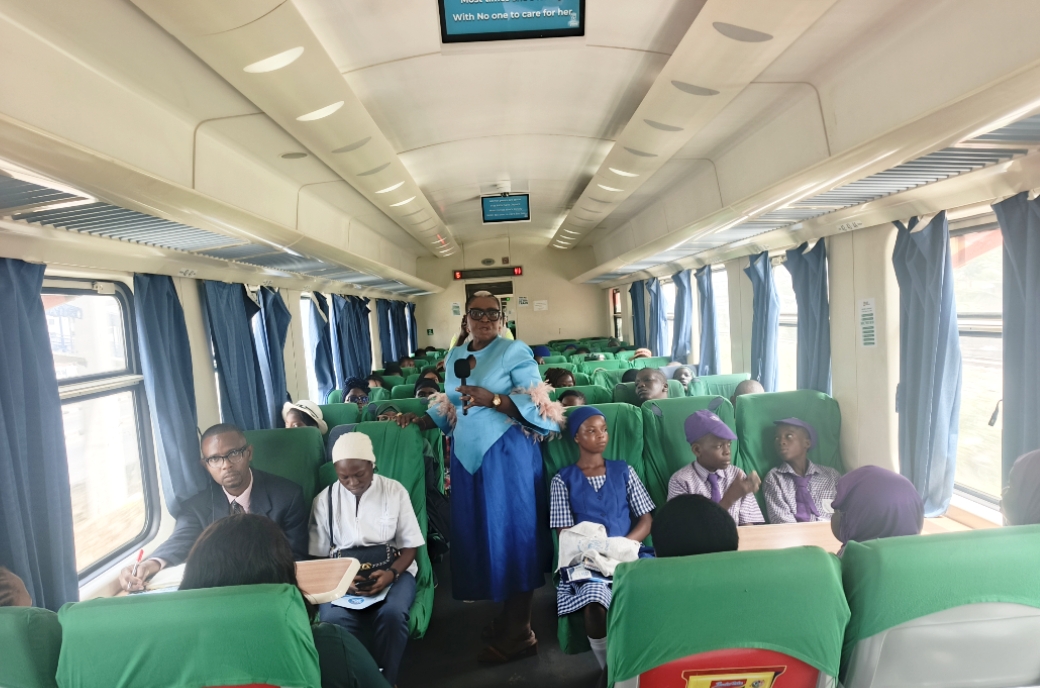
Williams observed that a lot of Nigerian seaports lack railway connection and stressed that the current national drive to develop seaports must be done with the goal of linking these infrastructure with railways for optimal performance.
“Sometimes, we wonder why in Nigeria we have expatriates manning 100% of the logistics sector. It is because there’s a gap. We need to educate our upcoming generation as a succession plan for them to get it right and close that gap. We need them to have the solution right from the schools,” Williams added.
Speaking on behalf of NRC earlier, the Deputy Director, Administration and Human Resources, Dr. Harriet Uche Nweke, welcomed the students and participants to the NRC headquarters even as she explained the role of the agency and its core services.
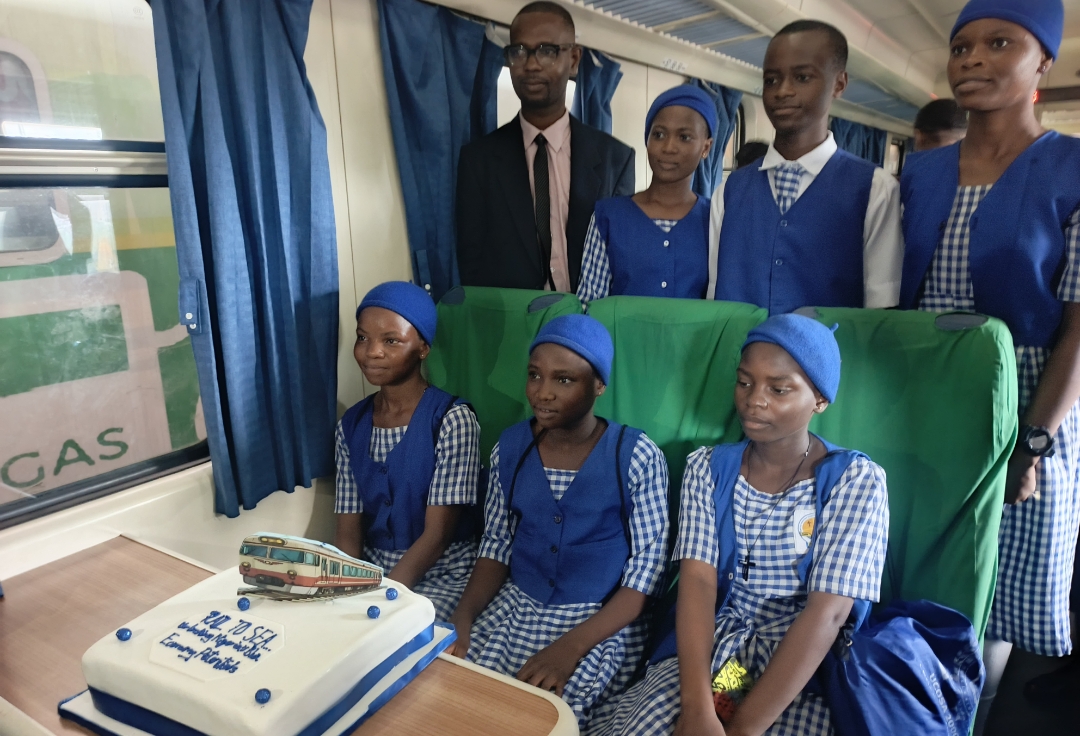
The schools which participated in the exercise include; Fountain Heights Secondary School, Surrulere; CMS Grammar School, Bariga; United Christian Senior Secondary School, Apapa; Methodist Girls’ High School, Yaba; Dansol Secondary School, Ikeja; Methodist Bpys’ High School-Victoria Island; Dowen College, Lekki; King’s College, Lagos; Yaba College of Technology Secondary School, Yaba; Landmark College, Ikorodu; BMJS, Ikorodu; Mindbuilders College, Alausa, Ikeja; Honeyland College, Magodo; New Crown Star College, Ogun State; Patfina Int’l School, Lagos; Keystone College, Lagos; Briggs Gate Comprehensive College, Ipaja; Iwerekun Community Sinr. High School, Ibeju-Lekki; Lafiaji Senior High School, Lagos Island; Epetedo Jnr. High School, Lagos Island; and Ebute Elefun Senior Secondary School, Lagos Island.