

Listen to story here
In a bid to enhance the performance and competitiveness of the nation’s seaports, the Federal Government has approved contracts for the reconstruction of the Apapa and Tin Can Island Ports, under the Western Port Rehabilitation Programme.
The Minister of Marine and Blue Economy, Adegboyega Oyetola CON, disclosed this on Thursday during an engagement with maritime industry stakeholders in Lagos.


According to the Minister, a similar procurement process is ongoing for the Eastern ports in a bid to ensure balanced trade and diverse shipping operations and economic development across the nation.
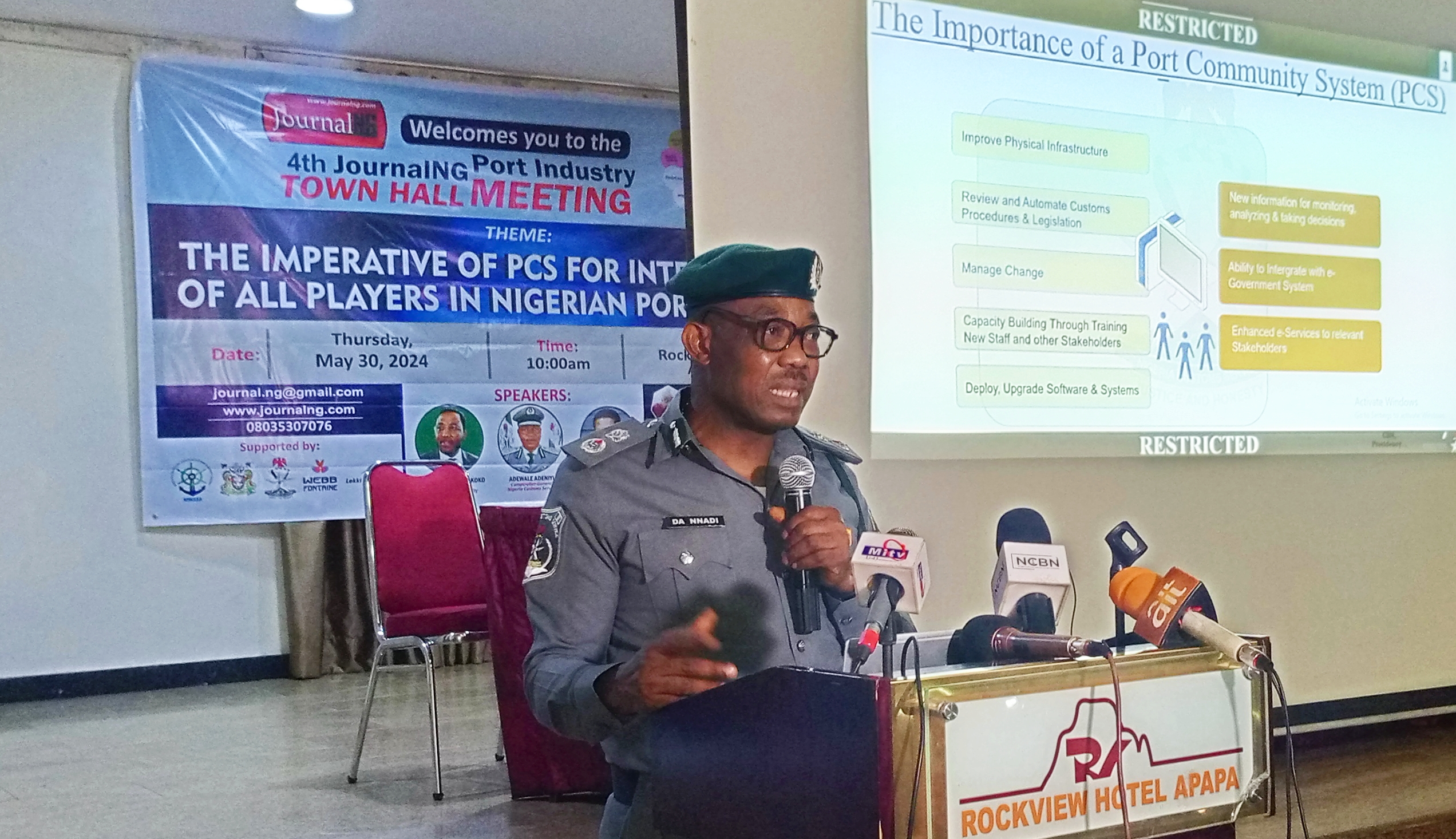
“These upgrades are complemented by the deployment of digital solutions, including the Port Community System, the E-Call-Up System, and a unified One-Stop-Shop for port clearance. These interventions are designed to reduce delays, boost investor confidence, and reposition Nigeria as a regional maritime hub.
“We are also working to strengthen indigenous shipping capacity. Through a public-private partnership model, we are pursuing the revival of a national carrier. Additionally, the Nigerian Maritime Administration and Safety Agency (NIMASA) has commenced preparatory activities for the disbursement of the Cabotage Vessel Financing Fund (CVFF). The process is being carefully structured to ensure transparency and regulatory compliance. When operational, the Fund will significantly expand opportunities for Nigerian shipping operators.”

He noted that the Ministry has recorded consistent year-on-year growth across her agencies, attributing this to digitisation drive and improved operational efficiency which have attracted private capital into the sector.
While stating the Ministry’s resolve to reduce procedural bottlenecks, and eliminate overlapping regulatory burdens, he expressed delight at the record of zero piracy incidents on the nation’s territorial waters in the past 3 years.
“Investment opportunities are expanding in bonded terminals, dry ports, inland logistics corridors, and warehousing infrastructure. Our overarching objective is to make Nigeria the maritime and logistics gateway for West and Central Africa.
“On the regional front, Nigeria is championing the operationalisation of the Regional Maritime Development Bank under the Maritime Organisation of West and Central Africa (MOWCA). With its headquarters here in Abuja, the Bank is poised to provide long-term financing for maritime infrastructure, thereby accelerating regional integration and supporting cross-border trade,” he asserted.
In his goodwil remarks, the pioneer President of Ship Owners Association of Nigeria (SOAN), Engr. Greg Ogbeifun, stated that the federal government has done its part by addressing several challenges in the sector.
“The private sector should take advantage of the opportunities created by the government for job creation, economic development, training and employment of cadets, among other benefits,” Ogbeifun posited.
Also speaking, the Chairman of Nigerian Ports Consultative Council (NPCC), Mr. Bolaji Sunmola, described the National Policy on Marine and Blue Economy as a transformative blueprint with a promising a future where maritime assets become pivotal to job creation, inclusive growth, and sustainable development.
“However, a policy—no matter how comprehensive—must translate into visible action, measurable outcomes, and prosperity for our people. We must intensify our commitment to local content enforcement.
“Nigeria loses over nine billion dollars annually due to under-enforcement of the Cabotage Act. This is an economic and patriotic emergency. Our ports must now prioritize indigenous participation in shipping, terminal operations, and maritime services. National/indigenous companies must not just be present—they must be protected and empowered to lead,” the NPCC boss said.
The President of Nigerian Chamber of Shipping (NCS), Mr. Aminu Umar also gave satisfactory remarks on the administration of the nation’s shipping sector in the past few years, commending the strides in anti-piracy and CVFF disbursement.
Umar, however, underlined the need for continuous engagement between operators, regulators and other industry stakeholders in a bid to build on the modest successes achieved in the maritime sector.

Speaking on behalf of women in maritime, the President of Women’s International Shipping and Trading Association (WISTA), Dr. (Mrs.) Odunayo Ani, thanked the Minister for the inclusion of Ms. Iroghama Ogbeifun in the Governing Board of NIMASA.
“This stakeholder engagement marks a pivotal moment in our collective journey toward harnessing the full potential of Nigeria’s marine and blue economy. The recent development of the National Policy on Marine and Blue Economy is both timely and visionary. It reflects the Federal Government’s commitment to sustainable ocean governance, economic diversification, job creation, and environmental stewardship.
“As a key stakeholder in the maritime sector, WISTA Nigeria commends the Ministry for initiating this inclusive platform to foster synergy among public and private sector players, civil society, and the academic community. We believe that strategic collaboration is not only essential but indispensable to the successful implementation of this ambitious national blueprint,” Dr. Ani said.
The event was graced by an array of industry stakeholders including seaport terminal operators, shipping companies, freight forwarders, ship owners, barge operators, maritime workers, as well as security agencies like the Nigerian Navy, Nigeria Customs Service (NCS), Nigerian Immigration Service (NIS), among others.