|
Getting your Trinity Audio player ready...
|
Should Oron community pressure and politics override national maritime interests? That’s the biggest question in dire need of answers as the Maritime Academy of Nigeria (MAN) Oron is at crossroads following its new enabling Act that upgraded the institution to the University of Maritime Studies – a degree-awarding body.
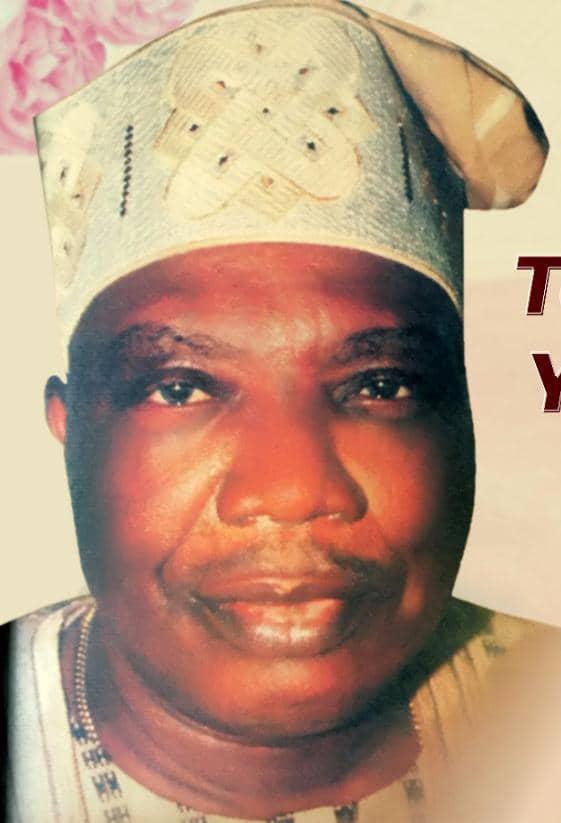
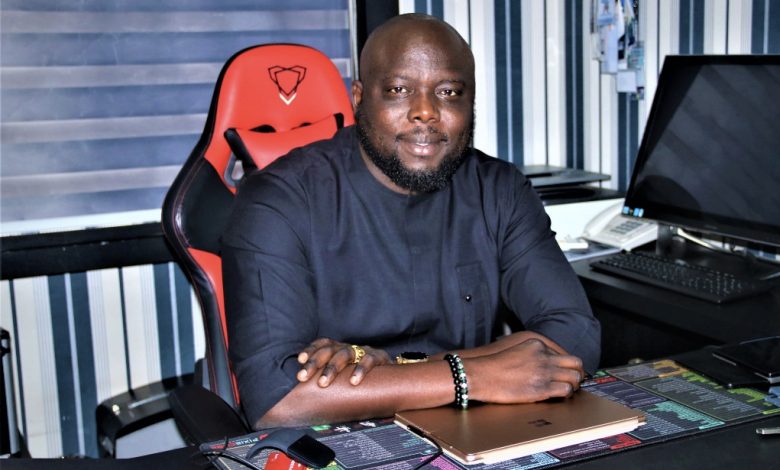
Mr. Emmanuel Maiguwa, President of the Alumni of Maritime Academy of Nigeria, Oron (AMANO), in this interview speaks on the thorny issue even as he highlights the pros and cons of such changes at the Academy.
Excerpts:

There have been reports that the Governing Council of Maritime Academy of Nigeria (MAN) is against the Academy’s evolution into a university going by the new legal instrument developed by the 9th national assembly. What is AMANO’s position on this?

Prior to the graduation of the 2025 graduating cadets of MAN Oron, there have been reports planned by the community to disrupt the graduation exercise. Also, we have received some reports from different quarters of pressure being mounted on the entire management of the institution, the Ministry of Marine and Blue Economy, over this issue of Maritime University versus Maritime Academy of Nigeria Act. However, we were not deterred. We went in and celebrated the graduating cadets. I believe that in the past 20 years, this is one of the most remarkable graduations that the Academy has had and it reflects the trust that the industry has on the quality of graduates that are coming out of this school and about 60% of seafaring cadets get employed. This is massive by any standard.
It goes to show the confidence that the industry has on that institution. The position of AMANO on the publication or the warning issued by the Governing Council of MAN Oron, I can tell you that the alumni is fully in support of the position of the Governing Council. Their position has echoed exactly the position of the alumni in the last 13 years amid many efforts that have been launched trying to convert this institution to a conventional university.
We understand the maritime industry better. We understand it from local perspective all the way to international platform. Our interest in the professionalism of the institution is purely to guarantee competent and skillful manpower for the maritime industry to help Nigeria achieve its objective in marine and blue economy development and sustainability
We believe that the Iron community has this notion that prioritizes what they believe to be the development of the community beyond the development of the country. They believe that if that institution is converted into a conventional university, it will grow in size, which is a fact. They also believe that when it grows in size, it will develop their community. Nonetheless, the question here is the institution’s ability to fulfil its mandate to support Nigeria’s maritime or marine and blue economy growth which improves the entire country. The alternative is a situation whereby the institution is allowed to be converted into a conventional university, and then you lose the professionalism, the maritime industry struggles to fill specialized gaps that is needed for improving the marine and blue economy, which the present administration of President Bola Tinubu has enabled us to have through the Ministry of Marine and Blue Economy.
We have a situation where a small community has this fallacy that they believe that a university will grow the community. Incidentally, even the politicians from up above who have actually championed this matter, it was done mainly on the grounds of politics during campaigns.
I recall when the current deputy governor of Akwa Ibom State, who was a sponsor of that bill in the ninth assembly, called for public hearing; AMANO went and presented its position, and she was able to see reason with the position. She called us into a meeting and told us clearly that she agreed with our position. Subsequently, we were asked to make submissions and review the bill. We have a copy of the bill.
We reviewed the bill with other industry experts to make sure that the professionalism of that institution is not distorted. We believed that there would be integrity in the process. But that wasn’t done as the politicians gave in to that pressure of the community for political gains against their personal conviction that it wasn’t good for the country. While the community believes that it is good for it, this development will drag the nation behind and disrupt the marine and blue economy strategy for sustainable growth.
Blue economy success is crucial to every sector in Nigeriq. So, the man in Sokoto, Kebbi, Enugu, Lokoja, Niger, Abuja will feel the negative impact of a marine and blue economy that has a significant skill gap. It is time we all lend our voices to ensure that what is good for the country is taken first as a priority, not just the wishes of the few. In a democracy, I think we need to look at the larger picture.
There seems to be a widening trust gap between the stakeholders. How can AMANO help restore confidence and reduce the tension around this quagmire?
Well, the interesting thing is that as professionals, we do not see gaps. There is no maritime professional today that has just little understanding of maritime industry that wants MAN Oron to move from being a specialised institution into a conventional university. A little understanding of the maritime sector is sufficient for you to know that Maritime Academy should remain specialized.
The problem there is that the politicians need to enlighten and educate their people and that means the host community.
It will surprise you to know that among Akwa Ibom is one the states that has the highest number of graduates of Maritime Academy of Nigeria. However, I can tell you that the entire members of AMANO including those that are from Akwa Ibom and the Oron community, have taken the side of retaining the professional structure of Maritime Academy of Nigeria. So among professionals, we don’t see division when you talk about the stakeholders. But in terms of that community, like communities generally all over the world, if you give them an inch, they will want to take a mile. So, there is need for sensitization. But in the middle of that sensitization, the government should take a position. The government should take a leadership position to say, hey, this is what is good for the country.
Those who support the Academy becoming a university say it will become a better research institution. What are the biggest setbacks in changing the specialised structure of the Academy?
We must not forget the aim of establishing the Maritime Academy of Nigeria. It is not the only maritime institution in Nigeria, but the aim of establishing that institution is so that Nigeria, as a member state of the International Maritime Organisation (IMO), will meet up with the standard or the requirement of IMO in terms of standards that are required for shipboard officers and this is specific.
Recall that the institution started as a nautical college before engineering was later added to just to provide shipboard officers. The later addition of maritime transport management into that institution is to cater for the growing professionalization of shore-based opportunities or jobs.
Years later, the Ministry of Transport approved for maritime management courses to be carried out in Oron. The idea was to go all the way to educational level where cadets will be able to proceed for their sea time, sorry, and then later Certificate of Competency (CoC). When you talk about research; it is usually at a postgraduate level.
Research is usually not a shipboard training that you embark upon. Yes, they are needed and that is why we have several faculties of Maritime Studies in different universities across the six geopolitical zones.
So the opportunities for research has not been closed by maintaining the professionalism in Maritime Academy of Nigeria. In fact, we have a Federal Maritime University in Okerenkoko, which is a reflection of the difficulties of running a pure maritime university. Currently, the student of the maritime university in Okerenkoko, go to Maritime Academy to complete some of their courses. Is that what we want to turn Maritime Academy to become?
What is critical today is that we are losing master mariners, engineers, and experienced shipboard officers because the ones we have are 60 years old or above. The younger ones that we have that have gone out of this country to train themselves, we cannot afford them. The companies in Nigeria cannot afford them because they have acquired some high-quality license that they need to recover their investments with bigger foreign opportunities. Maritime Academy as a specialised training institutions is there to fill in that gap. If we distort it, then our journey to developing our marine and our blue economy will suffer. The consequences may not be seen or felt in a year or in two years. However, down the line, we will begin to see the negative impact.