
Listen to story here
The Governing Board of the Nigerian Shippers’ Council (NSC) has pledged strong institutional backing to drive Nigeria’s economic growth to at least seven percent by 2028, in alignment with President Bola Ahmed Tinubu’s ambition of building a one-trillion-dollar economy by 2030.
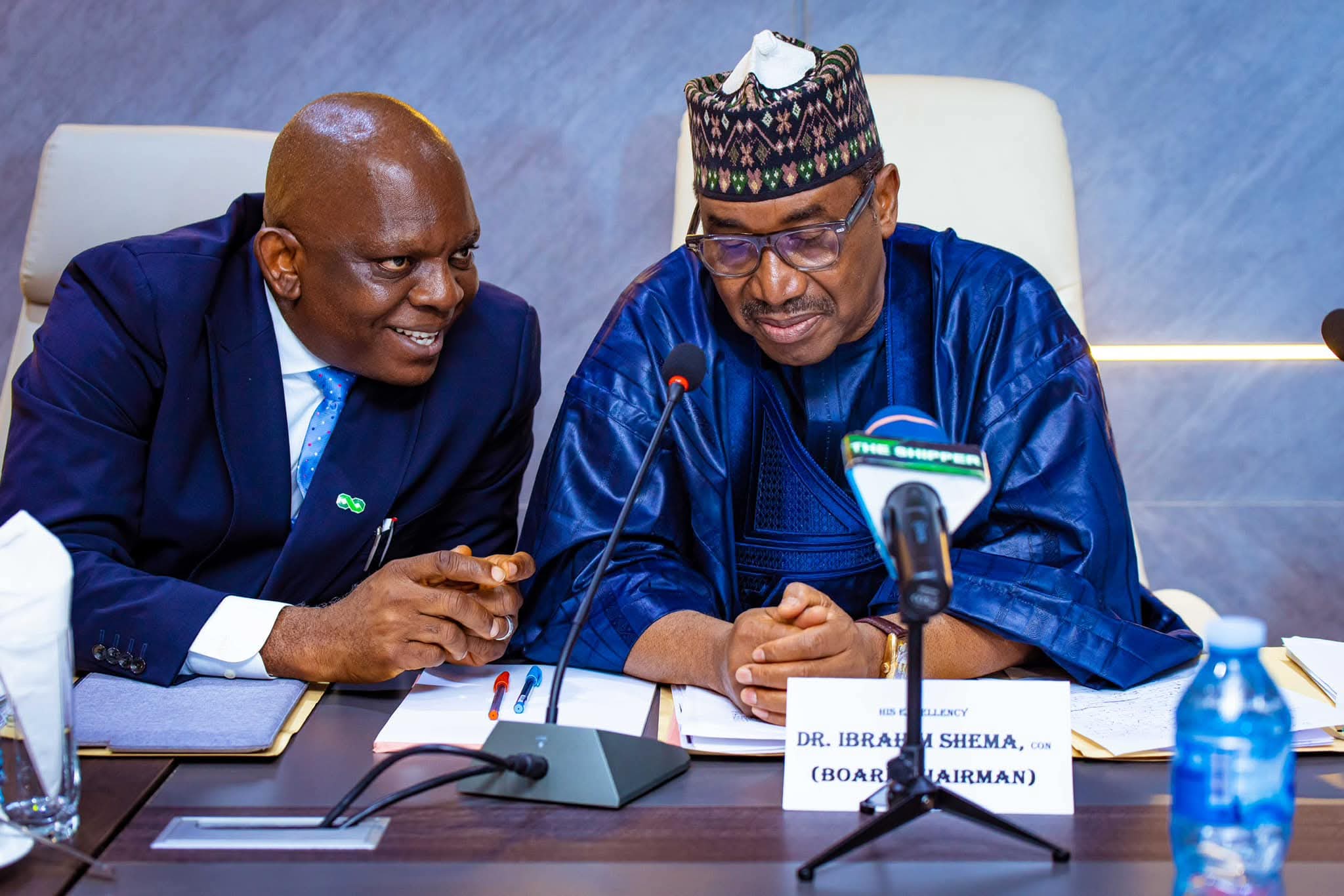
Speaking at the inaugural meeting of the newly inaugurated board in Lagos, the Board Chairman, Dr Ibrahim Shema, said the board would work closely with the management of the Council to deliver the President’s economic vision, stressing that the targets are achievable with sustained commitment and strategic collaboration.


Dr Shema, a former Governor of Katsina State, said the NSC, working alongside the Ministry of Marine and Blue Economy, would play a pivotal role in unlocking the vast potential of Nigeria’s maritime and blue economy sectors, which he described as critical drivers of national growth.
He noted that the Council would prioritise initiatives aimed at improving ease of doing business, facilitating trade and commerce, boosting revenue generation and strengthening partnerships with stakeholders across the real economy and the maritime industry.
“All hands must be on deck for Nigeria to fully harness the opportunities in the blue economy. The Council, the Board and management are hereby called to service. We have a lot of work ahead of us,” Shema declared.
Earlier, the Executive Secretary of the NSC, Dr. Pius Akutah MON, said a strong and collaborative relationship between the board and management would translate into measurable institutional and financial gains for the Council.
Akutah identified critical policy and regulatory priorities requiring the board’s support, including the actualisation of the Nigeria Port Economic Regulatory Agency (NPERA) Bill, the implementation of the International Cargo Tracking Note (ICTN), and the operationalisation of the one per cent Freight Stabilisation Fee.
According to him, the initiatives are central to strengthening regulatory clarity, improving cargo visibility, enhancing national security and securing sustainable revenue streams for the Council.
He said the NSC is well positioned to emerge as a financially resilient and institutionally stronger regulator, adding that management remains committed to providing the board with credible data, sound financial analysis and structured stakeholder engagement.
“With the guidance of this Board, I am confident that we will continue to protect shippers’ interests, promote efficient port operations and contribute meaningfully to national economic growth,” Akutah said.
He described the inaugural meeting as a historic milestone for the Council, expressing optimism that the calibre of the newly constituted board would significantly accelerate the achievement of the NSC’s strategic objectives.