
|
Getting your Trinity Audio player ready...
|
A former Minister of Interior and Chairman of Integrated Oil and Gas, Capt. Emmanuel Iheanacho, has admonished Nigeria to leverage global and regional integration frameworks via the Maritime Silk Road (MSR) and the African Continental Free Trade Area (AfCFTA) to accelerate growth in the maritime sector.
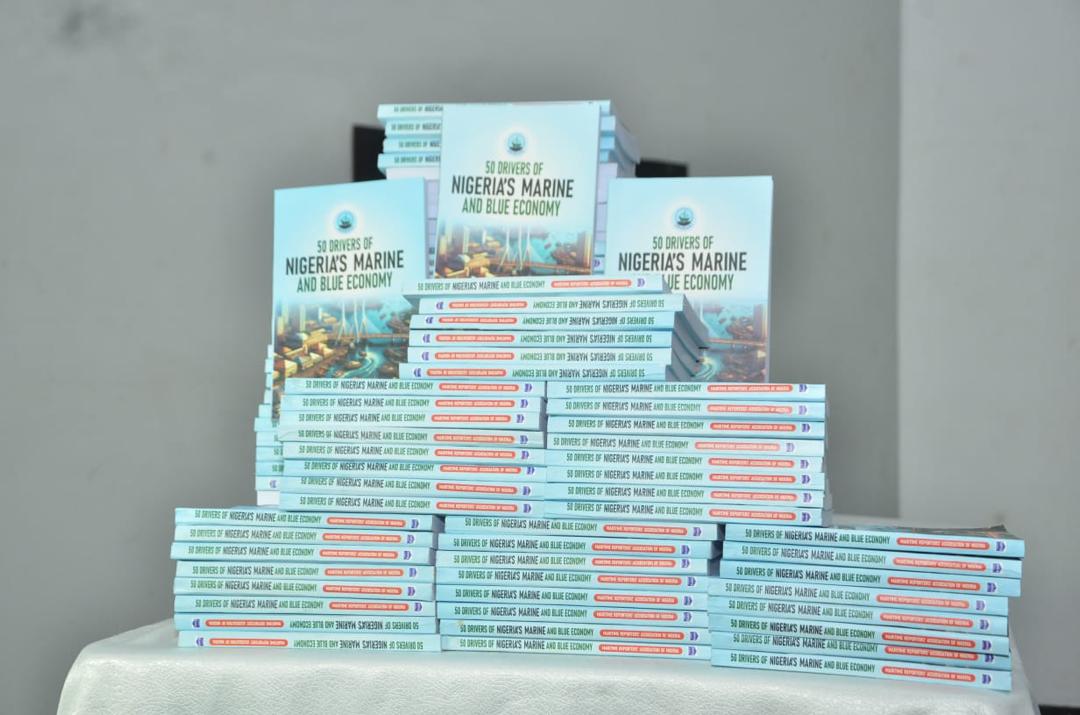
Addressing industry leaders, policymakers and maritime experts in Lagos, during the launch of 50 Drivers of Nigeria’s Marine and Blue Economy, a book published by Maritime Reporters Association of Nigeria (MARAN), Capt. Iheanacho underscored the critical role the maritime industry plays in Nigeria’s economic survival, describing it as “a vital component of national prosperity, trade facilitation and global competitiveness.”

He noted that the conference’s theme “Driving the Blue Agenda: Recognising Champions Steering Nigeria’s Marine Economy” was designed to spotlight the institutions, innovations and strategic actors driving the evolution of Nigeria’s Blue Economy.


Iheanacho observed that these evolutions include; decades of sectoral milestones such as the establishment of the Nigerian National Shipping Line in 1959, the National Maritime Authority in 1988, and its successor, NIMASA, in 2007.
Nonetheless, the Chairman placed special emphasis on the Maritime Silk Road – the oceanic arm of China’s Belt and Road Initiative – which he said holds transformative potential for Nigeria.
Capt. Iheanacho explained that the MSR spans more than 10,000 km of sea routes connecting China to global markets and is anchored on major maritime infrastructure development: ports, logistics hubs and enhanced shipping lanes. The initiative fosters cooperation in shipping, logistics, finance, tourism and other enablers of transnational commerce.
He stressed that Nigeria’s position as a key MSR partner formalized through the China-Nigeria Economic Corridor launched in 2016 offers tangible benefits, including: expanded trade volumes, particularly in manufactured goods and raw materials; greater foreign investment inflows, especially in port and transport infrastructure; improved maritime logistics and connectivity; and accelerated economic growth through better integration into global value chains.
The Chairman also highlighted AfCFTA as another major growth driver, describing the continent-wide agreement as a “game-changer” that opens Nigeria to a market of 1.3 billion people with a combined GDP of $3.4 trillion. He emphasized that the free-trade framework—by eliminating tariffs, reducing non-tariff barriers and enabling freer movement of goods and services—will deepen Nigeria’s maritime relevance as the primary gateway for regional commerce.
However, Capt. Iheanacho cautioned that to fully benefit from both the MSR and AfCFTA, Nigeria must tackle persistent challenges such as infrastructure gaps, bureaucratic redtape and workforce skills deficits.
Also speaking, the Executive Secretary of the Nigerian Shippers’ Council (NSC), Dr. Pius Akutah MON, who was represented by Assistant Director of Operations, Mrs. Juliana Saka, described the publication as a significant milestone even as he applauded MARAN for demonstrating vision and professionalism by documenting the contributions of key players in the sector.
“The marine and blue economy offers vast opportunities requiring collaboration, innovation, data, and accountability. MARAN’s work strengthens public understanding, celebrates behind-the-scenes contributors, and elevates discourse shaping policy, investment, infrastructure, and sustainable maritime development.” Akutah said.
Also speaking, former NSC Executive Secretary, Barr. Hassan Bello, whose contributions to the sector is captured in the book, described the celebration as timely, given the sector’s over 60 years of steady progress, stressing that Nigeria’s maritime economy remains central to national growth.
“All generations must unite to support and preserve the sector, honour past contributors, and work together for continued success,” he said.
In her review of the publication, a former General Manager, SERVICOM, Nigerian Ports Authority (NPA), Chief (Mrs.) Carol Ufere, said the book offers research-driven insights into ministries, agencies, industry leaders, reforms, and policy directions shaping Nigeria’s blue economy.
She highlighted its focus on governance, innovation, digitalisation, security architecture, and institutional strengthening.
According to her, the chapters examine the critical institutions, while showcasing achievements, challenges, and reforms needed to enhance competitiveness and sustainability.
Speaking earlier in his opening speech, MARAN’s Caretaker Committee Chairman, Mr. Tunde Ayodele, said the launch was organised to honour individuals and institutions whose service and vision have shaped Nigeria’s maritime trajectory.
He noted that the publication not only documents their contributions but also reinforces ongoing efforts to advance the marine and blue economy.
“Developed through extensive research, the book highlights outstanding leaders, private organisations, and agencies whose collective efforts drive reforms, innovation, and sectoral growth. This first edition also recognises emerging talents and future contributors to the industry.” Ayodele said.