
Listen to story here
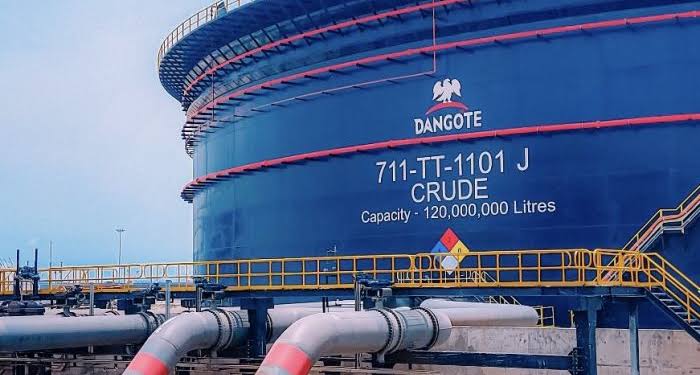
Dangote Petroleum Refinery and Nigerian National Petroleum Company Limited have committed to a strategic alliance aimed at strengthening Nigeria’s energy security and accelerating industrial self-sufficiency.
During a high-level visit to the refinery and petrochemicals complex in Ibeju-Lekki, leaders of both organisations pledged to move beyond past frictions and focus on operational excellence and long-term value creation.


President of the Dangote Group, Aliko Dangote, revealed that the facility is evolving beyond fuel production into a fully integrated industrial hub, including a planned 400,000 metric tonne Linear Alkyl Benzene (LAB) plant – set to exceed Africa’s current production capacity. He stressed that high-margin petrochemicals represent the future of refining, offering stronger value creation than fuels alone.
Aliko Dangote described the renewed partnership as central to the refinery’s founding vision and vital to Africa’s industrial transformation, even as he commended the new leadership of NNPC Ltd., expressing optimism about stronger cooperation.
“This was our dream before it became reality. Working together, we can strengthen Nigeria and anchor the next phase of Africa’s industrialisation,” Dangote said, noting that NNPC Ltd. holds a 7.25 percent equity stake in the refinery on behalf of Nigerians.
He, however, urged deeper collaboration within the existing industrial complex rather than duplication of assets, arguing that integration would unlock greater national value.
“The refinery is not just for fuels; it is an industrial hub. Domestic processing instead of exporting raw materials will boost foreign exchange earnings and deepen our industrial base,” he said.
NNPC Ltd. Group Chief Executive Officer, Engr. Bashir Bayo Ojulari, reaffirmed the company’s commitment to transparency and a results-driven partnership, distancing the organisation from what he termed an “unproductive past.”
“The goal is to assess where we are, identify new opportunities and agree on clear next steps,” Ojulari said, adding that proposals under discussion would be consolidated into a joint working framework.
He praised the refinery’s operational performance, disclosing that it was running at 661,000 barrels per day during the visit, above its 650,000 barrels-per-day nameplate capacity.
“None of us imagined it would even reach 550,000 barrels per day. What we saw live was 661,000. This is a source of national pride and proof that we can leapfrog legacy limitations with the right technology,” Ojulari said.
Describing both organisations as strategically significant national champions, he pledged sustained collaboration focused on measurable value growth.
The two parties agreed to define priority areas in the coming weeks and formalise a structured implementation framework, marking a partnership positioned to reshape Nigeria’s energy and industrial future.