|
Getting your Trinity Audio player ready...
|
Nigeria must stop blindly signing up to global climate commitments and instead pursue a sustainability agenda that aligns with its economic structure, resource realities and national priorities, the Keynote Speaker at the 2025 Alumni of Maritime Academy of Nigeria, Oron (AMANO) Convention, Capt. Suleiman Baiyee, has warned.
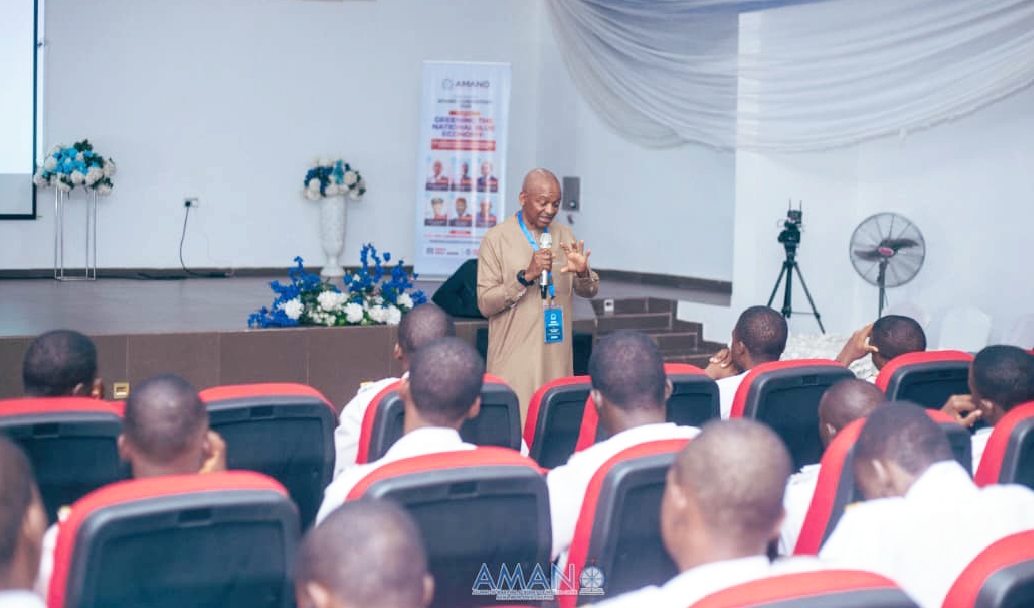
Baiyee criticised Nigeria’s tendency to mirror international net-zero ambitions without interrogating their relevance to the country’s development trajectory. Citing India’s refusal to abandon coal on externally imposed timelines, he argued that Nigeria must show similar strategic restraint.
“India refused to follow the world’s 2040 coal phase-out target and set 2070 instead because it understood its realities. But in Nigeria, we’re busy chasing global net-zero deadlines even though we only recently started using gas as a transition fuel,” he said.

According to him, discussions around the blue economy must reflect Nigeria’s true economic structure.


“Our blue economy today is 90 percent oil and gas. So how can we talk about greening our blue economy without talking about oil? Thirty years ago, our fishing industry was thriving. Today it’s gone, partly because our own vessel captains sabotaged local investors by selling catches offshore. We are often our own worst enemies.”
Baiyee also condemned what he described as planning failures across the maritime governance chain. He pointed to thousands of unemployed cadets produced without an industry absorption plan and criticised agencies for misaligned funding priorities.
“The Ministry’s 10-year roadmap is full of beautiful words, but words don’t solve problems. Why do we have 4,000 cadets walking around without employment? Because nobody planned for them,” he said.
Speaking on gender inclusion, Baiyee noted that the Nigerian seafaring landscape has witnessed a growth in female participation which he said was at 9% compared to the global seafaring margin which see women occupy less than 2%.
Drawing from his decades of experience in managing ships, he maintained that vessels with female cadets have performed much better than those without females.
He, however, added that while the Nigerian Content Development and Monitoring Board (NCDMB) has invested over $100 million in asset acquisition, far less has been dedicated to shipyard development, while the NDDC spent $67 million sending trainees abroad despite MAN Oron having suitable facilities.
“Funding is not the issue; it’s misplacement of priorities,” he stressed.
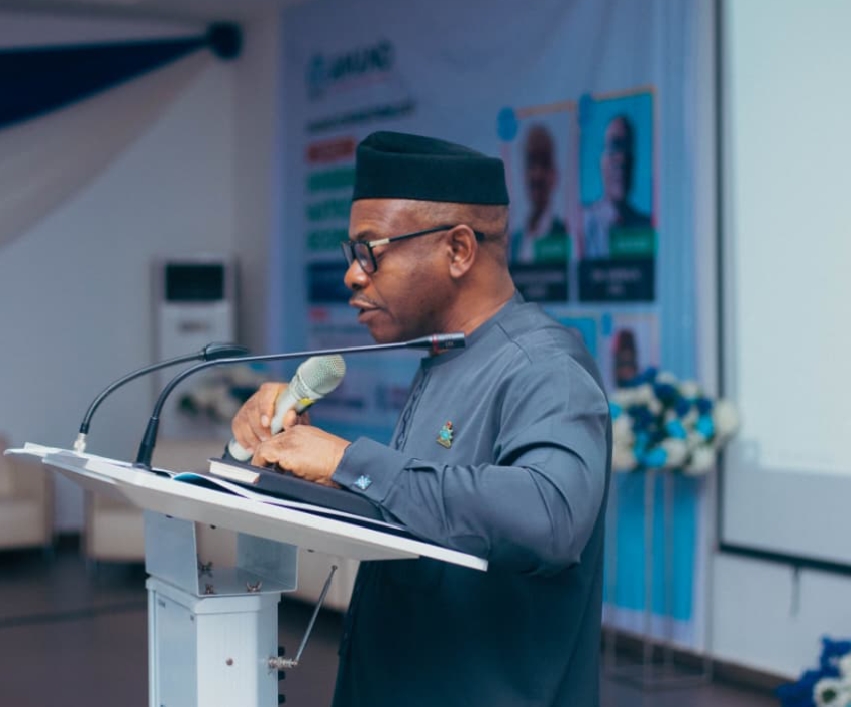
Meanwhile, the Acting Rector of MAN Oron, Dr. Kevin Okonna, called for realistic, locally grounded green transition building on these concerns.
Okonna urged policymakers to avoid “one-size-fits-all” sustainability models, stressing that Nigeria’s green transition must be technically feasible, economically viable, and sensitive to community realities.
“Global sustainability momentum is rising, but Nigeria must adopt measures that reflect our technological readiness and socioeconomic context,” he said.
Okonna highlighted reforms at MAN Oron – updated curriculum, faculty development, training upgrades and new partnerships – all embedded in a five-year strategic plan aligning training and research with realistic green objectives.
He also announced progress on recent MOUs with the Abuja MoU on Port State Control and CILT Nigeria, enabling new training pipelines and professional certification for cadets.
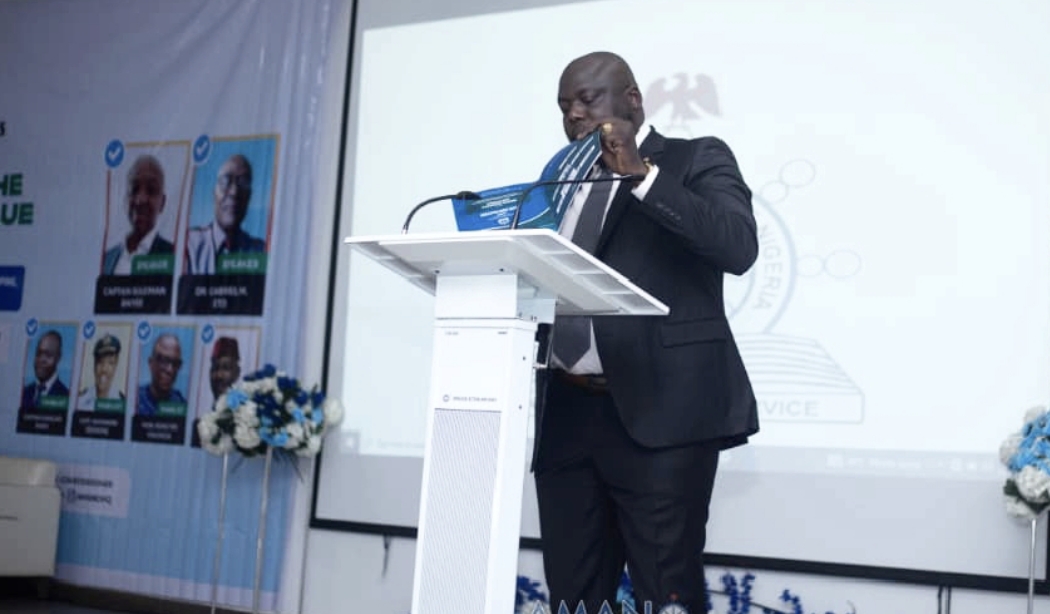
Also speaking, the AMANO President, Mr. Emmanuel Maiguwa, said alumni must lead the charge for sustainability by mentoring cadets, supporting research and advocating responsible maritime policies.
“The blue economy’s full potential will only be realised through practical, achievable green actions,” he said.
Also delivering a lecture, Dr. Gabriel Eto, observed that some challenges of bridging the gap between academia and the maritime industry could be addressed using policy framework in Nigeria.
According to him, the mismatch between the skills taught in academia and the competencies required in the maritime industry, could be because the academics may lack direct experience in the maritime sector, affecting the applicability of their research and teaching.
He called for more awareness campaigns and engagements between industry professionals and the academics, such that research initiatives are relevant to core industry operations.
Earlier, Convention Planning Committee Chair, Chief Jonathan Agassi, described the gathering as a convergence of “minds, experiences and visionaries” committed to repositioning Nigeria’s maritime future.
He said the theme “Greening the National Blue Economy” reflects the urgency of embracing cleaner shipping, renewable ocean energy and eco-friendly port operations through strong multi-stakeholder collaboration.