
Listen to story here
Maritime law experts have warned that international legal frameworks are failing to keep pace with the rapid emergence of autonomous ships, cautioning that the transition to software-driven and remotely operated vessels is creating major uncertainties over liability, cybersecurity and dispute resolution.
The concerns were raised during a webinar titled “The Future of Shipping is Unmanned: Are Maritime Laws Ready?” organised by Popoola Taiwo LP, where experts examined the legal and commercial implications of Maritime Autonomous Surface Ships (MASS) as digitalisation and artificial intelligence reshape global shipping.


Delivering the keynote presentation, Professor of Practice in Maritime Law, Mayank Suri, described autonomous shipping as the next stage in maritime transport, driven by advances in digital vessel operations, satellite communications and artificial intelligence.

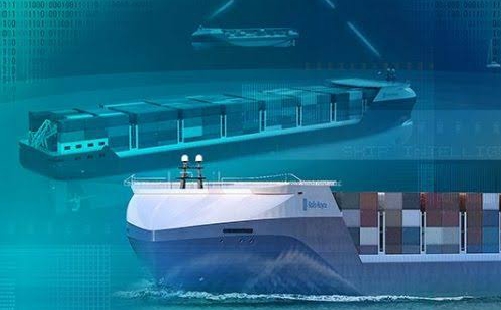
He said autonomous ships, powered by satellite technology and advanced software, require little or no human intervention and are steadily moving from concept to commercial reality.
Using the Norwegian-built Yara Birkeland as an example, Suri noted that the industry is progressing towards crewless vessels supported by integrated automation systems and AI platforms capable of processing weather forecasts, navigational information and geopolitical data to guide operational decisions remotely.
According to him, these technologies are accelerating the adoption of “just-in-time” shipping, reducing port waiting time, cutting demurrage costs and improving operational efficiency.
Despite these gains, Suri warned that growing reliance on digital infrastructure fundamentally changes the legal landscape by introducing new stakeholders; including software developers, satellite communication providers, equipment manufacturers and remote operators whose responsibilities remain largely undefined.
“The liability landscape is shifting from a shipowner-centred model to a multi-stakeholder framework involving software vendors, satellite providers, equipment manufacturers and remote operators,” he said.
He argued that autonomous shipping challenges the traditional foundations of maritime law, which evolved around the responsibilities of shipowners and seafarers. With human crews removed from vessels, many long-established legal assumptions underpinning international carriage-of-goods conventions may no longer apply.
Reviewing the Rotterdam Rules, Suri observed that although the convention modernised the legal framework for the carriage of goods by sea, it predates autonomous shipping and contains no explicit provisions for crewless vessels or the legal responsibilities of digital service providers.
He added that maritime disputes would increasingly rely on satellite communications, sensor outputs, software logs and other digital records rather than witness testimony, requiring technical experts and artificial intelligence to interpret vast amounts of electronic evidence.
Suri also argued that traditional carrier defences including acts of God, perils of the sea and latent defects, could become more difficult to sustain as predictive technologies and digital monitoring systems are increasingly expected to detect or prevent operational failures before accidents occur.
The webinar also reviewed the International Maritime Organization’s Maritime Autonomous Surface Ships (MASS) Code, adopted on May 22, 2026, and effective from July 1, 2026.
According to Suri, the code establishes international standards covering ship design, navigation, remote operations, cybersecurity, connectivity, fire safety, search and rescue, system robustness and risk assessment. However, he noted that it deliberately avoids creating new international liability rules for autonomous vessels.
One unresolved issue, he said, is the code’s recognition that a ship’s master retains overall responsibility even when operating remotely from shore, raising questions about accountability where no crew is physically present onboard.
Also speaking during the webinar, Mopelola Muibi-Hammed expressed concerns over the legal consequences of fully autonomous shipping, warning that cyberattacks, artificial intelligence failures and unauthorised manipulation of onboard systems could result in cargo diversion, operational delays or maritime accidents.
She urged policymakers, regulators and industry stakeholders to proactively address emerging liability issues before autonomous vessels become commonplace in international trade.
Responding to questions from participants, Suri acknowledged that while technological advancement cannot be halted, autonomous shipping has the potential to reduce traditional seafaring risks if supported by an appropriate legal and regulatory framework.
He predicted that disputes involving autonomous ships would increasingly be resolved through specialist arbitration involving maritime lawyers, engineers and technology experts, rather than conventional court litigation, concluding that international maritime law must evolve alongside technological innovation to provide certainty on liability, digital evidence and accountability.