

Listen to story here
Maritime stakeholders have described the interception of already cleared cargoes by the Maritime Police as a misnomer that undermines trade facilitation and violates international best practices in shipping and logistics, warning that the practice fuels avoidable costs, delays and reputational damage to Nigeria’s ports.
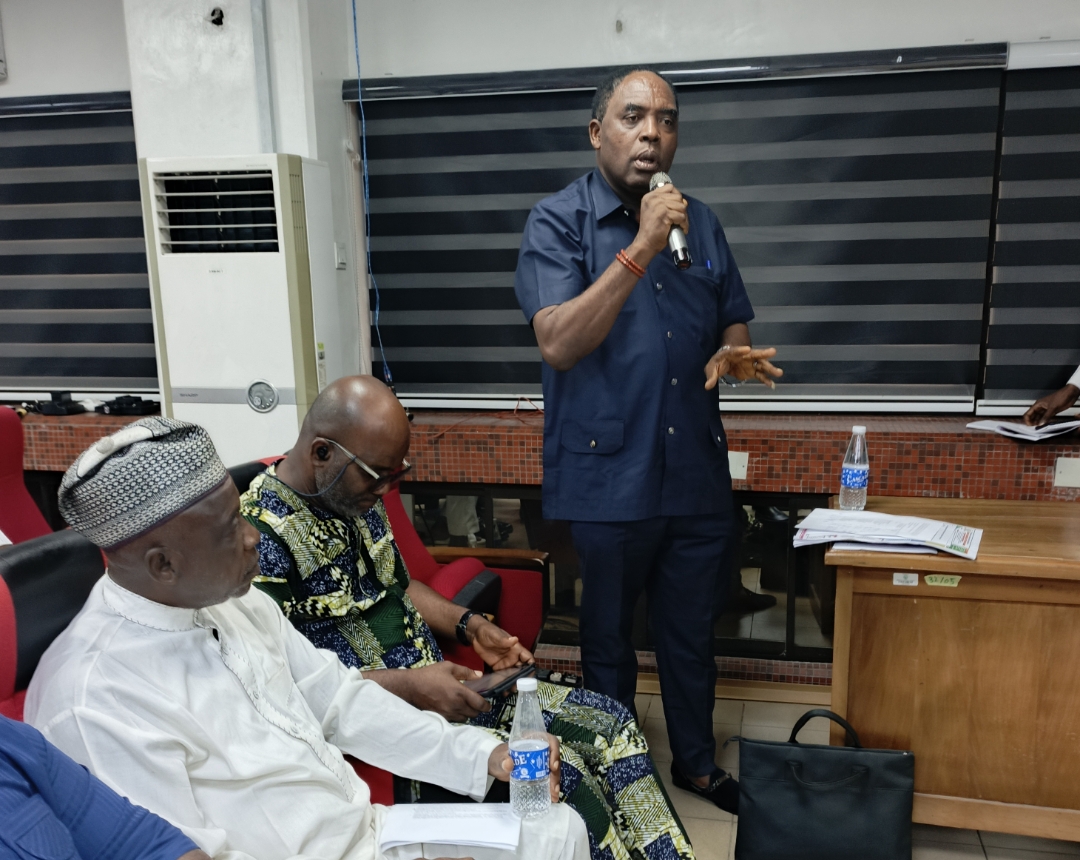
This consensus emerged at a stakeholders’ meeting convened by the Nigerian Shippers’ Council (NSC) to address rising complaints by clearing agents and freight forwarders over the random blocking of containers after due clearance by statutory agencies at the Lagos ports.
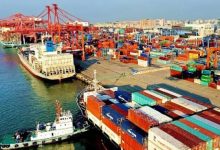

Participants drawn from freight forwarding associations, truck owners, terminal operators and importers argued that once cargoes have passed examination and been duly cleared by Customs and other government agencies, post-clearance interceptions amount to a breakdown of process integrity and regulatory coordination.

They stressed that such actions expose importers to excessive demurrage, storage charges and contract defaults, while eroding confidence in Nigeria’s port system among global trading partners.
Speaking on the menace, the General Manager of Port and Terminal Multiservices Limited (PTML), Mr. Babatunde Keshiro, noted that the core issue is a lack of sincerity of purpose and the practice of parallel authority.
His words: “I am glad that the Maritime Police spokesman confirmed that Police officials are part of the examination process. Whatever concerns or reservations they observe on these cargoes should be raised during the examination by information the lead agency which is Nigeria Customs Service (NCS). Once the cargo has been cleared and exited the ports, there shouldn’t be any ploy to delay it. No letter, no sanction should arise after that.
“I call draw the attention of industry stakeholders to a executive order that was given in 2022 directing the stoppage of this practice of intercepting already cleared and released containers.”
Meanwhile, the Chairman of the Apapa Chapter of the Association of Nigerian Licensed Customs Agents (ANLCA), Chief Emeka Chukwumalu, said the Police must be ready to bear the financial consequences of demurrage whenever containers are blocked after clearance.
Similarly, Chairman of the National Council of Managing Directors of Licensed Customs Agents at PTML Terminal, Abayomi Duyile, accused shipping companies of aiding the practice by releasing cargo manifests to the Police, describing it as illegal and contrary to international shipping standards.

Other speakers, including the President of the Association of Maritime Truck Owners (AMATO), Chief Remi Ogungbemi, and representatives of joint freight forwarding associations, echoed concerns that container blocking after clearance disrupts port operations and shifts inefficiencies onto port users.
The Maritime Police was accused of demanding fees between N200,000 and N400,000 per 20ft container blocked; while freight forwarders were coerced into payments in a bid to avoid additional demurrage and storage charges.
Sharing insights on his investigations, the Publisher of Kings Communications Limited, Mr. Kingsley Anaroke, revealed that during an undercover exploit he had disguised as a shipper to negotiate on behalf of a Lebanese company to pay Maritime Police about N50million settlement after the company was fined for carrying goods classified as groupage.
Anaroke noted that the investigation led to a partnership between NSC and the Independent Corrupt practices and other related offences Commission (ICPC) as well as a Memorandum of Understanding (MOU) between the Nigeria Police and Nigerian Shippers’ Council (NSC) to end the interception of already cleared cargoes by the Police.
Reacting to allegations of collusion, the Executive Secretary and Chief Executive Officer of the Nigerian Shippers’ Council, Dr. Pius Akutah, firmly denied any conspiracy between the Council and the Maritime Police.
Akutah said the NSC’s engagement with security agencies is solely to protect cargo interests and ensure safety within the port environment.
“Our role is not to complicate your business or impose additional costs. We work with the Police to secure cargoes, but we also intervene when stakeholders complain, and many of such complaints are promptly resolved,” Akutah said.
Head of the Complaints Unit at the NSC, Dr. Bashir Ambi, was more pointed, expressing concern over the reputational damage being suffered by the Council.
“I have been having sleepless nights because our reputation is being damaged. Let me state it clearly: the Complaints Unit of the NSC has never and will never collect a kobo for its services. Rather, we are constantly engaging and, in fact, confronting the Maritime Police over the issue of blocking containers that have already been cleared at the ports,” he said.
He urged stakeholders to resist paying unreceipted fees and to submit petitions with evidence through the Council for redress.
Earlier, the Police Public Relations Officer of the Maritime Police Command, ASP Adebayo Rasheed, defended the practice, insisting that container blocking is intelligence-driven and cannot be halted in the interest of national security.
Rasheed cited recent interceptions of arms and tramadol concealed in already cleared containers, assuring stakeholders that the Police would not compromise security for trade facilitation, while urging those with evidence of extortion to petition the appropriate authorities.