
Listen to story here
The Comptroller-General of the Nigeria Customs Service (NCS), Bashir Adewale Adeniyi MFR, has disclosed that more than half of the complaints he handles daily are linked to overtime cargoes congesting Nigerian ports.

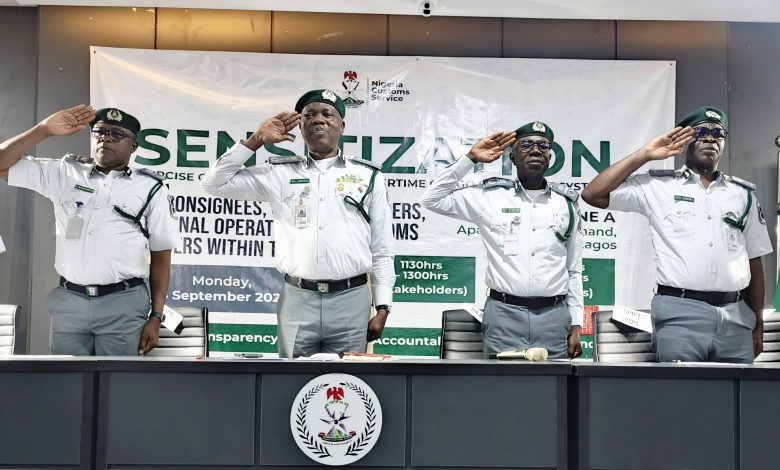
Adeniyi made the revelation on Monday at Apapa Customs Command, while addressing consignees, Customs brokers, terminal operators, and officers at a sensitisation programme on the automation of overtime cargo clearance.
“Over 50 percent of letters, emails and complaints I receive as CG are about overtime cargo. Some of these disputes end up with the ICPC, EFCC, and even reach the President’s desk. One case has dragged for nearly 15 years, resurfacing with every administration,” he said.
The Customs boss, however, stressed that the Service’s goal is not revenue from auction sales but efficient port operations.
“In 2024, we collected N6.3 trillion in revenue, but less than one percent came from overtime cargo sales. Our focus is transparency, reducing corruption, and freeing space at the ports.”
He announced that special desks have been set up in headquarters and key commands to fast-track the clearance of imports for government projects, manufacturers, embassies, and international agencies.
“These goods are vital for power, road, health, and education projects. They must not spend one extra day in the ports,” he said.
Adeniyi highlighted the new automated system as a game changer, designed to balance the interests of cargo owners, custodians, and other stakeholders while speeding up clearance times and cutting costs.
He also promised more engagements with stakeholders, starting with terminal operators and shipping companies, to ensure smooth implementation of the system.
“We are more interested in exiting the cargoes from the ports rather than having them as overtime,” he remarked.
On deliberate cargo abandonment, Adeniyi warned; “We know some people exploit the system. Our intelligence units will stay alert, and we will not allow criminals to hijack this process.”
Also speaking the Assistant Comptroller-General of Customs, Isah Umar, described the automated system as a defining moment that would break long-standing barriers in the management and disposal of overtime cargo.
He said the dynamic nature of port operations made it necessary to constantly review and upgrade clearance procedures to align with emerging technologies and global best practices.
Umar noted that the repeal of the old Customs and Excise Management Act (CEMA) and the enactment of the NCS Act 2023 had created a fresh mandate for the Service to modernize its overtime cargo procedures.
“This end-to-end automation is not just a reform; it is a transformation that demands active collaboration between Customs and stakeholders across the import and export sectors,” he said.
He listed the benefits of the automated system to include greater transparency, improved data integrity, elimination of bottlenecks, reduced human interference, and harmonized documentation.
On his part, General Manager, Ports and Terminal Multiservices Limited (PTML), Mr. Babatunde Keshiro recommended that the automated system should be structured in a way that prevent deliberate jettisoning of goods at port for overtime to invade import duty and other port charges.
He, however, assured that PTML will continue to partner with the NCS in ensuring the new automated system works perfectly, even as he added that the new system should be institutionalised.